

Copepodologist''s Cabinet : A Biographical and Bibliographical History, Memoirs, American Philosophical Society (vol. 240)
Book Details
Format
Hardback
Book Series
Memoirs of the American Philosophical Society
ISBN-10
0871692406
ISBN-13
9780871692405
Publisher
American Philosophical Society Press
Imprint
American Philosophical Society Press
Country of Manufacture
GB
Country of Publication
GB
Publication Date
Jan 1st, 2002
Print length
300 Pages
Product Classification:
Zoology & animal sciencesZoology and animal sciences
KSh 8,650.00
Currently unavailable
0 in stock
Delivery Location
Delivery fee: Select location
Secure
Quality
Fast
Copepod crustaceans are the most numerous multicellular animals on earth. They occur in every free-living and parasitic aquatic niche. Copepods have been known since the time of Aristotle, yet there has never been a history of the study of copepods. This volume, the first in a planned three-volume series, reviews the discoveries of copepods to 1832, the year that the two distinct branches, the free-living copepods (long-known as insects) and the parasitic copepods (thought to be molluscs or worms) were finally acknowledged as members of the same Class Crustacea. The narrative includes the biographies of 90 early copepodologists and recounts their most important contributions to science. Portraits are included for two-thirds of the subjects, with considerable new material as well as information and illustrations from obscure sources. Milestones include the first description of copepods (ca. 350 B.C.), the first illustration (1554), the first free-living freshwater copepod (1688), the first explanation of a free-living copepod''s metamorphosis (1756), the first permanently named copepod (1758), the first free-living marine copepod (1770), and the first description of a parasitic copepod''s metamorphosis (1819). The work ends with a transition to the mid-19th century, previewing numerous personal connections that pointed toward copepodology''s Golden Age in the 1890s, to be covered in Volume 2. A final volume will take the history of the study of copepods to ca. 1950.
Get Copepodologist''s Cabinet by David M. Damkaer at the best price and quality guaranteed only at Werezi Africa's largest book ecommerce store. The book was published by American Philosophical Society Press and it has 300 pages.
Customers Who Bought This Also Bought

Immense World
KSh 2,350.00
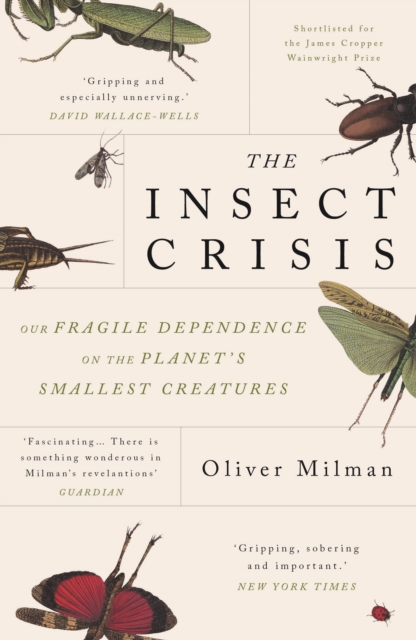
Insect Crisis
KSh 2,350.00

Animal Vegetable Criminal
KSh 1,800.00

Entangled Life
KSh 2,350.00

The Biology of Disease – Third Edition
KSh 15,300.00

Allowed to Grow Old – Portraits of Elderly Animals from Farm Sanctuaries
KSh 7,850.00

Evolution of the Vertebrate Skull
KSh 30,600.00

Insect Livestock
KSh 10,250.00

American Sheep
KSh 6,300.00

The Anatidae Family
KSh 22,500.00

Quick Cattle and Dying Wishes
KSh 20,900.00

Neotropical Birds of Prey
KSh 15,100.00