
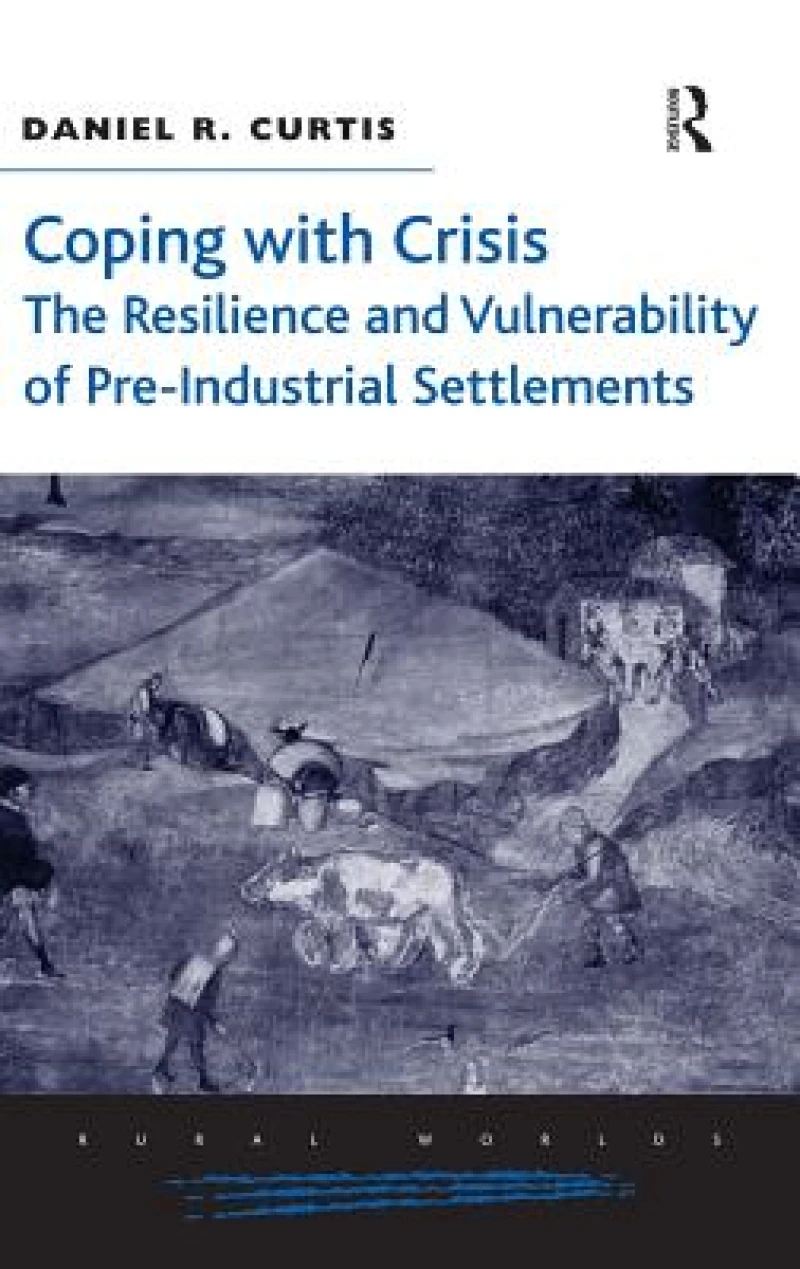
Coping with Crisis: The Resilience and Vulnerability of Pre-Industrial Settlements
Book Details
Format
Hardback or Cased Book
Book Series
Rural Worlds
ISBN-10
1472420047
ISBN-13
9781472420046
Publisher
Taylor & Francis Ltd
Imprint
Routledge
Country of Manufacture
GB
Country of Publication
GB
Publication Date
Aug 29th, 2014
Print length
404 Pages
Weight
914 grams
Dimensions
16.70 x 24.10 x 3.50 cms
Product Classification:
European historyMedieval historyEarly modern history: c 1450/1500 to c 1700Rural communities
Ksh 33,850.00
Werezi Extended Catalogue
0 in stock
Delivery Location
Delivery fee: Select location
Secure
Quality
Fast
All pre-industrial societies had to face certain challenges: earthquakes, plague, warfare, soil erosion and subsistence crises. However, while some settlements were stable over the long term, other settlements proved more vulnerable to crisis. This book has been stimulated by the hypotheses put forward by a recent 'disaster studies' literature.
Why in the pre-industrial period were some settlements resilient and stable over the long term while other settlements were vulnerable to crisis? Indeed, what made certain human habitations more prone to decline or even total collapse, than others? All pre-industrial societies had to face certain challenges: exogenous environmental hazards such as earthquakes or plagues, economic or political hazards from ’outside’ such as warfare or expropriation of property, or hazards of their own-making such as soil erosion or subsistence crises. How then can we explain why some societies were able to overcome or negate these problems, while other societies proved susceptible to failure, as settlements contracted, stagnated, were abandoned, or even disappeared entirely? This book has been stimulated by the questions and hypotheses put forward by a recent ’disaster studies’ literature - in particular, by placing the intrinsic arrangement of societies at the forefront of the explanatory framework. Essentially it is suggested that the resilience or vulnerability of habitation has less to do with exogenous crises themselves, but on endogenous societal responses which dictate: (a) the extent of destruction caused by crises and the capacity for society to protect itself; and (b) the capacity to create a sufficient recovery. By empirically testing the explanatory framework on a number of societies between the Middle Ages and the nineteenth century in England, the Low Countries, and Italy, it is ultimately argued in this book that rather than the protective functions of the state or the market, or the implementation of technological innovation or capital investment, the most resilient human habitations in the pre-industrial period were those than displayed an equitable distribution of property and a well-balanced distribution of power between social interest groups. Equitable distributions of power and property were the underlying conditions in pre-industrial societies that all
Get Coping with Crisis: The Resilience and Vulnerability of Pre-Industrial Settlements by at the best price and quality guaranteed only at Werezi Africa's largest book ecommerce store. The book was published by Taylor & Francis Ltd and it has pages.

