
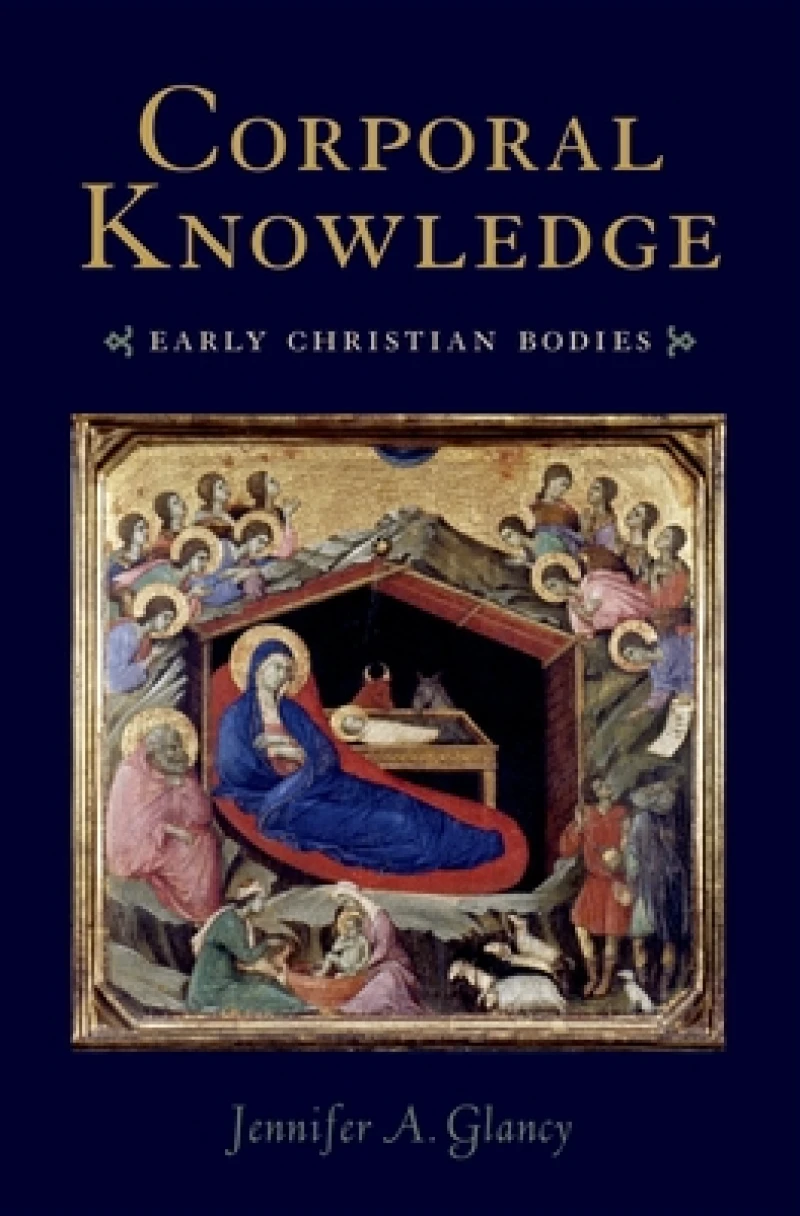
Corporal Knowledge : Early Christian Bodies
Book Details
Format
Hardback or Cased Book
ISBN-10
0195328159
ISBN-13
9780195328158
Publisher
Oxford University Press Inc
Imprint
Oxford University Press Inc
Country of Manufacture
US
Country of Publication
GB
Publication Date
Apr 29th, 2010
Print length
208 Pages
Weight
490 grams
Dimensions
15.50 x 23.90 x 2.50 cms
Product Classification:
Classical history / classical civilisationThe Early ChurchChristian theology
Ksh 12,800.00
Manufactured on Demand
0 in stock
Delivery Location
Delivery fee: Select location
Secure
Quality
Fast
At the heart of the Christian proclamation is the problematic body of Jesus: problematic because His crucified form conveyed shame rather than glory, problematic because Christian communities argued about whether Jesus'' body shared in the corruptible and tactile qualities of other human bodies. Jennifer Glancy argues that ordinary Christians, like others in the Roman Empire, saw all human bodies as expressing such things as social status and gender, honor and abjection. All human bodies were matrices of communication. Glancy draws on a variety of theoretical approaches to explore what early Christians understood bodies to communicate.
At the heart of the Christian proclamation is the problematic body of Jesus: problematic because His crucified form conveyed shame rather than glory, problematic because Christian communities argued about whether Jesus'' body shared in the corruptible and tactile qualities of other human bodies. Jesus'' message-bearing body is not the only storytelling body we encounter in early Christian writings. Paul, for example, invited recipients of his letters to read the gospel story in his scarred body. In the second and early third centuries, Christians argued about the perpetual virginity of the body of Mary, the mother of Jesus, and those on both sides of the question saw Mary''s body as a meaningful, expressive matrix. Jennifer Glancy argues that ordinary Christians, like others in the Roman Empire, saw all human bodies as expressing such things as social status and gender, honor and abjection. All human bodies were matrices of communication. Glancy draws on a variety of theoretical approaches, particularly the practice-oriented theory of Pierre Bourdieu and the corporal phenomenology of Maurice Merleau-Ponty, to explore what early Christians understood bodies to communicate. Among the specific examples she considers are those of Jesus, Mary, and Paul, those of the entire class of people held in slavery, and those subjected to torture.
Get Corporal Knowledge by at the best price and quality guaranteed only at Werezi Africa's largest book ecommerce store. The book was published by Oxford University Press Inc and it has pages.

