
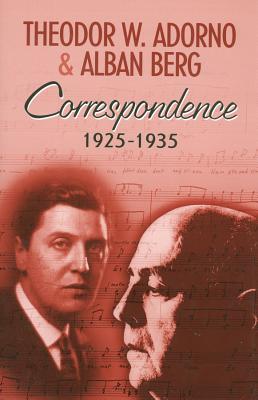
Correspondence 1925–1935
Book Details
Format
Hardback
ISBN-10
0745623352
ISBN-13
9780745623351
Publisher
John Wiley and Sons Ltd
Imprint
Polity Press
Country of Manufacture
GB
Country of Publication
GB
Publication Date
Oct 4th, 2005
Print length
168 Pages
Weight
567 grams
Dimensions
23.10 x 16.00 x 3.30 cms
Product Classification:
Autobiography: generalAutobiography: generalCultural studiesCultural studies
KSh 2,850.00
Currently unavailable
0 in stock
Delivery Location
Delivery fee: Select location
Secure
Quality
Fast
* The correspondence of Theodor Adorno and Thomas Mann documents a rare encounter of creative tension between literary tradition and aesthetic modernism spanning the years 1943-1955. * The letters offer the reader a fascinating insight into the lives of two of the most important figures of twentieth-century intellectual life.
In December 1945 Thomas Mann wrote a famous letter to Adorno in which he formulated the principle of montage adopted in his novel Doctor Faustus. The writer expressly invited the philosopher to 'consider, with me, how such a work - and I mean Leverkuhn's work - could more or less be practically realized'. Their close collaboration on questions concerning the character of the fictional composer's putatively late works (Adorno produced specific sketches which are included as an appendix to the present volume) effectively laid the basis for a further exchange of letters. The ensuing correspondence between the two men documents a rare encounter of creative tension between literary tradition and aesthetic modernism which would be sustained right up until the novelist's death in 1955. In the letters, Thomas Mann openly acknowledged his 'fascinated reading' of Adorno's Minima Moralia and commented in detail on the 'Essay on Wagner', which he was as eager to read as 'the one in the Book of Revelation consumes a book which tastes "as sweet as honey"'. Adorno in turn offered detailed observations upon and frequently enthusiastic commendations of Mann's later writings, such as The Holy Sinner, The Betrayed One and The Confessions of Felix Krull. Their correspondence also touches upon issues of great personal significance, notably the sensitive discussion of the problems of returning from exile to postwar Germany. The letters are extensively annotated and offer the reader detailed notes concerning the writings, events and personalities referred or alluded to in the correspondence.
Get Correspondence 1925–1935 by Alban Berg, Theodor W. Adorno at the best price and quality guaranteed only at Werezi Africa's largest book ecommerce store. The book was published by John Wiley and Sons Ltd and it has 168 pages.
Customers Who Bought This Also Bought
Youth
KSh 2,700.00
Why I Am so Clever
KSh 700.00
Xmeditations
KSh 700.00

Race To Be Myself
KSh 3,600.00

Childhood
KSh 2,900.00
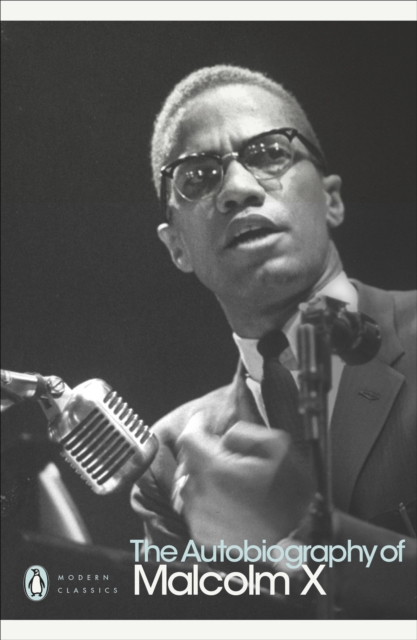
Autobiography of Malcolm X
KSh 2,350.00

I Know Why The Caged Bird Sings
KSh 2,000.00

The Return
KSh 2,000.00
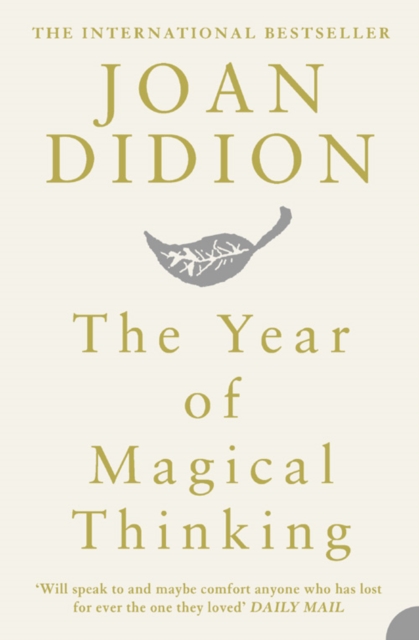
Year of Magical Thinking
KSh 2,000.00

Elephant Whisperer
KSh 2,150.00

I, Phoolan Devi
KSh 2,700.00

These Precious Days
KSh 2,000.00
More by Alban Berg, Theodor W. Adorno
An Introduction to Dialectics
KSh 3,700.00

Metaphysics – Concept and Problems
KSh 9,900.00
Ontology and Dialectics 1960–61
KSh 3,750.00
Dialectic of Enlightenment
KSh 4,300.00
Negative Dialectics
KSh 6,450.00
Critical Models – Interventions and Catchwords
KSh 15,850.00
Alban Berg
KSh 2,900.00

Without Model
KSh 3,350.00
Philosophy of Modern Music
KSh 4,150.00
The New Music – Kranichstein Lectures
KSh 6,600.00

Lectures 1949–1968, Volume 2 – Social Theory and Politics
KSh 9,900.00
Philosophy and Sociology: 1960
KSh 9,900.00
