
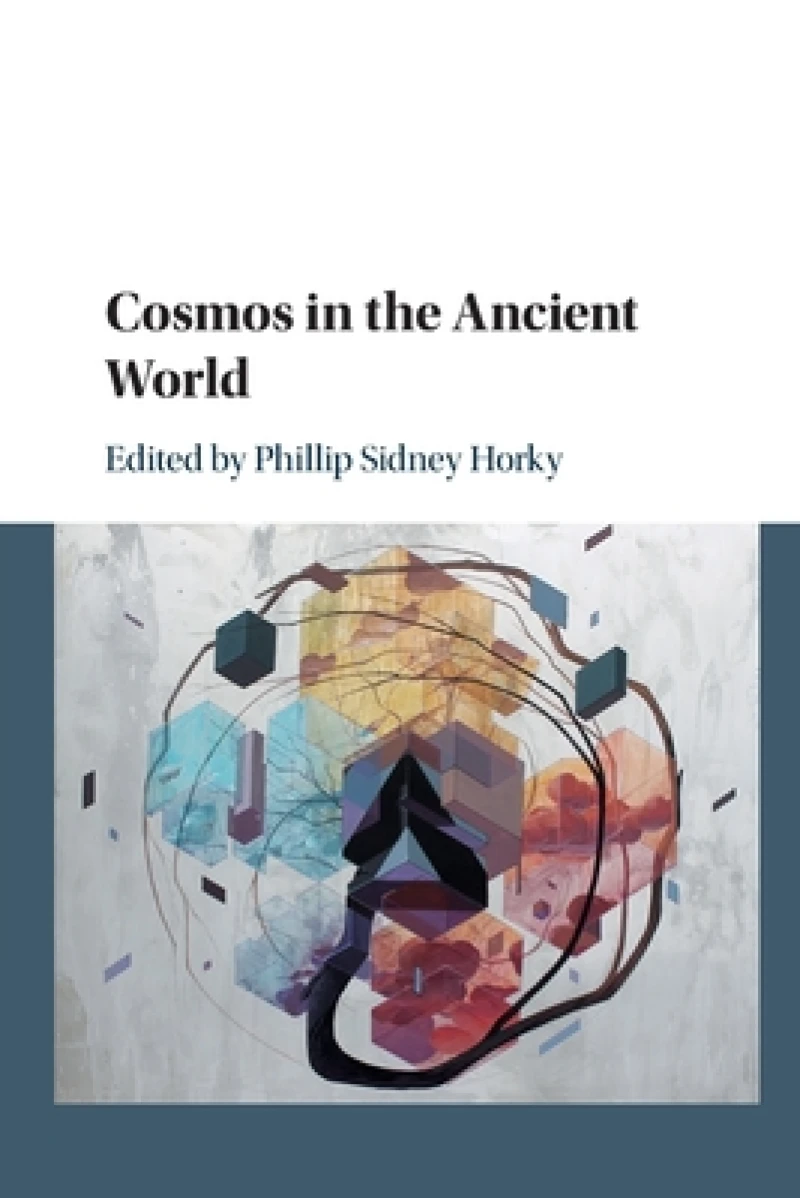
Cosmos in the Ancient World
Book Details
Format
Paperback / Softback
ISBN-10
1108438229
ISBN-13
9781108438223
Publisher
Cambridge University Press
Imprint
Cambridge University Press
Country of Manufacture
GB
Country of Publication
GB
Publication Date
Jun 30th, 2022
Print length
370 Pages
Weight
498 grams
Dimensions
22.90 x 15.20 x 2.00 cms
Product Classification:
Western philosophy: Ancient, to c 500
Ksh 6,200.00
Manufactured on Demand
0 in stock
Delivery Location
Delivery fee: Select location
Secure
Quality
Fast
A comprehensive, multi-disciplinary discussion of the notion of kosmos as order, arrangement, and ornament in Greco-Roman antiquity. This book traces this concept from its inception in Homer, through its canonisation by Plato, to its ultimate transformation by the early Christians.
How did the ancient Greeks and Romans conceptualise order? This book answers that question by analysing the formative concept of kosmos (''order'', ''arrangement'', ''ornament'') in ancient literature, philosophy, science, art, and religion. This concept encouraged the Greeks and Romans to develop theories to explain core aspects of human life, including nature, beauty, society, politics, the individual, and what lies beyond human experience. Hence, Greek kosmos, and its Latin correlate mundus, are subjects of profound reflection by a wide range of important ancient figures, including philosophers (Parmenides, Empedocles, the Pythagoreans, Democritus, Plato, Aristotle, the Stoics, Lucretius, Cicero, Seneca, Plotinus), poets and playwrights (Sophocles, Euripides, Aristophanes, Plautus, Marcus Argentarius, Nonnus), intellectuals (Gorgias, Protagoras, Varro), and religious exegetes (Philo, the Gospel Writers, Paul). By revealing kosmos in its many ancient manifestations, this book asks us to rethink our own sense of ''order'', and to reflect on our place within a broader cosmic history.
Get Cosmos in the Ancient World by at the best price and quality guaranteed only at Werezi Africa's largest book ecommerce store. The book was published by Cambridge University Press and it has pages.

