
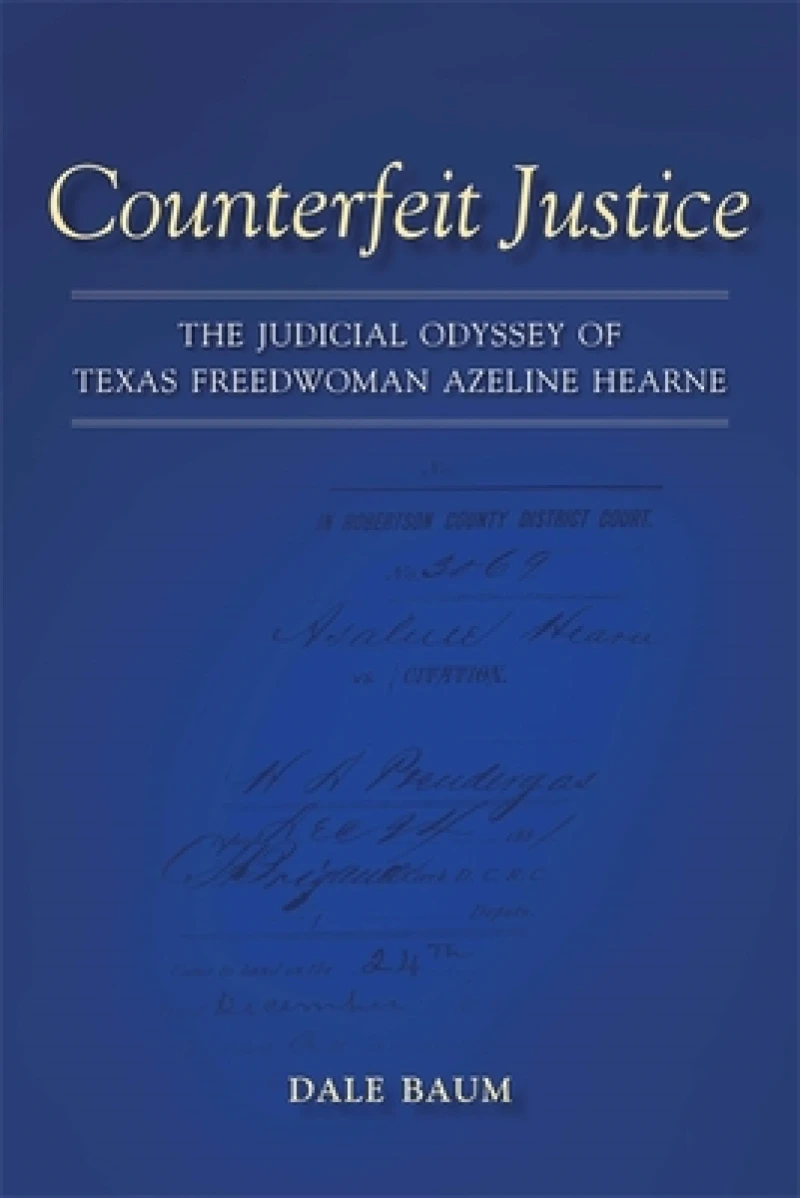
Counterfeit Justice : The Judicial Odyssey of Texas Freedwoman Azeline Hearne
by
Dale Baum
Book Details
Format
Hardback or Cased Book
ISBN-10
0807134058
ISBN-13
9780807134054
Publisher
Louisiana State University Press
Imprint
Louisiana State University Press
Country of Manufacture
US
Country of Publication
GB
Publication Date
May 1st, 2009
Print length
328 Pages
Weight
333 grams
Dimensions
22.80 x 16.00 x 2.70 cms
Ksh 7,200.00
Temporarily out of stock, due soon
0 in stock
Delivery Location
Delivery fee: Select location
Secure
Quality
Fast
For many of the forty years of her life as a slave, Azeline Hearne cohabitated with her wealthy, unmarried master, Samuel R. Hearne. Azeline ultimately inherited one of the most profitable cotton plantations in Texas and became one of the wealthiest ex-slaves in the former Confederacy. In this volume, Dale Baum traces Azeline's remarkable story.
For many of the forty years of her life as a slave, Azeline Hearne cohabitated with her wealthy, unmarried master, Samuel R. Hearne. She bore him four children, only one of whom survived past early childhood. When Sam died shortly after the Civil War ended, he publicly acknowledged his relationship with Azeline and bequeathed his entire estate to their twenty-year-old mulatto son, with the provision that he take care of his mother. When their son died early in 1868, Azeline inherited one of the most profitable cotton plantations in Texas and became one of the wealthiest ex-slaves in the former Confederacy. In Counterfeit Justice, Dale Baum traces Azeline's remarkable story, detailing her ongoing legal battles to claim and maintain her legacy.
As Baum shows, Azeline's inheritance quickly made her a target for predatory whites determined to strip her of her land. A familiar figure at the Robertson County District Court from the late 1860s to the early 1880s, Azeline faced numerous lawsuits -- including one filed against her by her own lawyer. Samuel Hearne's family took steps to dispossess her, and other unscrupulous white men challenged the title to her plantation, using claims based on old Spanish land grants. Azeline's prolonged and courageous defense of her rightful title brought her a certain notoriety: the first freedwoman to be a party to three separate civil lawsuits appealed all the way to the Texas Supreme Court and the first former slave in Robertson County indicted on criminal charges of perjury. Although repeatedly blocked and frustrated by the convolutions of the legal system, she evolved from a bewildered defendant to a determined plaintiff who, in one extraordinary lawsuit, came tantalisingly close to achieving revenge against those who defrauded her for over a decade.
Due to gaps in the available historical record and the unreliability of secondary accounts based on local Reconstruction folklore, many of the details of Azeline's story are lost to history. But Baum grounds his speculation about her life in recent scholarship on the Reconstruction era, and he puts his findings in context in the history of Robertson County. Although history has not credited Azeline Hearne with influencing the course of the law, the story of her uniquely difficult position after the Civil War gives an unprecedented view of the era and of one solitary woman's attempt to negotiate its social and legal complexities in her struggle to find justice.
Baum's meticulously researched narrative will be of keen interest to legal scholars and to all those interested in the plight of freed slaves during this era.
As Baum shows, Azeline's inheritance quickly made her a target for predatory whites determined to strip her of her land. A familiar figure at the Robertson County District Court from the late 1860s to the early 1880s, Azeline faced numerous lawsuits -- including one filed against her by her own lawyer. Samuel Hearne's family took steps to dispossess her, and other unscrupulous white men challenged the title to her plantation, using claims based on old Spanish land grants. Azeline's prolonged and courageous defense of her rightful title brought her a certain notoriety: the first freedwoman to be a party to three separate civil lawsuits appealed all the way to the Texas Supreme Court and the first former slave in Robertson County indicted on criminal charges of perjury. Although repeatedly blocked and frustrated by the convolutions of the legal system, she evolved from a bewildered defendant to a determined plaintiff who, in one extraordinary lawsuit, came tantalisingly close to achieving revenge against those who defrauded her for over a decade.
Due to gaps in the available historical record and the unreliability of secondary accounts based on local Reconstruction folklore, many of the details of Azeline's story are lost to history. But Baum grounds his speculation about her life in recent scholarship on the Reconstruction era, and he puts his findings in context in the history of Robertson County. Although history has not credited Azeline Hearne with influencing the course of the law, the story of her uniquely difficult position after the Civil War gives an unprecedented view of the era and of one solitary woman's attempt to negotiate its social and legal complexities in her struggle to find justice.
Baum's meticulously researched narrative will be of keen interest to legal scholars and to all those interested in the plight of freed slaves during this era.
Get Counterfeit Justice by at the best price and quality guaranteed only at Werezi Africa's largest book ecommerce store. The book was published by Louisiana State University Press and it has pages.

