
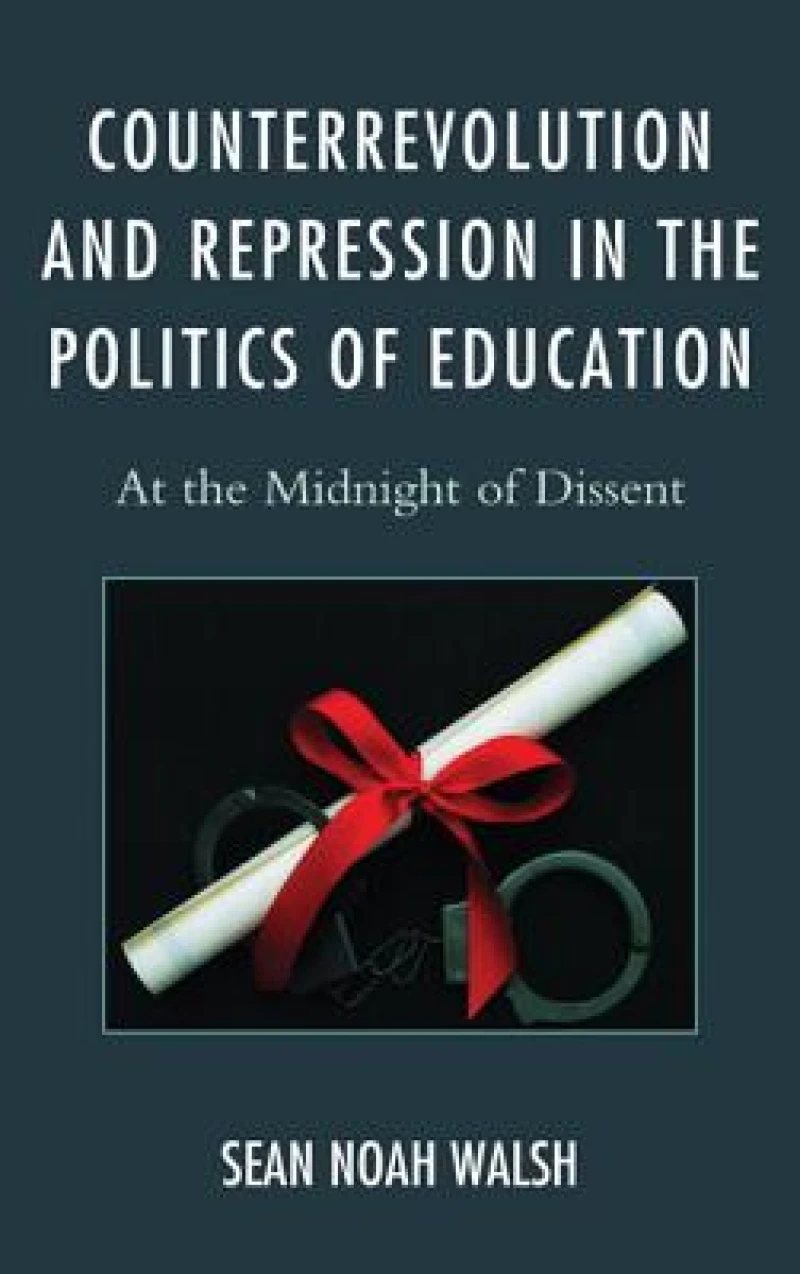
Counterrevolution and Repression in the Politics of Education : At the Midnight of Dissent
Book Details
Format
Hardback or Cased Book
ISBN-10
0739186728
ISBN-13
9780739186725
Publisher
Bloomsbury Publishing Plc
Imprint
Lexington Books
Country of Manufacture
GB
Country of Publication
GB
Publication Date
Dec 12th, 2013
Print length
126 Pages
Weight
342 grams
Dimensions
23.60 x 15.20 x 1.50 cms
Product Classification:
Social & political philosophyPhilosophy & theory of educationPolitical science & theory
Ksh 17,250.00
Manufactured on Demand
0 in stock
Delivery Location
Delivery fee: Select location
Secure
Quality
Fast
Counterrevolution and Repression in the Politics of Education revisits the ideas of Herbert Marcuse in order to examine how his observations on counterrevolution are applicable to present conditions in politics, particularly those pertaining to the politics of education. While Marcuse’s influence in the academy has noticeably waned since its zenith in the late 1960’s, his observations seem more relevant than ever, especially in the current context of economic crises, ideological polarization, and a heightened disaffection with capitalism. In particular, this book focuses on how counterrevolution functions within the field of ideology, manipulating the acquisition, representation, and exercise of reason in order to diminish the faculties of dissent and render utopian projects as the paramount political obscenity. While we are most familiar with counterrevolution in its guise of bloodstained battlefields and ditches filled with the bodies of dissidents, Marcuse alerts us to the decidedly ideological character of counterrevolution in late capitalism. In advanced industrial society, counterrevolution functions by converting the needs of the working class, turning a potentially revolutionary segment of society into clients and supporters of the very system that oppresses them. Furthermore, the counterrevolution in the advanced industrial society is purely preemptive—there is no revolution to be undone or turned back. Starting from the foundation provided by Marcuse, this book demonstrates how the tactics of counterrevolution have been applied in the present for the purpose of undermining criticism and dissent and how counterrevolution has intervened within the politics of reason. In the last several years alone, we have witnessed attempts by state powers to reorganize college and university curricula, a heightened denigration of intellectuals and academics within political discourse, pervasive encroachment of consumerism in the collegiate experience, and the rapid expansion of online teaching. By using Marcuse’s ideas, this book demonstrates that rather than unconnected and isolated, these phenomena are unified by the counterrevolutionary strategy of limiting and obstructing the acquisition of reason for the final aim of narrowing the possibilities for dissent.
Counterrevolution and Repression in the Politics of Education revisits the ideas of Herbert Marcuse in order to examine how his observations on counterrevolution are applicable to present conditions in politics, particularly those pertaining to the politics of education. While Marcuse’s influence in the academy has noticeably waned since its zenith in the late 1960’s, his observations seem more relevant than ever, especially in the current context of economic crises, ideological polarization, and a heightened disaffection with capitalism. In particular, this book focuses on how counterrevolution functions within the field of ideology, manipulating the acquisition, representation, and exercise of reason in order to diminish the faculties of dissent and render utopian projects as the paramount political obscenity. While we are most familiar with counterrevolution in its guise of bloodstained battlefields and ditches filled with the bodies of dissidents, Marcuse alerts us to the decidedly ideological character of counterrevolution in late capitalism. In advanced industrial society, counterrevolution functions by converting the needs of the working class, turning a potentially revolutionary segment of society into clients and supporters of the very system that oppresses them. Furthermore, the counterrevolution in the advanced industrial society is purely preemptive—there is no revolution to be undone or turned back. Starting from the foundation provided by Marcuse, this book demonstrates how the tactics of counterrevolution have been applied in the present for the purpose of undermining criticism and dissent and how counterrevolution has intervened within the politics of reason. In the last several years alone, we have witnessed attempts by state powers to reorganize college and university curricula, a heightened denigration of intellectuals and academics within political discourse, pervasive encroachment of consumerism in the collegiate experience, and the rapid expansion of online teaching. By using Marcuse’s ideas, this book demonstrates that rather than unconnected and isolated, these phenomena are unified by the counterrevolutionary strategy of limiting and obstructing the acquisition of reason for the final aim of narrowing the possibilities for dissent.
Get Counterrevolution and Repression in the Politics of Education by at the best price and quality guaranteed only at Werezi Africa's largest book ecommerce store. The book was published by Bloomsbury Publishing Plc and it has pages.

