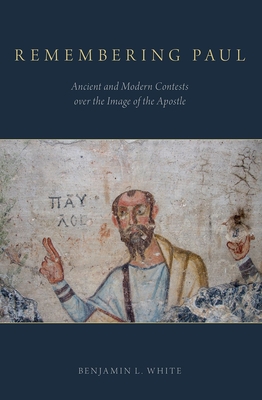
Counting Paul : Scientificity, Fuzzy Math, and Ideology in Pauline Studies
Book Details
Format
Hardback
ISBN-10
0197802249
ISBN-13
9780197802243
Publisher
Oxford University Press Inc
Imprint
Oxford University Press Inc
Country of Manufacture
GB
Country of Publication
GB
Publication Date
Jul 3rd, 2025
Print length
288 Pages
Weight
622 grams
Dimensions
16.40 x 24.30 x 2.80 cms
Product Classification:
History of religionNew TestamentsHistory of religionNew Testaments
KSh 12,850.00
Currently unavailable
0 in stock
Delivery Location
Delivery fee: Select location
Secure
Quality
Fast
Who wrote the Pauline Epistles? For nearly 1,700 years the answer seemed fairly straightforward. The New Testament canon set the boundary at thirteen (or fourteen, including Hebrews) Pauline Epistles, alongside an uncontroversial biographical framework within which to imagine them in Acts. In the early nineteenth century the identification of the historical Paul with the canonical Paul was severed when theologian Ferdinand Christian Baur of the University of Tübingen laid the groundwork for the fundamental historiographical moves that still orient Pauline Studies as a critical discipline by both delimiting the number of authentic Pauline Epistles and highlighting the tendentious character of Acts'' portrayal of Paul. Given the highly uncertain and subjective nature of so much of the argumentation over the authenticity of the Pauline Epistles as it developed in the nineteenth century, the analysis of authorial style took on increasing weight as a way out of so many special decisions. The linguistic features of texts were counted, averaged, and compared. In measuring one text against another, the Pauline stylome emerged as the incontrovertible standard for uncovering canonical forgeries in the Apostle''s name. Tracing the long history of the computational approach to the Pauline authorship problem, Counting Paul exposes the ideological foundations and questionable science of much of the work and argues that Pauline biography ought not be written from fewer sources than what the New Testament has given us, but rather more. It advocates for a more expansive vision of what might count as Pauline by reorienting our focus away from internal criteria, like appeals to style, and toward external criteria, like the reception of Paul in the generations after his death.
Get Counting Paul by Benjamin L. White at the best price and quality guaranteed only at Werezi Africa's largest book ecommerce store. The book was published by Oxford University Press Inc and it has 288 pages.
Customers Who Bought This Also Bought

Palestine
KSh 2,400.00

History of Christianity
KSh 3,800.00

Builders of a Nation
KSh 2,200.00

Tudor Church Militant
KSh 2,350.00
Lower than the Angels
KSh 3,400.00

All Things Made New
KSh 3,050.00

On Antisemitism
KSh 4,500.00

Cold-Case Christianity Participant's Guide
KSh 2,050.00
The Apocryphal Gospels
KSh 2,350.00
R. C. Sproul – A Life
KSh 4,700.00

Bible Stories
KSh 3,600.00

The New Testament of our Lord and Saviour Jesus Christ Translated out of the Latin Vulgat by John Wiclif, ... About 1378. To Which is Præfixt a History of the Several Translations of the H. Bible ... By John Lewis,
KSh 4,850.00