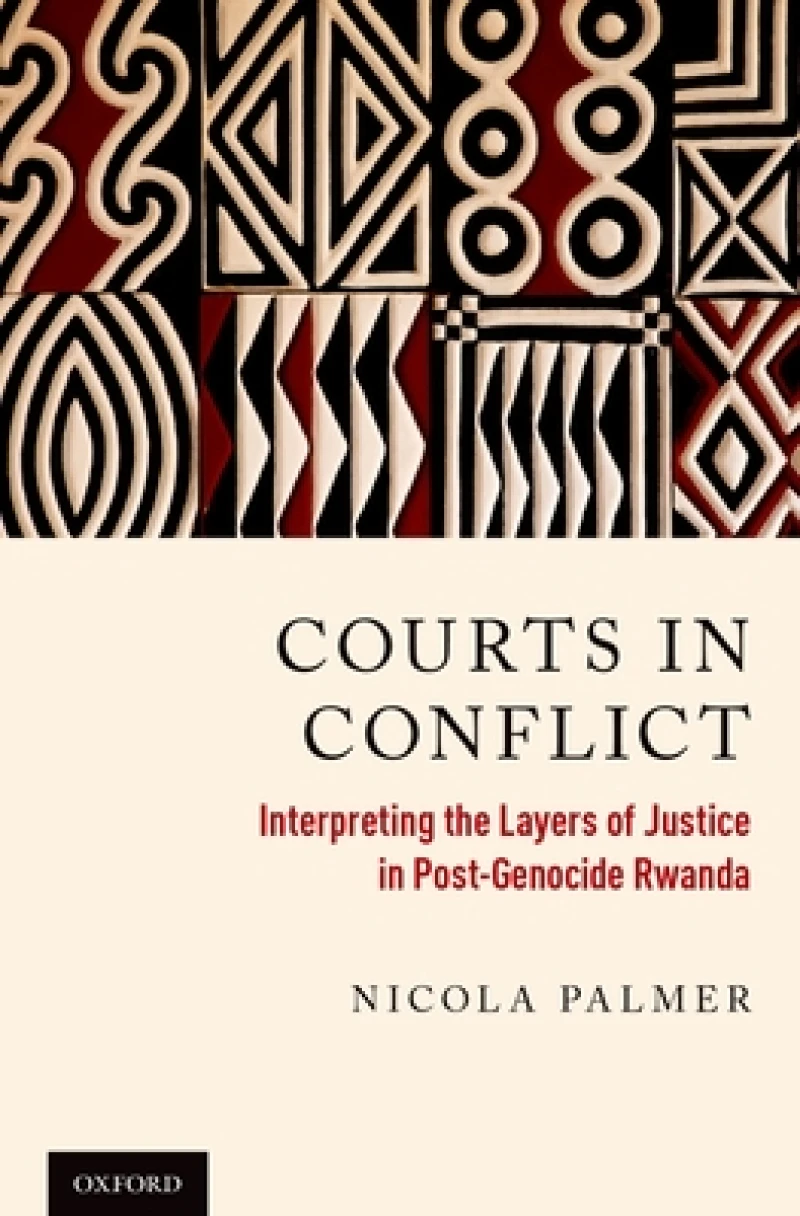
Courts in Conflict : Interpreting the Layers of Justice in Post-Genocide Rwanda
Book Details
Format
Hardback or Cased Book
ISBN-10
0199398194
ISBN-13
9780199398195
Publisher
Oxford University Press Inc
Imprint
Oxford University Press Inc
Country of Manufacture
US
Country of Publication
GB
Publication Date
May 7th, 2015
Print length
240 Pages
Weight
456 grams
Dimensions
24.50 x 16.50 x 2.40 cms
Product Classification:
African historyGenocide & ethnic cleansingInternational criminal lawCourts & procedure
Ksh 20,250.00
Manufactured on Demand
0 in stock
Delivery Location
Delivery fee: Select location
Secure
Quality
Fast
Courts in Conflict focuses on the practices of the United Nations International Criminal Tribunal for Rwanda (ICTR), the national Rwandan courts, and the gacaca community courts in post-genocide Rwanda. It emphasizes that, although the courts are compatible in law, an interpretive cultural analysis indicates how and why they have often conflicted in practice.
The rise of international criminal trials has been accompanied by a call for domestic responses to extraordinary violence. Yet there is remarkably limited research on the interactions among local, national, and international transitional justice institutions. Rwanda offers an early example of multi-level courts operating in concert, through the concurrent practice of the United Nations International Criminal Tribunal for Rwanda (ICTR), the national Rwandan courts, and the gacaca community courts.Courts in Conflict makes a crucial and timely contribution to the examination of these pluralist responses to atrocity at a juncture when holistic approaches are rapidly becoming the policy norm. Although Rwanda''s post-genocide criminal courts are compatible in law, an interpretive cultural analysis shows how and why they have often conflicted in practice. The author''s research is derived from 182 interviews with judges, lawyers, and a group of witnesses and suspects within all three of the post-genocide courts. This rich empirical material shows that the judges and lawyers inside each of the courts offer notably different interpretations of Rwanda''s transitional justice processes, illuminating divergent legal cultures that help explain the constraints on the courts'' effective cooperation and evidence gathering. The potential for similar competition between domestic and international justice processes is apparent in the current practice of the International Criminal Court (ICC). However, this competition can be mitigated through increased communication among the different sites of justice, fostering legal cultures of complementarity that can more effectively respond to the needs of affected populations.
Get Courts in Conflict by at the best price and quality guaranteed only at Werezi Africa's largest book ecommerce store. The book was published by Oxford University Press Inc and it has pages.