
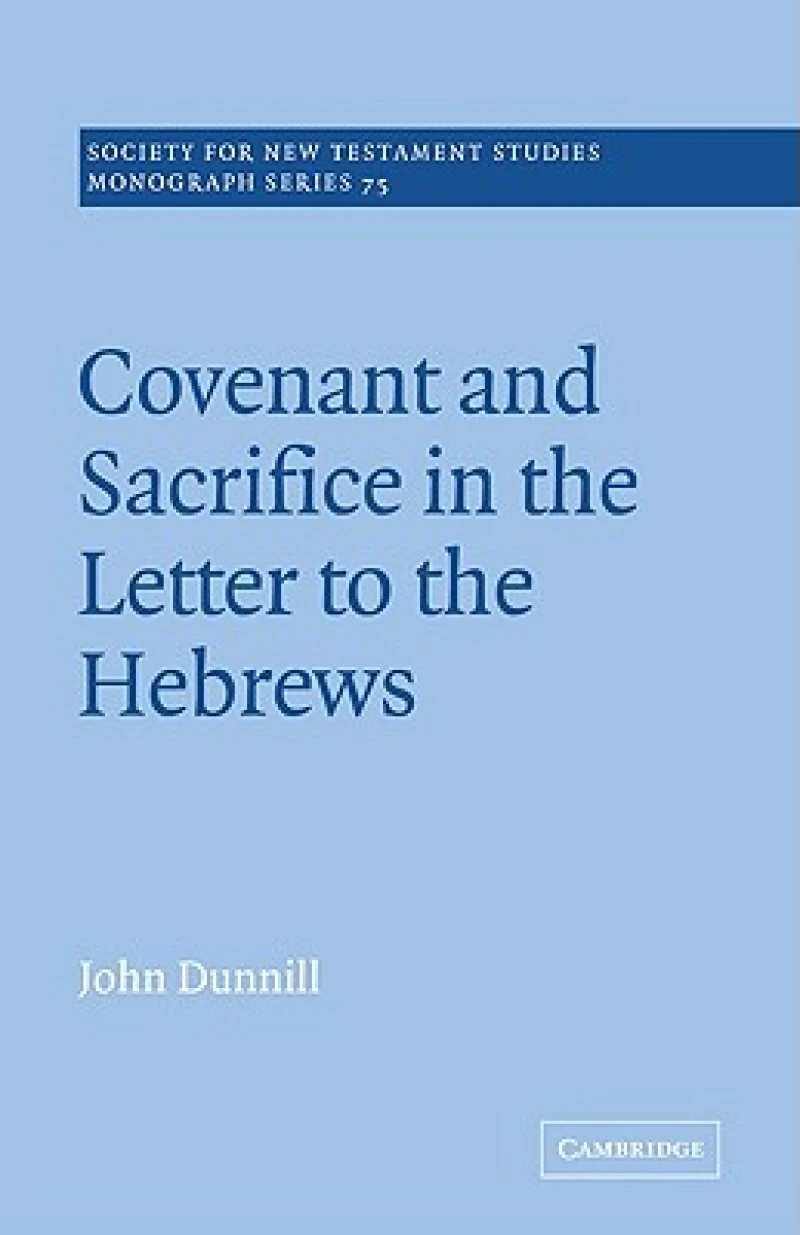
Covenant and Sacrifice in the Letter to the Hebrews
by
John Dunnill
Book Details
Format
Paperback / Softback
ISBN-10
052102062X
ISBN-13
9780521020626
Publisher
Cambridge University Press
Imprint
Cambridge University Press
Country of Manufacture
GB
Country of Publication
GB
Publication Date
Oct 6th, 2005
Print length
312 Pages
Weight
416 grams
Dimensions
14.00 x 21.60 x 2.20 cms
Product Classification:
Bible readings, selections & meditationsBible readings, selections and meditations
Ksh 4,750.00
Manufactured on Demand
0 in stock
Delivery Location
Delivery fee: Select location
Secure
Quality
Fast
This study focuses on the way the Letter to the Hebrews explains the Christian doctrine of salvation by means of sacrificial symbols drawn from the Old Testament. Theories about the nature of sacrifice are taken from the work of social anthropologists to show the underlying meaning of these symbols.
Among the problems which Hebrews poses for interpretation, its use of sacrificial terminology must cause it to seem remote and obscure. Although the recent work of social anthropologists on the nature of religious systems has been applied by Old Testament scholars to the laws and symbols of the Pentateuch this is the first sustained study of Hebrews to take account of these theories. Building on the work of such writers as Mary Douglas, Victor Turner, and Claude Levi-Strauss, Hebrews is approached here as a 'structure of symbols', in which the symbol-system of the Old Testament covenant is re-presented and transposed. Motifs explored by the author include sacred time and space; liminality; the sacrificial function of blood, death, oaths, and blessings; and the narrative traditions of election and exclusion. Dr Dunnill assesses Hebrews, not as an argument, but as an act of symbolic communication expressing the possibility of direct communion with God.
Get Covenant and Sacrifice in the Letter to the Hebrews by at the best price and quality guaranteed only at Werezi Africa's largest book ecommerce store. The book was published by Cambridge University Press and it has pages.

