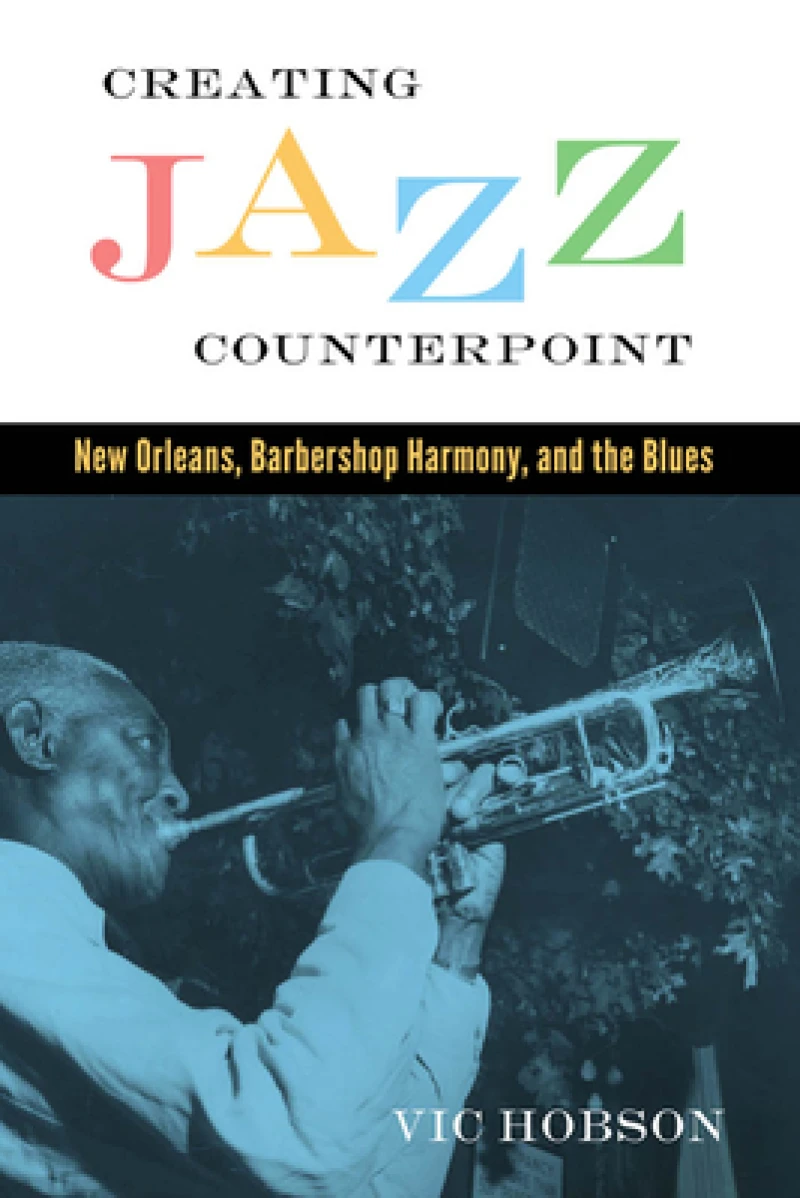
Creating Jazz Counterpoint : New Orleans, Barbershop Harmony, and the Blues
by
Vic Hobson
Book Details
Format
Hardback or Cased Book
Book Series
American Made Music Series
ISBN-10
1617039918
ISBN-13
9781617039911
Publisher
University Press of Mississippi
Imprint
University Press of Mississippi
Country of Manufacture
US
Country of Publication
GB
Publication Date
Mar 30th, 2014
Print length
224 Pages
Weight
418 grams
Dimensions
23.70 x 16.00 x 1.90 cms
Product Classification:
Jazz
Ksh 15,850.00
Werezi Extended Catalogue
0 in stock
Delivery Location
Delivery fee: Select location
Secure
Quality
Fast
Offers a look at the blues roots of the New Orleans Jazz sound. This book describes in both historical and musical terms how the practices of quartet singing were converted to the instruments of a jazz band, and how this, in turn, produced collectively improvised, blues-inflected jazz, that unique sound of New Orleans.
The book Jazzmen (1939) claimed New Orleans as the birthplace of jazz and introduced the legend of Buddy Bolden as the ""First Man of Jazz."" Much of the information that the book relied on came from a highly controversial source: Bunk Johnson. He claimed to have played with Bolden and that together they had pioneered jazz. Johnson made many recordings talking about and playing the music of the Bolden era. These recordings have been treated with skepticism because of doubts about Johnson''s credibility. Using oral histories, the Jazzmen interview notes, and unpublished archive material, this book confirms that Bunk Johnson did play with Bolden. This confirmation, in turn, has profound implications for Johnson''s recorded legacy in describing the music of the early years of New Orleans jazz. New Orleans jazz was different from ragtime in a number of ways. It was a music that was collectively improvised, and it carried a new tonality--the tonality of the blues. How early jazz musicians improvised together and how the blues became a part of jazz has until now been a mystery. Part of the reason New Orleans jazz developed as it did is that all the prominent jazz pioneers, including Buddy Bolden, Bunk Johnson, Louis Armstrong, Sidney Bechet, Johnny Dodds, and Kid Ory, sang in barbershop (or barroom) quartets. This book describes in both historical and musical terms how the practices of quartet singing were converted to the instruments of a jazz band, and how this, in turn, produced collectively improvised, blues-inflected jazz, that unique sound of New Orleans.
Get Creating Jazz Counterpoint by at the best price and quality guaranteed only at Werezi Africa's largest book ecommerce store. The book was published by University Press of Mississippi and it has pages.