Crossing Frontiers : Gerontology Emerges as a Science
Book Details
Format
Paperback / softback
ISBN-10
0521558808
ISBN-13
9780521558808
Publisher
Cambridge University Press
Imprint
Cambridge University Press
Country of Manufacture
GB
Country of Publication
GB
Publication Date
Aug 25th, 1995
Print length
296 Pages
Weight
414 grams
Dimensions
22.90 x 15.30 x 1.90 cms
KSh 4,750.00
Currently unavailable
0 in stock
Delivery Location
Delivery fee: Select location
Secure
Quality
Fast
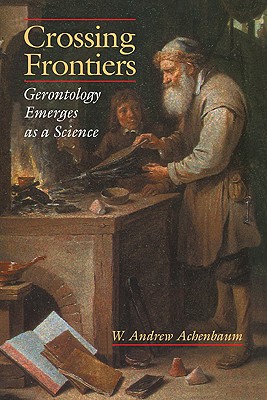
Gerontology did not emerge as a scientific field of inquiry in the United States until the twentieth century. By tracing intellectual networks and analyzing institutional patterns, Crossing Frontiers shows how old age became a 'problem' worth investigating and how a multidisciplinary orientation took shape.
Although philosophers, physicians, and others have long pondered the meanings and experiences of growing older, gerontology did not emerge as a scientific field of inquiry in the United States until the twentieth century. The study of aging borrows from a variety of other disciplines, including medicine, psychology, sociology and anthropology, but its own scientific basis is still developing. Despite dozens of aging-related journals, and a notable increase in state, regional, national and international networks, there are no widely shared techniques or distinctive methods. Theories of aging remain partial and tentative. By tracing intellectual networks and analyzing institutional patterns, Crossing Frontiers shows how old age became a 'problem' worth investigating and how a multidisciplinary orientation took shape. Gerontology is a marginal intellectual enterprise but its very strengths and weaknesses illuminate the politics of specialization and academic turf-fighting in U.S. higher education.
Get Crossing Frontiers by W. Andrew Achenbaum at the best price and quality guaranteed only at Werezi Africa's largest book ecommerce store. The book was published by Cambridge University Press and it has 296 pages.
Customers Who Bought This Also Bought
Adult Personality Development
KSh 22,500.00

I Have Been Assigned the Single Bird
KSh 5,700.00

Wash, Wear, and Care
KSh 4,850.00

The Melody
KSh 2,500.00

Material Citizenship in Dementia Care
KSh 3,600.00

I Have Been Assigned the Single Bird
KSh 4,150.00

My Last Eight Thousand Days
KSh 4,500.00
The Poetics and Politics of Tuareg Aging
KSh 3,050.00

Aging, Theory & Globalization
KSh 11,150.00
Sexuality and Aging
KSh 22,150.00
Studying Aging and Social Change
KSh 26,450.00
Socioeconomic Differences in Old Age Mortality
KSh 16,200.00