
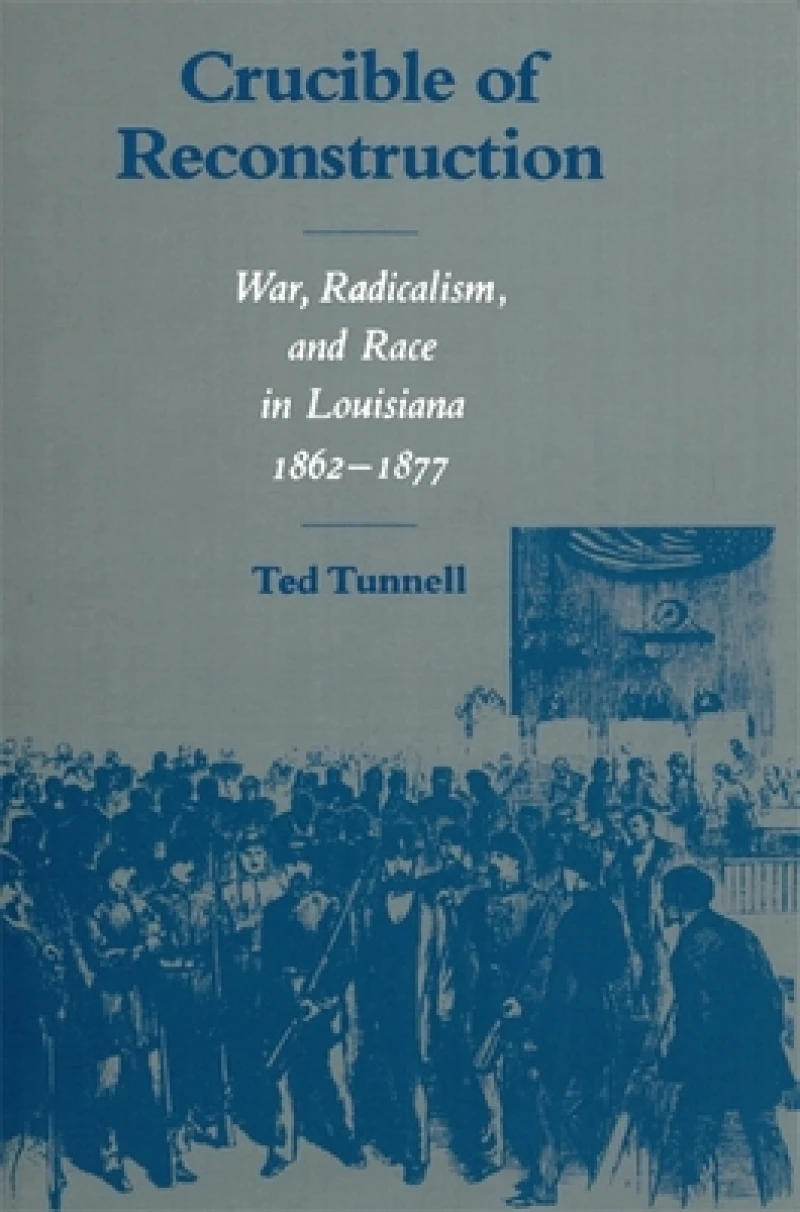
Crucible of Reconstruction : War, Radicalism, and Race in Louisiana, 1862-1877
by
Ted Tunnell
Book Details
Format
Paperback / Softback
ISBN-10
0807118036
ISBN-13
9780807118030
Publisher
Louisiana State University Press
Imprint
Louisiana State University Press
Country of Manufacture
US
Country of Publication
GB
Publication Date
Jul 1st, 1992
Print length
257 Pages
Weight
363 grams
Dimensions
23.00 x 15.10 x 1.50 cms
Product Classification:
History of the AmericasEarly modern history: c 1450/1500 to c 1700HistoryHistory of the Americas
Ksh 5,500.00
Werezi Extended Catalogue
0 in stock
Delivery Location
Delivery fee: Select location
Secure
Quality
Fast
Examines the byzantine complexities of Louisiana's restoration to the Union, from the capture of New Orleans to the downfall of the Radical Republicans a decade and a half later. Ted Tunnell writes with insight about wartime Reconstruction and the period of presidential Reconstruction, but his ultimate concern is with Radical Reconstruction.
In late April, 1862, Union warships slipped past the Confederate river forts below New Orleans and blasted the Rebel fleet guarding the city. Advancing overland, General Benjamin F. Butler occupied New Orleans on May Day, and for the duration of the war the Stars and Stripes waved over the Confederacy's largest city. The reconstruction of Louisiana began almost immediately.
In Crucible of Reconstruction, Ted Tunnell examines the byzantine complexities of Louisiana's restoration to the Union, from the capture of New Orleans to the downfall of the Radical Republicans a decade and a half later. He writes with insight about wartime Reconstruction and the period of presidential Reconstruction under Andrew Johnson, but his ultimate concern is with Radical Reconstruction and that uneasy coalition of Unionists, free blacks, and carpetbaggers that formed the Louisiana Republican party after Appomattox and struggled fitfully for a biracial society based on equality and justice.
One of the distinguishing features of Crucible of Reconstruction is its concern with the origins of Radicalism. Tunnell finds that nearly two-thirds of Louisiana Unionists were actually outsiders, men who had come to Louisiana from the North or from abroad. Of the remainder, many had either been born in the border slave states that sided with the North in 1861 or had been deeply influenced by Northern culture. The free blacks were the most radical element of the Republican party and for a brief but critical moment actually dominated the reconstruction process; with a black majority in the constitutional convention of 1867-1868, they drafted a civil rights program that made Louisiana's Reconstruction constitution, along with South Carolina's, a model of Republican Radicalism. In the end, though, the carpetbaggers dominated Republican Reconstruction. Although few in number, they controlled the immense federal bureaucracy centered in New Orleans, and in a government that depended on support from Washington for its very survival, they alone had influence on the Potomac.
For a generation historians have struggled to explain the destructive factionalism that crippled the Republican regimes in Louisiana and other Reconstruction states. In a thesis of wide applicability, Tunnel shows how Republican factionalism was actually rooted in a larger ""crisis of legitimacy."" Louisiana Republicans confronted enemies who challenged not merely their policies but their very right to exist, enemies whose overriding goal was to expunge the Republican party from the polity. Led by Governor Henry Clay Warmoth, a carpetbagger from Illinois, the Republicans responded to the crisis with a twofold strategy embodied in what Tunnell calls the policy of force and the policy of peace. The policy of force, while it partially deterred assaults on Republican voters, undermined northern support for Reconstruction. The policy of peace not only failed to conciliate white Louisianians, it generated the vicious factionalism that destroyed the Republican party from within. The Warmoth strategies were in fact mutually contradictory; they negated each other and demolished his government.
In his final chapter, Tunnell recounts the career of Marshall Harvey Twitchell, a Vermont carpetbagger who settled in north Louisiana in 1866. Twitchell's tragic story, gleaned from his unpublished autobiography and government records, provides a stunningly immediate reminder of the violent and unlawful conditions that existed during the final years of Reconstruction in Louisiana.
Tunnell's analyses of Unionism, of black and white political leadership, of Republican factionalism, and of the brutal eradication of Republicanism in the state make this one of the most fascinating and provocative of recent books on Reconstruction.
In Crucible of Reconstruction, Ted Tunnell examines the byzantine complexities of Louisiana's restoration to the Union, from the capture of New Orleans to the downfall of the Radical Republicans a decade and a half later. He writes with insight about wartime Reconstruction and the period of presidential Reconstruction under Andrew Johnson, but his ultimate concern is with Radical Reconstruction and that uneasy coalition of Unionists, free blacks, and carpetbaggers that formed the Louisiana Republican party after Appomattox and struggled fitfully for a biracial society based on equality and justice.
One of the distinguishing features of Crucible of Reconstruction is its concern with the origins of Radicalism. Tunnell finds that nearly two-thirds of Louisiana Unionists were actually outsiders, men who had come to Louisiana from the North or from abroad. Of the remainder, many had either been born in the border slave states that sided with the North in 1861 or had been deeply influenced by Northern culture. The free blacks were the most radical element of the Republican party and for a brief but critical moment actually dominated the reconstruction process; with a black majority in the constitutional convention of 1867-1868, they drafted a civil rights program that made Louisiana's Reconstruction constitution, along with South Carolina's, a model of Republican Radicalism. In the end, though, the carpetbaggers dominated Republican Reconstruction. Although few in number, they controlled the immense federal bureaucracy centered in New Orleans, and in a government that depended on support from Washington for its very survival, they alone had influence on the Potomac.
For a generation historians have struggled to explain the destructive factionalism that crippled the Republican regimes in Louisiana and other Reconstruction states. In a thesis of wide applicability, Tunnel shows how Republican factionalism was actually rooted in a larger ""crisis of legitimacy."" Louisiana Republicans confronted enemies who challenged not merely their policies but their very right to exist, enemies whose overriding goal was to expunge the Republican party from the polity. Led by Governor Henry Clay Warmoth, a carpetbagger from Illinois, the Republicans responded to the crisis with a twofold strategy embodied in what Tunnell calls the policy of force and the policy of peace. The policy of force, while it partially deterred assaults on Republican voters, undermined northern support for Reconstruction. The policy of peace not only failed to conciliate white Louisianians, it generated the vicious factionalism that destroyed the Republican party from within. The Warmoth strategies were in fact mutually contradictory; they negated each other and demolished his government.
In his final chapter, Tunnell recounts the career of Marshall Harvey Twitchell, a Vermont carpetbagger who settled in north Louisiana in 1866. Twitchell's tragic story, gleaned from his unpublished autobiography and government records, provides a stunningly immediate reminder of the violent and unlawful conditions that existed during the final years of Reconstruction in Louisiana.
Tunnell's analyses of Unionism, of black and white political leadership, of Republican factionalism, and of the brutal eradication of Republicanism in the state make this one of the most fascinating and provocative of recent books on Reconstruction.
Get Crucible of Reconstruction by at the best price and quality guaranteed only at Werezi Africa's largest book ecommerce store. The book was published by Louisiana State University Press and it has pages.

