
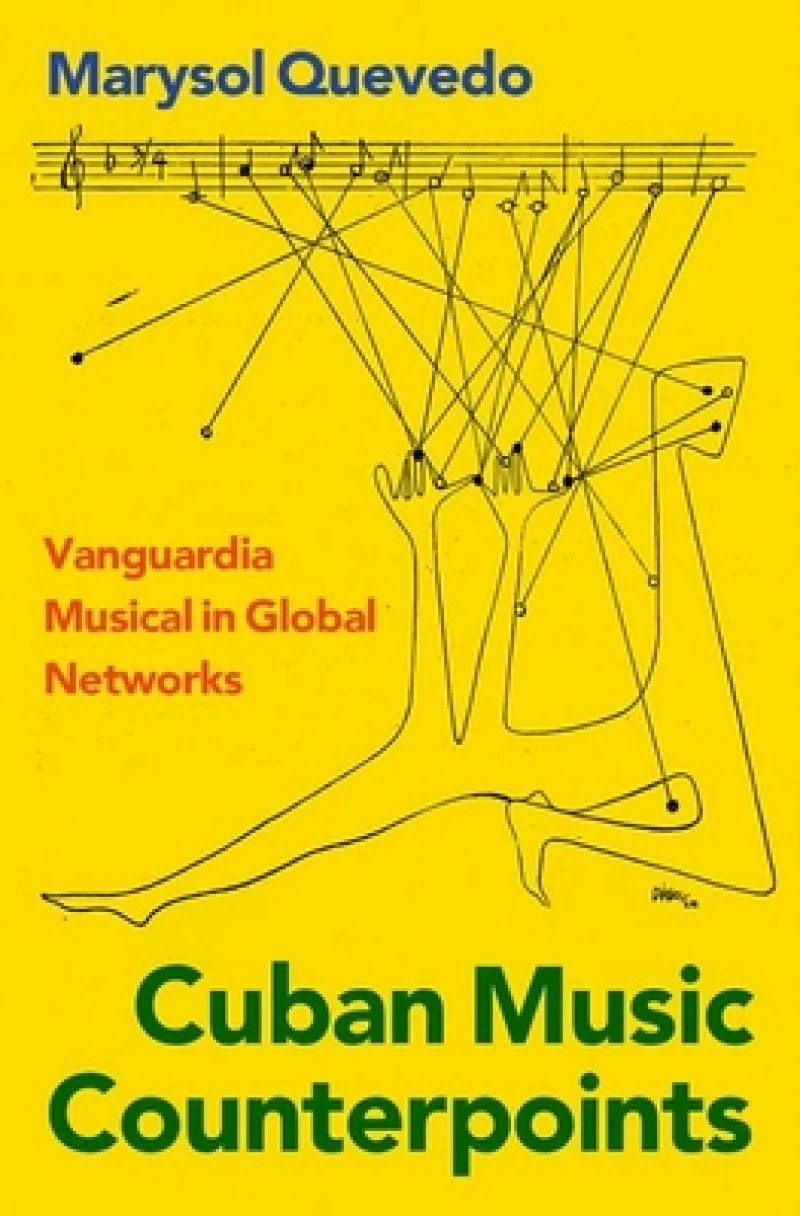
Cuban Music Counterpoints : Vanguardia Musical in Global Networks
Book Details
Format
Hardback or Cased Book
Book Series
CURRENTS IN LATIN AMER AND IBERIAN MUSIC
ISBN-10
0197552234
ISBN-13
9780197552230
Publisher
Oxford University Press Inc
Imprint
Oxford University Press Inc
Country of Manufacture
GB
Country of Publication
GB
Publication Date
Oct 4th, 2023
Print length
296 Pages
Weight
562 grams
Dimensions
16.40 x 23.70 x 2.70 cms
Product Classification:
Music reviews & criticism20th century & contemporary classical musicWorld music
Ksh 15,550.00
Werezi Extended Catalogue
0 in stock
Delivery Location
Delivery fee: Select location
Secure
Quality
Fast
Cuban Music Counterpoints traces the continuities and ruptures in the Cuban classical music scene between 1940 and 1991. The book focuses on specific events, objects, and compositions that reveal how composers forged connections with local and foreign composers, visual artists, writers, dancers, and film makers by placing them within emergent global, social, political, and cultural contexts.
Cuban Music Counterpoints maps the intellectual and artistic networks Cuban composers forged between 1940 and 1991 by exploring moments--concerts, festivals, recordings--that shed light on how they negotiated aesthetic and political agendas at local and international levels. Beginning with the modernist neoclassicism of the Grupo de Renovación Musical in the 1940s and its Pan Americanist backdrop, the book moves through the more turbulent 1950s, when a more politically engaged organization, the Sociedad Cultural Nuestro Tiempo, promoted contemporary socially engaged art of Cuba and the Americas. Their activities set the stage for the post-1959 Revolutionary period of aesthetic and political experimentation in the 1960s, subsequent institutionalization of the 1970s, and the pluralist global turn of the 1980s.Through musical analysis, reception history, and historical contextualization, various case studies demonstrate that, due to music''s polyvalent capacities, composers were able to experiment aesthetically with a much higher degree of freedom than their Cuban counterparts in other artistic fields--such as literature and visual arts--as well as their counterparts in other socialist countries, such as East Germany and the Soviet Union. Three key terms--innovation, revolution, and vanguardia--serve as anchors for exploring how composers tied the post-revolutionary present and future to the pre-revolutionary past. The aesthetic and political concepts of cubanía (Cubanness), national identity versus cosmopolitanism and universalism, modernism, Pan-Americanism, internationalism, socialism, and the revolution, guide our understandings of how Cuban composers created meaning and connected their work to vast local and global networks of art music production. This book sheds light not only on the classical music scene in Cuba, but also the international classical music network with which Cuban composers engaged during this time.
Get Cuban Music Counterpoints by at the best price and quality guaranteed only at Werezi Africa's largest book ecommerce store. The book was published by Oxford University Press Inc and it has pages.

