
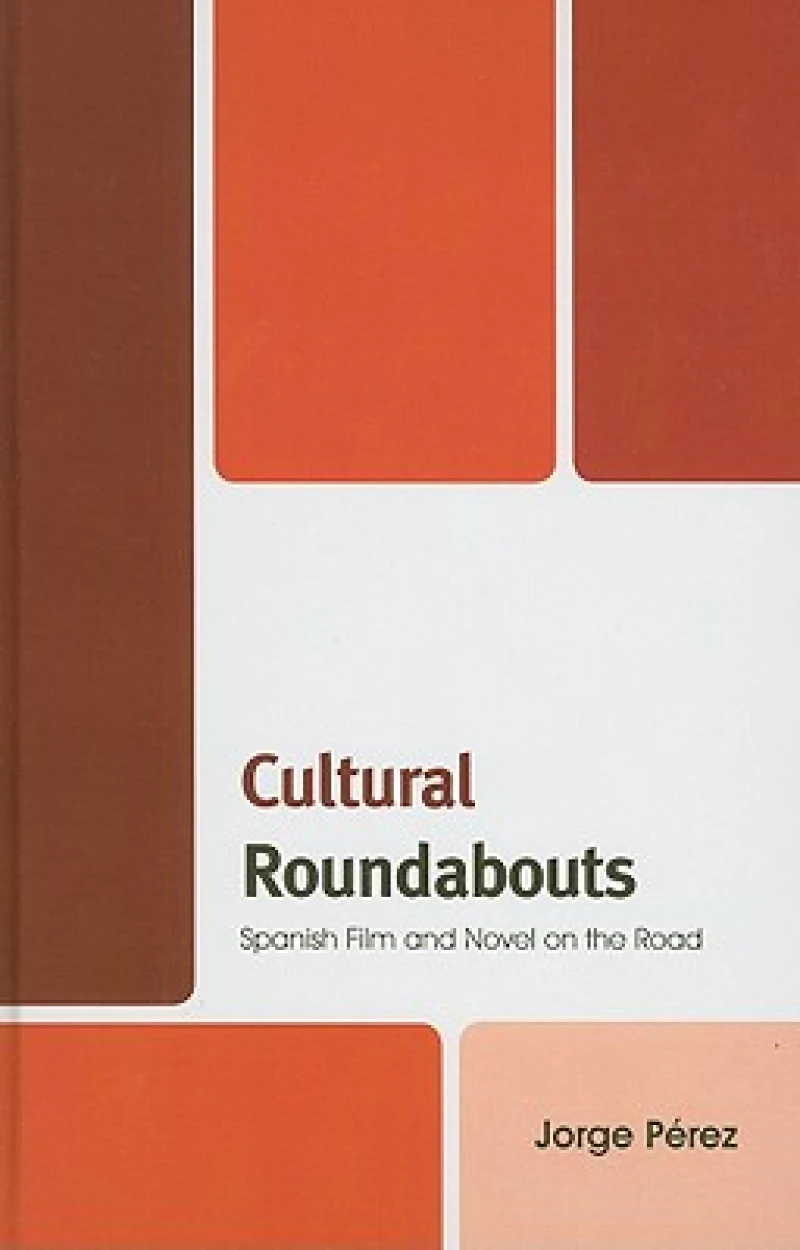
Cultural Roundabouts : Spanish Film and Novel on the Road
by
Jorge Perez
Book Details
Format
Hardback or Cased Book
ISBN-10
1611480043
ISBN-13
9781611480047
Publisher
Bucknell University Press
Imprint
Bucknell University Press
Country of Manufacture
US
Country of Publication
GB
Publication Date
Apr 18th, 2011
Print length
258 Pages
Weight
526 grams
Dimensions
23.90 x 16.20 x 2.30 cms
Product Classification:
Films, cinemaLiterary studies: fiction, novelists & prose writers
Ksh 16,550.00
Werezi Extended Catalogue
0 in stock
Delivery Location
Delivery fee: Select location
Secure
Quality
Fast
Cultural Roundabouts: Spanish Film and Novel on the Road, by Jorge Perez, offers the first comprehensive inquiry about the road genre in Spain. Road narratives have recently received some scholarly attention within the field of Peninsular Studies through a few articles and book chapters, but no book-length study has been published so far. This book investigates how Spanish authors such as Ignacio Martinez de Pison, Ray Loriga, Eugenio Fuentes, and Eugenia Rico, and filmmakers such as Juan Antonio Bardem, Cecilia Bartolome, Fernando Guillen Cuervo, and Mariano Barroso employ the road genre to address the reconfiguration of the social, economic, and cultural landscape of Spain since 1975. One of the premises of this book is that, in the context of Spanish culture, road movies and novels should be discussed concurrently, as they emerge as a response to the same socio-historical circumstances, share many thematic and iconographic traits, and show reciprocal influences. The road genre, broadly defined as movies and novels in which the characters travel by driving a vehicle across, out of, or into the Spanish territory, offers the opportunity to examine a country in movement and, thus, to reflect on the topic of national mobility. This genre brings to the fore the modernization of Spain, as highlighted by the remodeled highway system, the development of the automobile industry, and the changes in the landscape. In this study, Perez argues that road stories offer lenses through which one can observe contemporary Spain and its transformations, but also the shortcomings of its development. It is not a one-way journey of a whole community progressing at the same speed and along the same path. As the trope of the roundabout suggests, contemporary Spain seems to function with a fluid social and cultural circulation that allows movement from and to multiple directions. Yet, as with a roundabout in which specific traffic norms and hierarchies navigate flow, these narratives signal
Cultural Roundabouts: Spanish Film and Novel on the Road, by Jorge Pérez, offers the first comprehensive inquiry about the road genre in Spain. Road narratives have recently received some scholarly attention within the field of Peninsular Studies through a few articles and book chapters, but no book-length study has been published so far. This book investigates how Spanish authors such as Ignacio Martínez de Pisón, Ray Loriga, Eugenio Fuentes, and Eugenia Rico, and filmmakers such as Juan Antonio Bardem, Cecilia Bartolomé, Fernando Guillén Cuervo, and Mariano Barroso employ the road genre to address the reconfiguration of the social, economic, and cultural landscape of Spain since 1975. One of the premises of this book is that, in the context of Spanish culture, road movies and novels should be discussed concurrently, as they emerge as a response to the same socio-historical circumstances, share many thematic and iconographic traits, and show reciprocal influences. The road genre, broadly defined as movies and novels in which the characters travel by driving a vehicle across, out of, or into the Spanish territory, offers the opportunity to examine a country in movement and, thus, to reflect on the topic of national mobility. This genre brings to the fore the modernization of Spain, as highlighted by the remodeled highway system, the development of the automobile industry, and the changes in the landscape. In this study, Pérez argues that road stories offer lenses through which one can observe contemporary Spain and its transformations, but also the shortcomings of its development. It is not a one-way journey of a whole community progressing at the same speed and along the same path. As the trope of the roundabout suggests, contemporary Spain seems to function with a fluid social and cultural circulation that allows movement from and to multiple directions. Yet, as with a roundabout in which specific traffic norms and hierarchies navigate flow, these narratives signal
Get Cultural Roundabouts by at the best price and quality guaranteed only at Werezi Africa's largest book ecommerce store. The book was published by Bucknell University Press and it has pages.

