
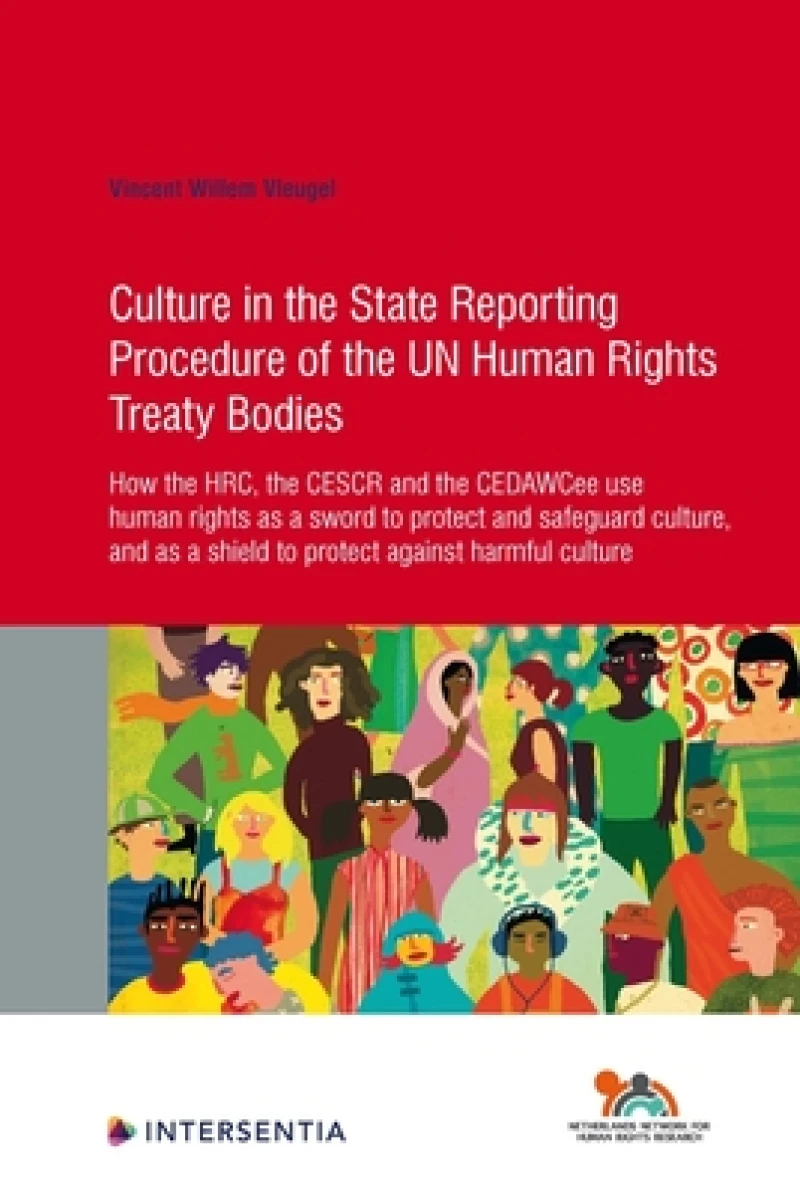
Culture in the State Reporting Procedure of the UN Human Rights Treaty Bodies : How the HRC, the CESCR and the CEDAWCee use human rights as a sword to protect and promote culture, and as a shield to protect against harmful culture
Book Details
Format
Paperback / Softback
Book Series
Human Rights Research Series
ISBN-10
1839700068
ISBN-13
9781839700064
Publisher
Intersentia Ltd
Imprint
Intersentia Ltd
Country of Manufacture
GB
Country of Publication
GB
Publication Date
Nov 24th, 2020
Print length
378 Pages
Weight
660 grams
Dimensions
16.90 x 24.50 x 2.40 cms
Product Classification:
Human rightsCivil rights & citizenship
Ksh 17,100.00
Werezi Extended Catalogue
0 in stock
Delivery Location
Delivery fee: Select location
Secure
Quality
Fast
Ever since the adoption of the Universal Declaration of Human Rights in 1948 there has been a debate on the issue of universality and cultural diversity. The UN human rights treaty bodies have an important role to play in ensuring a proper balance between safeguarding the universality of the rights, while at the same time leaving room for cultural particularities. This book examines how the UN treaty bodies, in particular the Human Rights Committee, the Committee on Economic, Social and Cultural Rights and the Committee on the Elimination of Discrimination against Women, fulfil this role.
Ever since the adoption of the Universal Declaration of Human Rights in 1948 there has been a debate on the issue of universality and cultural diversity. Nowadays, this debate is not so much framed in terms of opposites, but more in terms of reconciliation. Under the international human rights framework, States are allowed to take cultural particularities into account when implementing the treaties. The UN human rights treaty bodies which monitor the implementation of the treaties by States have an important role to play in ensuring a proper balance between safeguarding the universality of the rights, while at the same time leaving room for cultural particularities in the interpretation and implementation of those rights by States. This book examines how the UN treaty bodies, in particular the Human Rights Committee, the Committee on Economic, Social and Cultural Rights and the Committee on the Elimination of Discrimination against Women, fulfil this role. The research shows that human rights are used as a sword to protect and safeguard culture and cultural diversity, and as a shield to protect against harmful aspects of culture. It also looks in-depth at the dialogue between treaty bodies and States parties, and the way cultural arguments are dealt with. The study concludes that the treaty bodies are first and foremost guardians of the universality of human rights. They use their monitoring role not so much (actively) to reconcile universality and cultural diversity or to accommodate cultural variation, but more to determine the limits of such cultural variation.
Get Culture in the State Reporting Procedure of the UN Human Rights Treaty Bodies by at the best price and quality guaranteed only at Werezi Africa's largest book ecommerce store. The book was published by Intersentia Ltd and it has pages.

