
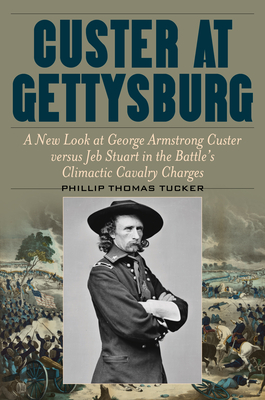
Custer at Gettysburg : A New Look at George Armstrong Custer versus Jeb Stuart in the Battle’s Climactic Cavalry Charges
Book Details
Format
Hardback
ISBN-10
0811738531
ISBN-13
9780811738538
Publisher
Stackpole Books
Imprint
Stackpole Books
Country of Manufacture
US
Country of Publication
GB
Publication Date
Jan 1st, 2020
Print length
480 Pages
Weight
772 grams
Dimensions
16.30 x 23.50 x 3.60 cms
Product Classification:
Modern history to 20th century: c 1700 to c 1900Military historyBattles & campaigns
KSh 5,050.00
Currently unavailable
0 in stock
Delivery Location
Delivery fee: Select location
Secure
Quality
Fast
George Armstrong Custer is famous for his fatal defeat at the Little Bighorn in 1876, but Custer’s baptism of fire came during the Civil War. After graduating last in the West Point class of 1861, Custer served from the First Battle of Bull Run (only a month after graduation) through Appomattox, where he witnessed the surrender. But Custer’s true rise to prominence began at Gettysburg in 1863. On the eve of the Battle of Gettysburg, only twenty-three years old and barely two years removed from being the goat of his West Point class, Custer received promotion to brigadier general and command – his first direct field command – of the Michigan Cavalry Brigade, the “Wolverines.” Now that he held general rank, Custer felt comfortable wearing the distinctive, some said gaudy, uniform that helped skyrocket him into fame and legend. However flashy he may have been in style, Custer did not disappoint his superiors, who promoted him in a search for more aggressive cavalry officers. At approximately noon on July 3, 1863, Custer and his men heard enemy cannon fire: Stuart’s signal to Lee that he was ready for action. Thus began the melee that was East Cavalry Field at Gettysburg. Much back and forth preceded Custer’s career-defining action. An hour or two into the battle, after many of his cavalrymen had been reduced to hand-to-hand infantry-style fighting, Custer ordered a charge of one of his regiments and led it into action himself, screaming one of the battle’s most famous lines: “Come on, you Wolverines!” Around three o’clock, Stuart mounted a final charge, which mowed down Union cavalry – until it ran into Custer’s Wolverines, who stood firm, with Custer wielding a sword at their head, and broke the Confederates’ last attack.In a book combining two popular subjects, Tucker recounts the story of Custer at Gettysburg with verve, shows how the Custer legend was born on the fields of the war’s most famous battle, and offers eye-opening new perspectives on Gettysburg’s overlooked cavalry battle.
George Armstrong Custer is famous for his fatal defeat at the Little Bighorn in 1876, but Custer’s baptism of fire came during the Civil War. After graduating last in the West Point class of 1861, Custer served from the First Battle of Bull Run (only a month after graduation) through Appomattox, where he witnessed the surrender. But Custer’s true rise to prominence began at Gettysburg in 1863. On the eve of the Battle of Gettysburg, only twenty-three years old and barely two years removed from being the goat of his West Point class, Custer received promotion to brigadier general and command – his first direct field command – of the Michigan Cavalry Brigade, the “Wolverines.” Now that he held general rank, Custer felt comfortable wearing the distinctive, some said gaudy, uniform that helped skyrocket him into fame and legend. However flashy he may have been in style, Custer did not disappoint his superiors, who promoted him in a search for more aggressive cavalry officers. At approximately noon on July 3, 1863, Custer and his men heard enemy cannon fire: Stuart’s signal to Lee that he was ready for action. Thus began the melee that was East Cavalry Field at Gettysburg. Much back and forth preceded Custer’s career-defining action. An hour or two into the battle, after many of his cavalrymen had been reduced to hand-to-hand infantry-style fighting, Custer ordered a charge of one of his regiments and led it into action himself, screaming one of the battle’s most famous lines: “Come on, you Wolverines!” Around three o’clock, Stuart mounted a final charge, which mowed down Union cavalry – until it ran into Custer’s Wolverines, who stood firm, with Custer wielding a sword at their head, and broke the Confederates’ last attack. In a book combining two popular subjects, Tucker recounts the story of Custer at Gettysburg with verve, shows how the Custer legend was born on the fields of the war’s most famous battle, and offers eye-opening new perspectives on Gettysburg’s overlooked cavalry battle.
Get Custer at Gettysburg by Phillip Thomas Tucker at the best price and quality guaranteed only at Werezi Africa's largest book ecommerce store. The book was published by Stackpole Books and it has 480 pages.
Customers Who Bought This Also Bought
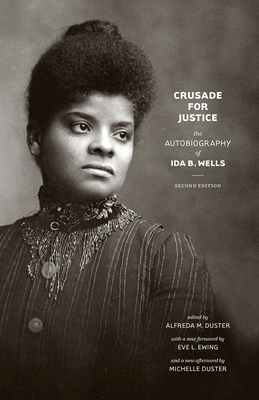
Crusade for Justice – The Autobiography of Ida B. Wells, Second Edition
KSh 4,050.00

Scramble for Africa
KSh 3,400.00
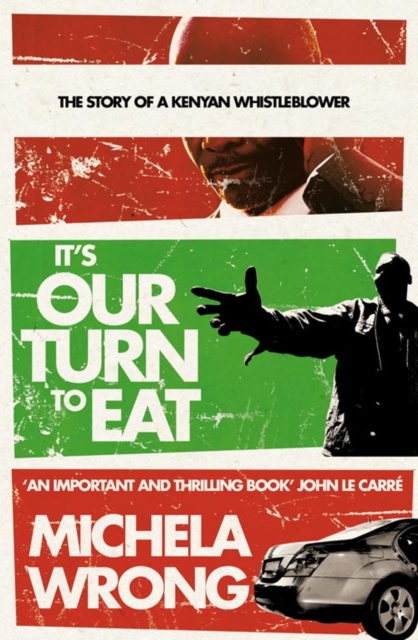
Its Our Turn to Eat
KSh 2,350.00
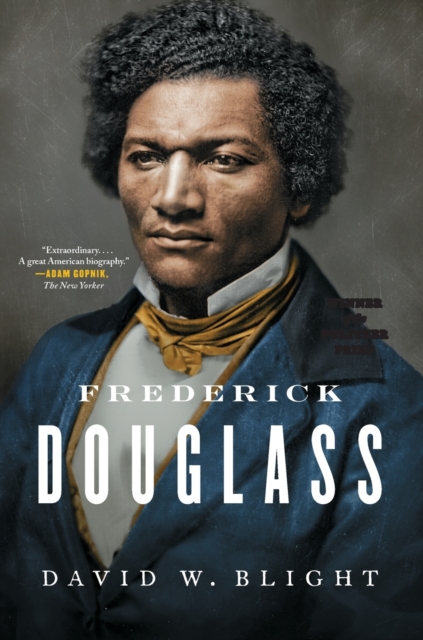
Frederick Douglass
KSh 3,350.00

Anarchy
KSh 2,700.00

Second Treatise of Government – Norton Library
KSh 1,600.00
What Matters in Jane Austen?
KSh 2,700.00

The Life Of The Mind
KSh 3,950.00

Napoleon The Great
KSh 3,600.00
Culture and Imperialism
KSh 2,700.00
Master Slave Husband Wife
KSh 2,000.00

Letters on England
KSh 2,350.00
More by Phillip Thomas Tucker
Alexander Hamilton and the Battle of Yorktown, October 1781
KSh 3,600.00

Emily D. West and the "Yellow Rose of Texas" Myth
KSh 5,700.00

Blood in the Snow
KSh 5,950.00
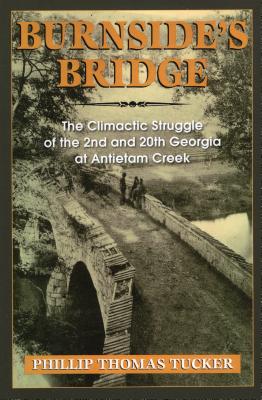
Burnside'S Bridge
KSh 2,700.00
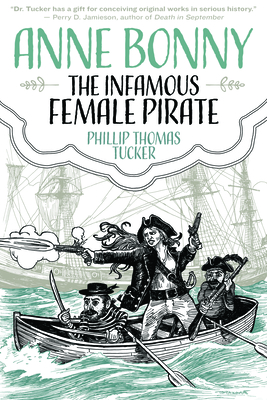
Anne Bonny: The Infamous Female Pirate
KSh 3,050.00
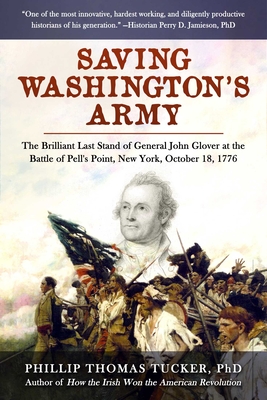
Saving Washington''s Army
KSh 3,600.00
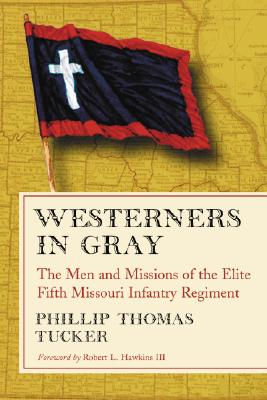
Westerners in Gray
KSh 5,650.00
Ranger Raid
KSh 5,400.00

Brothers in Liberty
KSh 5,650.00
Cathy Williams
KSh 2,900.00

Cathy Williams
KSh 3,750.00
Kings Mountain
KSh 5,050.00
