
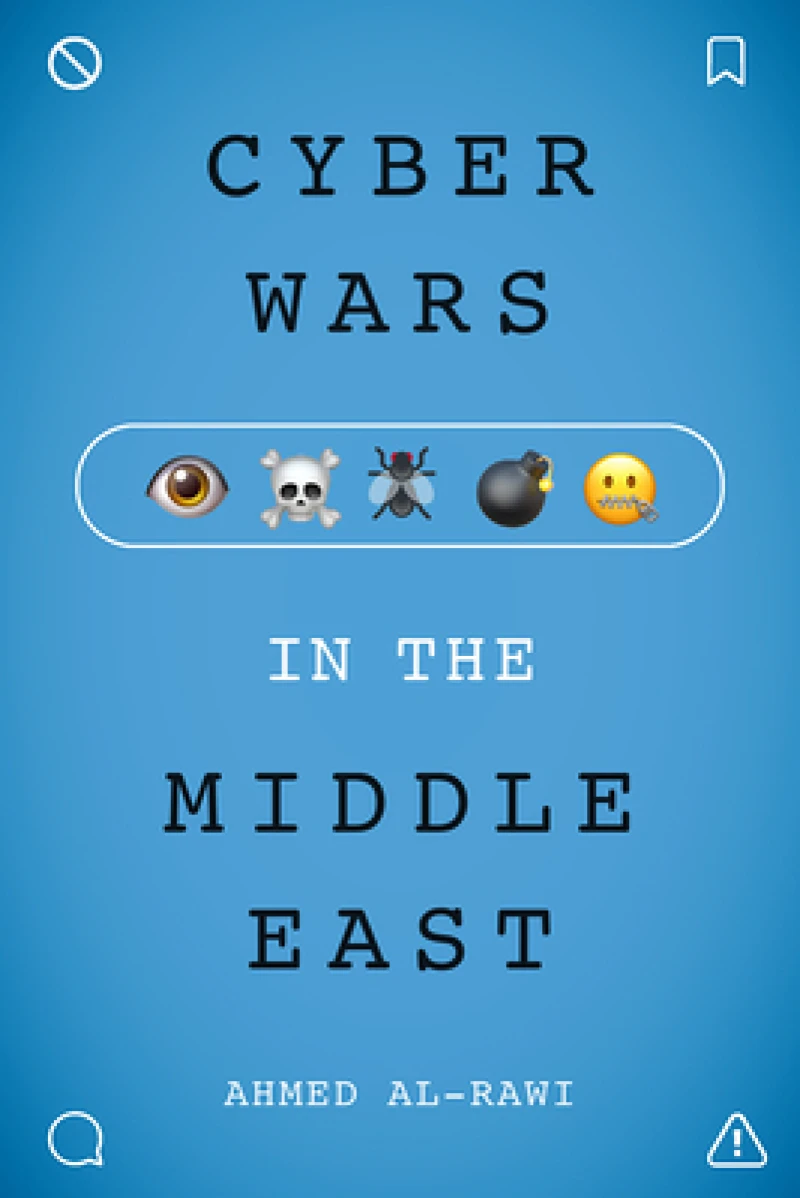
Cyberwars in the Middle East
Book Details
Format
Paperback / Softback
ISBN-10
1978810105
ISBN-13
9781978810105
Publisher
Rutgers University Press
Imprint
Rutgers University Press
Country of Manufacture
US
Country of Publication
GB
Publication Date
Jul 16th, 2021
Print length
192 Pages
Weight
274 grams
Dimensions
15.10 x 22.90 x 2.00 cms
Ksh 4,500.00
Werezi Extended Catalogue
0 in stock
Delivery Location
Delivery fee: Select location
Secure
Quality
Fast
Argues that hacking is a form of online political disruption whose influence flows vertically in two directions or horizontally. This book is the first of its kind to shine a light on many ways that governments and hackers are perpetrating cyber attacks in the Middle East and beyond, and to show the ripple effect of these attacks.
Cyberwars in the Middle East argues that hacking is a form of online political disruption whose influence flows vertically in two directions (top-bottom or bottom-up) or horizontally. These hacking activities are performed along three political dimensions: international, regional, and local. Author Ahmed Al-Rawi argues that political hacking is an aggressive and militant form of public communication employed by tech-savvy individuals, regardless of their affiliations, in order to influence politics and policies. Kenneth Waltz’s structural realism theory is linked to this argument as it provides a relevant framework to explain why nation-states employ cyber tools against each other.
On the one hand, nation-states as well as their affiliated hacking groups like cyber warriors employ hacking as offensive and defensive tools in connection to the cyber activity or inactivity of other nation-states, such as the role of Russian Trolls disseminating disinformation on social media during the US 2016 presidential election. This is regarded as a horizontal flow of political disruption. Sometimes, nation-states, like the UAE, Saudi Arabia, and Bahrain, use hacking and surveillance tactics as a vertical flow (top-bottom) form of online political disruption by targeting their own citizens due to their oppositional or activists’ political views. On the other hand, regular hackers who are often politically independent practice a form of bottom-top political disruption to address issues related to the internal politics of their respective nation-states such as the case of a number of Iraqi, Saudi, and Algerian hackers. In some cases, other hackers target ordinary citizens to express opposition to their political or ideological views which is regarded as a horizontal form of online political disruption. This book is the first of its kind to shine a light on many ways that governments and hackers are perpetrating cyber attacks in the Middle East and beyond, and to show the ripple effect of these attacks.
On the one hand, nation-states as well as their affiliated hacking groups like cyber warriors employ hacking as offensive and defensive tools in connection to the cyber activity or inactivity of other nation-states, such as the role of Russian Trolls disseminating disinformation on social media during the US 2016 presidential election. This is regarded as a horizontal flow of political disruption. Sometimes, nation-states, like the UAE, Saudi Arabia, and Bahrain, use hacking and surveillance tactics as a vertical flow (top-bottom) form of online political disruption by targeting their own citizens due to their oppositional or activists’ political views. On the other hand, regular hackers who are often politically independent practice a form of bottom-top political disruption to address issues related to the internal politics of their respective nation-states such as the case of a number of Iraqi, Saudi, and Algerian hackers. In some cases, other hackers target ordinary citizens to express opposition to their political or ideological views which is regarded as a horizontal form of online political disruption. This book is the first of its kind to shine a light on many ways that governments and hackers are perpetrating cyber attacks in the Middle East and beyond, and to show the ripple effect of these attacks.
Get Cyberwars in the Middle East by at the best price and quality guaranteed only at Werezi Africa's largest book ecommerce store. The book was published by Rutgers University Press and it has pages.

