
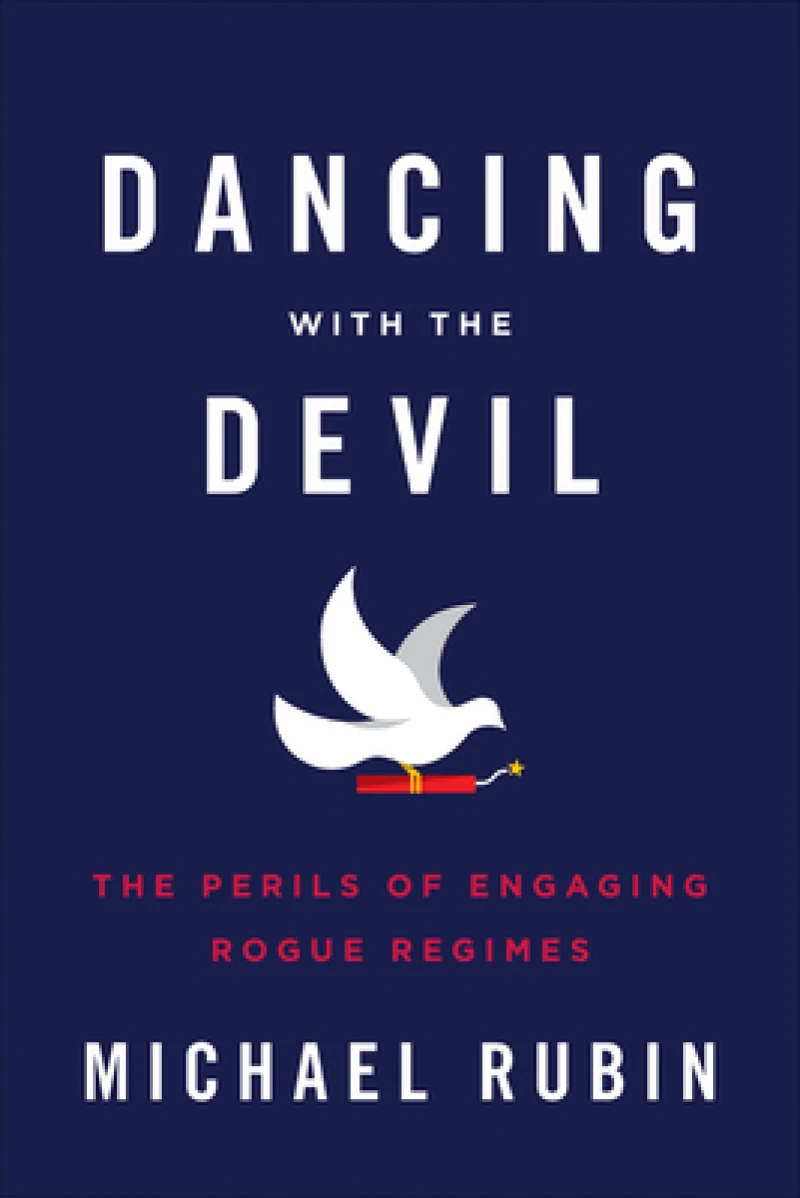
Dancing with the Devil : The Perils of Engaging Rogue Regimes
Book Details
Format
Hardback or Cased Book
ISBN-10
159403723X
ISBN-13
9781594037238
Publisher
Encounter Books,USA
Imprint
Encounter Books,USA
Country of Manufacture
GB
Country of Publication
GB
Publication Date
Apr 3rd, 2014
Print length
384 Pages
Weight
779 grams
Product Classification:
Middle Eastern historyDiplomacyTerrorism, armed struggle
Ksh 3,850.00
Re-Printing
0 in stock
Delivery Location
Delivery fee: Select location
Secure
Quality
Fast
The world has never been as dangerous as it is now. Rogue regimes--governments and groups which eschew diplomatic normality, sponsor terrorism, and proliferate nuclear weapons--challenge the United States around the globe. The American response of first resort is to talk. "It never hurts to talk to enemies." Seldom is conventional wisdom so wrong.
The world has seldom been as dangerous as it is now. Rogue regimes—governments and groups that eschew diplomatic normality, sponsor terrorism, and proliferate nuclear weapons—threaten the United States around the globe. Because sanctions and military action are so costly, the American strategy of first resort is dialogue, on the theory that “it never hurts to talk to enemies.” Seldom is conventional wisdom so wrong.
Engagement with rogue regimes is not cost-free, as Michael Rubin demonstrates by tracing the history of American diplomacy with North Korea, Iran, Iraq, Libya, the Taliban’s Afghanistan, and Pakistan. Further challenges to traditional diplomacy have come from terrorist groups, such as the PLO in the 1970s and 1980s, or Hamas and Hezbollah in the last two decades. The argument in favor of negotiation with terrorists is suffused with moral equivalence, the idea that one man’s terrorist is another man’s freedom fighter. Rarely does the actual record of talking to terrorists come under serious examination.
While soldiers spend weeks developing lessons learned after every exercise, diplomats generally do not reflect on why their strategy toward rogues has failed, or consider whether their basic assumptions have been faulty. Rubin’s analysis finds that rogue regimes all have one thing in common: they pretend to be aggrieved in order to put Western diplomats on the defensive. Whether in Pyongyang, Tehran, or Islamabad, rogue leaders understand that the West rewards bluster with incentives and that the U.S. State Department too often values process more than results.
Engagement with rogue regimes is not cost-free, as Michael Rubin demonstrates by tracing the history of American diplomacy with North Korea, Iran, Iraq, Libya, the Taliban’s Afghanistan, and Pakistan. Further challenges to traditional diplomacy have come from terrorist groups, such as the PLO in the 1970s and 1980s, or Hamas and Hezbollah in the last two decades. The argument in favor of negotiation with terrorists is suffused with moral equivalence, the idea that one man’s terrorist is another man’s freedom fighter. Rarely does the actual record of talking to terrorists come under serious examination.
While soldiers spend weeks developing lessons learned after every exercise, diplomats generally do not reflect on why their strategy toward rogues has failed, or consider whether their basic assumptions have been faulty. Rubin’s analysis finds that rogue regimes all have one thing in common: they pretend to be aggrieved in order to put Western diplomats on the defensive. Whether in Pyongyang, Tehran, or Islamabad, rogue leaders understand that the West rewards bluster with incentives and that the U.S. State Department too often values process more than results.
Get Dancing with the Devil by at the best price and quality guaranteed only at Werezi Africa's largest book ecommerce store. The book was published by Encounter Books,USA and it has pages.

