
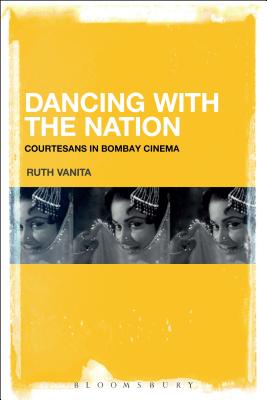
Dancing with the Nation : Courtesans in Bombay Cinema
by
Ruth Vanita
Book Details
Format
Paperback / softback
ISBN-10
1501357263
ISBN-13
9781501357268
Publisher
Bloomsbury Publishing Plc
Imprint
Bloomsbury Academic
Country of Manufacture
GB
Country of Publication
GB
Publication Date
Aug 22nd, 2019
Print length
232 Pages
Weight
342 grams
Dimensions
15.20 x 22.80 x 1.80 cms
Product Classification:
IndiaDigital, video and new media artsElectronic, holographic & video artFilms, cinemaFilm theory & criticismFilms, cinemaFilm history, theory or criticismMedia, entertainment, information and communication industriesMedia, information & communication industriesCinema industryFilm, TV and Radio industries
KSh 7,050.00
Currently unavailable
0 in stock
Delivery Location
Delivery fee: Select location
Secure
Quality
Fast
Indian cinema is the only body of world cinema that depicts courtesans as important characters. In early films courtesan characters transmitted Indian classical dance, music and aesthetics to large audiences. They represent the nation’s past, tracing their heritage to the fourth-century Kamasutra and to nineteenth-century courtly cultures, but they are also the first group of modern women in Hindi films. They are working professionals living on their own or in matrilineal families. Like male protagonists, they travel widely and develop networks of friends and chosen kin. They have relations with men outside marriage and become single mothers. Courtesan films are heroine-oriented and almost every major female actor has played this role. Challenging received wisdom, Vanita demonstrates that a larger number of courtesans in Bombay cinema are Hindu and indeterminate than are Muslim, and that films depict their culture as hybrid Hindu-Muslim, not Islamicate. Courtesans speak in the ambiguous voice of the modern nation, inviting spectators to seize pleasure here and now but also to search for the meaning of life. Vanita''s groundbreaking study of courtesans and courtesan imagery in 235 films brings fresh evidence to show that the courtesan figure shapes the modern Indian erotic, political and religious imagination.
Get Dancing with the Nation by Ruth Vanita at the best price and quality guaranteed only at Werezi Africa's largest book ecommerce store. The book was published by Bloomsbury Publishing Plc and it has 232 pages.
Customers Who Bought This Also Bought

How To Do Nothing
KSh 2,700.00

The Art of Marvel''s Spider-Man 2
KSh 8,200.00

Spider-Man: Across the Spider-Verse: The Art of the Movie
KSh 6,400.00

Changing Moods
KSh 8,650.00

L'art de l'IA
KSh 3,100.00

The South Never Plays Itself
KSh 6,300.00

Esoteric Hollywood 3
KSh 3,800.00

The Art of Assassin''s Creed Black Flag Resynced
KSh 7,200.00

The Future of New Testament Studies
KSh 5,400.00

Gamers 2
KSh 2,950.00

A History of Artists' Film and Video in Britain
KSh 8,250.00

Digital Memory and the Archive
KSh 3,800.00


