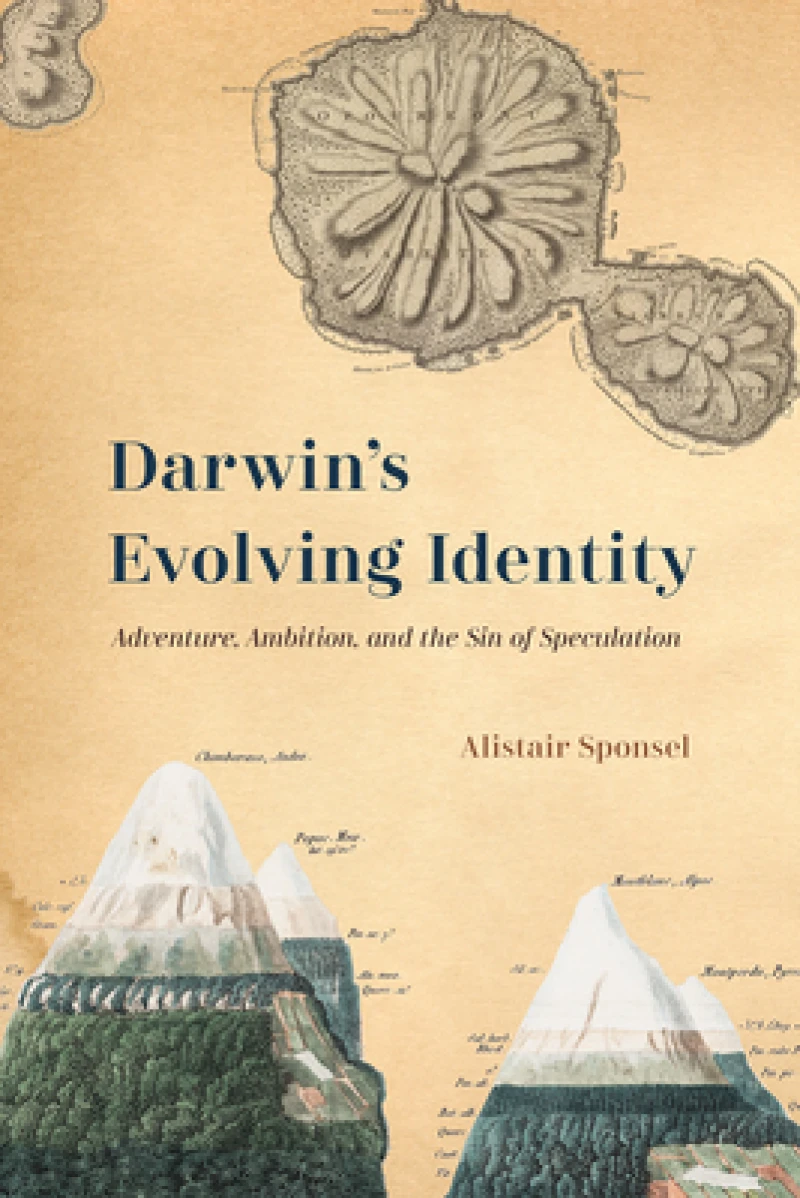
Darwin's Evolving Identity : Adventure, Ambition, and the Sin of Speculation
Book Details
Format
Hardback or Cased Book
ISBN-10
022652311X
ISBN-13
9780226523118
Publisher
The University of Chicago Press
Imprint
University of Chicago Press
Country of Manufacture
US
Country of Publication
GB
Publication Date
Mar 21st, 2018
Print length
336 Pages
Weight
642 grams
Dimensions
16.40 x 23.40 x 2.90 cms
Product Classification:
History of scienceEvolution
Ksh 9,250.00
Werezi Extended Catalogue
0 in stock
Delivery Location
Delivery fee: Select location
Secure
Quality
Fast
Why against his mentor's exhortations to publish did Charles Darwin take twenty years to reveal his theory of evolution by natural selection? In Darwin's Evolving Identity, Alistair Sponsel argues that Darwin adopted this cautious approach in order to atone for mistakes he had made as a young geological author. Darwin recoiled from getting his "fingers burned" by the reaction to his ambitious theorizing during the Beagle voyage and afterward in his publishing debut masterminded by the provocative geologist Charles Lyell. Far from being tormented by guilt about developing his evolutionary theory, Darwin was chastened by a publishing strategy that had forced him to disavow his "sin of speculation" about coral reefs, volcanoes, and earthquakes. It was this obligation to moderate his theoretical ambitions in general, rather than the prospect of public outcry over evolution in particular, that made Darwin such a cautious author of Origin of Species. Drawing on his own ambitious research in Darwin's manuscripts and at the Beagle's remotest ports of call, Sponsel takes us from the ocean to the Origin and beyond, providing a vivid new picture of Darwin's career as a voyaging naturalist and metropolitan author and, through this example, of the range of skills involved in the development of scientific theories.
Get Darwin's Evolving Identity by at the best price and quality guaranteed only at Werezi Africa's largest book ecommerce store. The book was published by The University of Chicago Press and it has pages.