
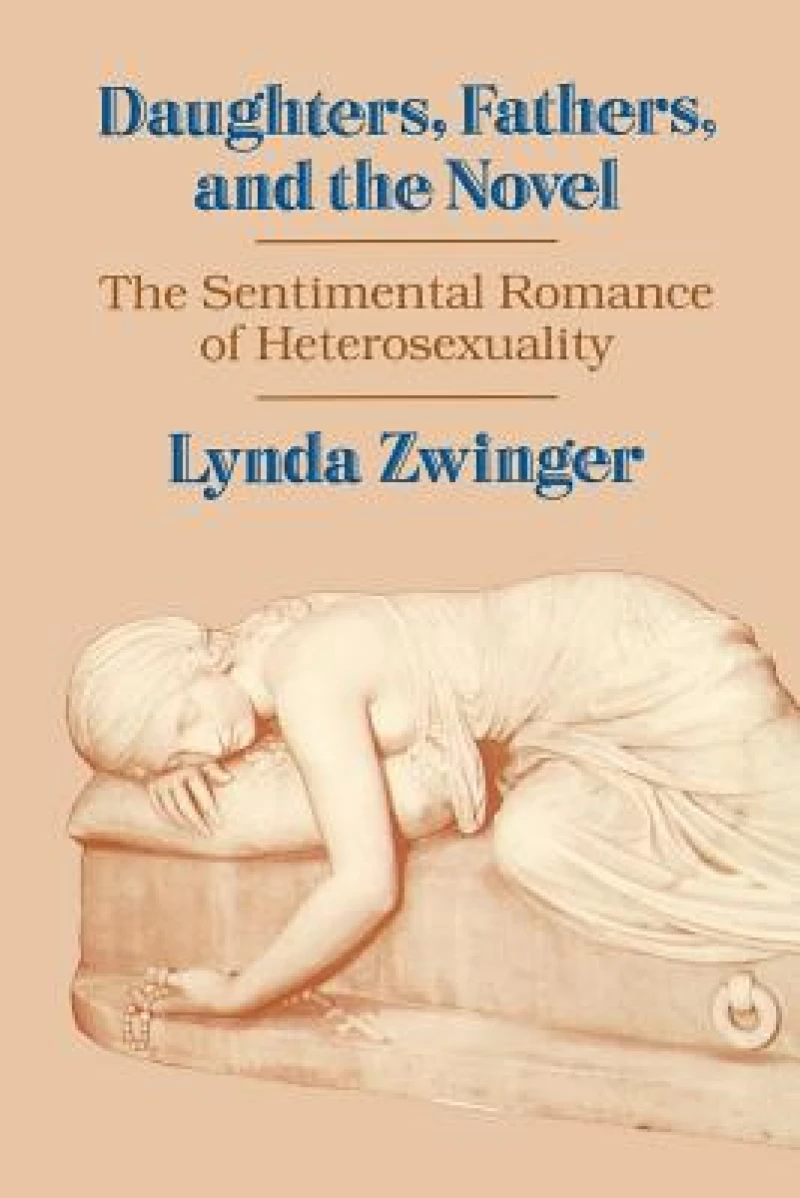
Daughters, Fathers and the Novel : Sentimental Romance of Heterosexuality
Book Details
Format
Paperback / Softback
ISBN-10
0299128547
ISBN-13
9780299128548
Publisher
University of Wisconsin Press
Imprint
University of Wisconsin Press
Country of Manufacture
US
Country of Publication
GB
Publication Date
Apr 15th, 1991
Print length
184 Pages
Weight
300 grams
Dimensions
22.80 x 15.40 x 1.10 cms
Ksh 2,600.00
Temporarily out of stock, due soon
0 in stock
Delivery Location
Delivery fee: Select location
Secure
Quality
Fast
A study of the father-daughter story - a relatively neglected dimension of the family romance. Zwinger analyzes ""high-brow"" and ""low-brow"" novels and examines five works in particular: ""Clarissa Harlowe"", ""Dombey and Son"", ""Little Women"", ""The Golden Bowl"" and ""The Story of O"".
Daughters, Fathers, and the Novel is a provocative study of the father-daughter story - a relatively neglected dimension of the family romance. It has important implications for the history of the novel, for our understanding of key texts in that history, and for theories concerning the representation of gender, family relations, and heterosexuality in Western culture. In the English and American novel, argues Zwinger, the ""good woman"" is a father''s daughter and constructed to the very particular specifications of an omnipresent and unvoiced paternal desire. Zwinger supports her case with an analysis of both ""high brow"" and ""low brow"" novels and with brilliant textual analyses of five novels in particular: ""Clarissa Harlowe"", ""Dombey and Son"", ""Little Women"", ""The Golden Bowl"" and ""The Story of O"". In the dominant discourse of Anglo-Saxon culture, the father''s daughter figured sentimentally, simultaneously provides alibi and cornerstone to the patriarchal edifices of domesticity and desire. Zwinger''s analysis of the sexual politics embodied in the figure of the sentimental daughter raises compelling critical and cultural issues. In her conclusion, Zwinger offers a broad overview of the 19th-century novel, asking what difference it makes when the writer is a daughter. She shows how the daughter''s family romance pictures the father as inadequate, ironically requiring the sentimental daughter as patriarchal prop. She develops a useful concept of hysteria and argues that generic ""disorder"" and hysterical ""intrusions"" mark the family romantic novels of Jane Austen, Emily and Charlotte Bronte, and George Eliot. And finally, she makes the case that the daughter''s choice to stay home is not necessarily an act of simple complicity: for, by staying home, she comes as close as she can to disrupting the father-daughter romance.
Get Daughters, Fathers and the Novel by at the best price and quality guaranteed only at Werezi Africa's largest book ecommerce store. The book was published by University of Wisconsin Press and it has pages.

