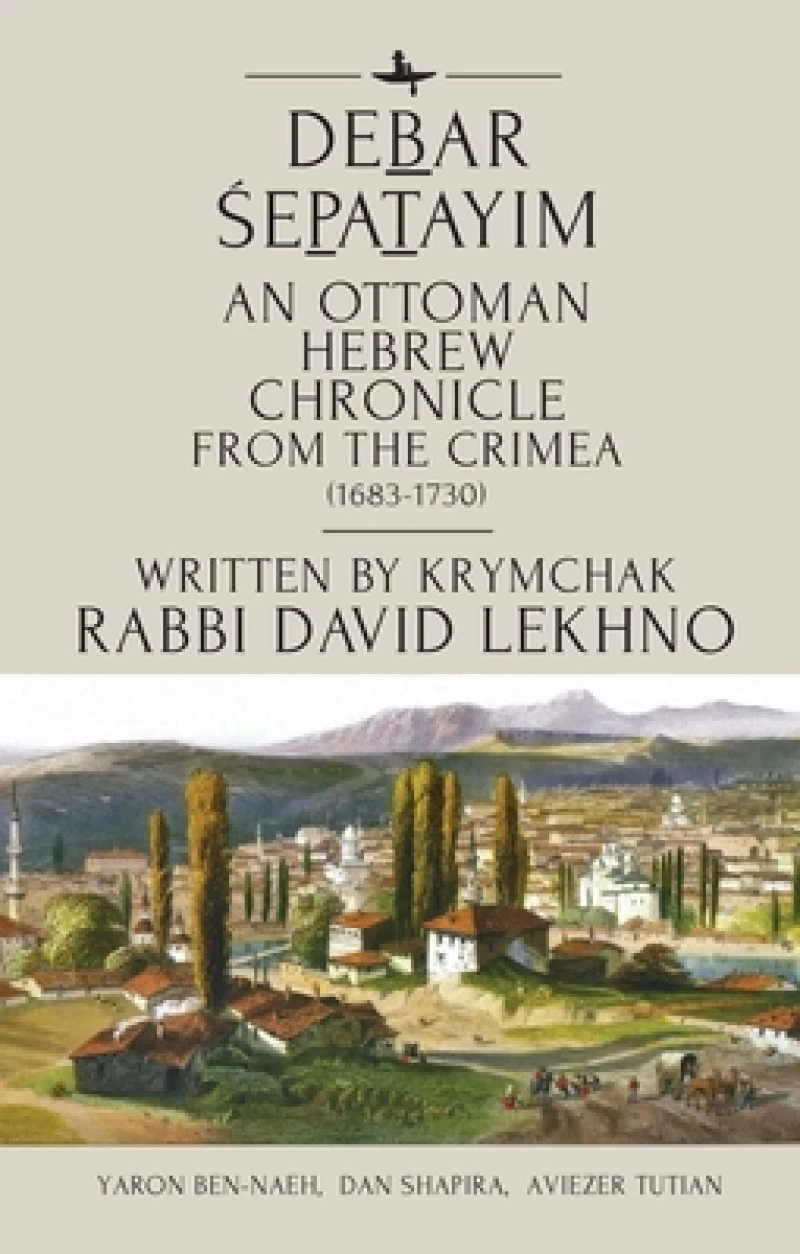
This previously unpublished chronicle contains valuable information on the Crimean Khanate and its relations with the Ottoman state between 1680-1730, as well as on other events in this important period. It was originally written by a local Jewish rabbi in Semi-Biblical Hebrew and was translated from the extant manuscripts.
“The text includes important information not only on Crimean Jews but also on the Crimean Khanate itself and its relations with its neighbors, mainly the Ottomans and Russians as well as the Habsburgs, Venetians, Caucasians and Safavids. It presents Crimean, including Jewish, points of view on events, namely, the view from the periphery, not from the centers of political power. This is really one of the main contributions of this chronicle: deriving from a region poorer, as far as archival documentary material is concerned, than imperial capitals. Similarly, local sources can provide richer information on the Crimean Jews. … The editors/translators did a very thorough work in identifying personalities and events, adding much valuable information. This is an important contribution to Ottoman, Crimean, and Jewish history told from a Jewish Crimean perspective.”
— Rachel Simon, AJL News and Reviews, July/August 2022
"The steady growth in the recent decades of Ottoman Studies is partly due to the availability of extensive records in the state archives and a vast collection of historical narratives. While a blessing to historians, the drawback of the easy accessibility of this body of documentation is that Ottoman history has been too often written from the perspective of the imperial center in Istanbul. Wary of this complication, historians have turned their attention to new sources and topics. Increasingly, studies have focused on unearthing viewpoints that do not necessarily reflect the imperial ideology of the Ottoman state. Works such as the current edition of
Debar Śepatayim open new avenues of discovering different perspectives within Ottoman society.
Debar Śepatayim is a historical narrative with an emphasis on political happenings mainly from the Crimean perspective. The author, David Lekhno, evidently avails himself of the accounts of a few informants from the region. While his source base causes him to follow and imitate an accepted annalistic style and thereby devote attention primarily to military and political affairs, as a learned Jewish scholar, his attitude to and interpretation of events are unmistakably marked by his own worldview. The chronicle demonstrates to us the connected worlds of the people living in lands under the Ottoman cultural influence. It is stimulating to observe that while inspired by different cultural and religious traditions, the subjects of the Ottoman and specifically Crimean polities could well be engaged in a shared political goal. Readers of
Debar Śepatayim will find a rich world as seen through the eyes of a Crimean Jewish individual in the early seventeenth century. Those interested in the history of the Crimean khanate, Ottoman and Russian empires, and the politics of the northern lands of the Black Sea will appreciate this carefully annotated translation."
—Hakan T. Karateke, Professor of Ottoman and Turkish Culture, Language, and Literature, University of Chicago
Get Debar Sepatayim by at the best price and quality guaranteed only at Werezi Africa's largest book ecommerce store. The book was published by Academic Studies Press and it has pages.