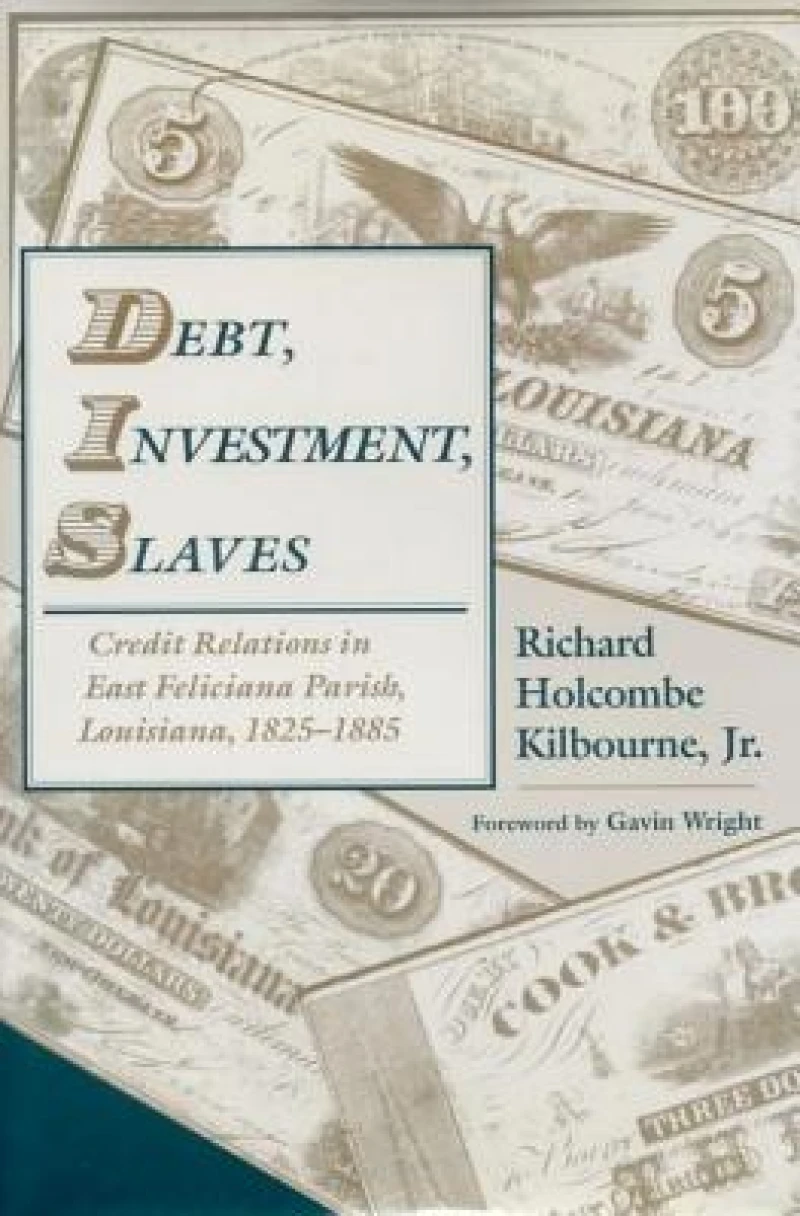
Debt, Investment, Slaves : Credit Relations in East Feliciana Parish, Louisiana, 1825-1885
Book Details
Format
Paperback / Softback
ISBN-10
0817357750
ISBN-13
9780817357757
Publisher
The University of Alabama Press
Imprint
The University of Alabama Press
Country of Manufacture
US
Country of Publication
GB
Publication Date
Apr 1st, 2014
Print length
222 Pages
Weight
525 grams
Dimensions
23.50 x 15.60 x 2.30 cms
Product Classification:
HistoryFinanceFinance and the finance industryHistory
Ksh 3,950.00
Temporarily out of stock, due soon
0 in stock
Delivery Location
Delivery fee: Select location
Secure
Quality
Fast
A thorough survey of parish mortgage records and other manuscript collections led to the conclusion that most credit relationships, collateralized and uncollateralized, were grounded in slave property as opposed to land or other forms of wealth. Uncollateralized debt was directly dependent on the relative wealth of parish residents, and the bulk of most portfolios consisted of slaves.
Emancipation and the Civil War occasioned a monumental credit implosion from which the local economy never recovered, at least for the remainder of the 19th century. Kilbourne makes an extensive examination of postwar debt distress and the evolution of sharecropping and tenancy. Even the wealthiest households were in the throes of debt distress as was evidenced by the numerous suits by wives for separations of property.
A peculiar recoding requirement for crop privileges and pledges in the years from 1870 to 1880 made it possible to determine the amount of credit available in the postwar decades. Kilbourne shows that credit facilities contracted by 90 percent in the two decades following the Civil War. The decline in credit facilities parallels the decline in household wealth levels.
Kilbourne disagrees with earlier scholars on the role of furnishing merchants in shaping the postbellum agricultural order. Furnishing merchants did become relatively more important in financing agriculture in the postwar decade, but they were not the successors of antebellum firms. Local merchants actually provided less credit than they had furnished before the Civil War to small cotton farmers who had made up two-thirds of the growers in the parish in 1860.
Slavery made for a unique labor market, and this situation influenced the evolution of the credit system in the region. Emancipation was a revolutionary break with what had gone before. The focus of the credit system shifted from slaves to cotton. Land did form most postbellum planter portfolios, but it did not fill the void left by emancipation, and wealth levels remained substantially below antebellum ones. The credit system became highly localized in the postwar decades, and this fact was instrumental in shaping postbellum planting arrangements.
Get Debt, Investment, Slaves by at the best price and quality guaranteed only at Werezi Africa's largest book ecommerce store. The book was published by The University of Alabama Press and it has pages.