
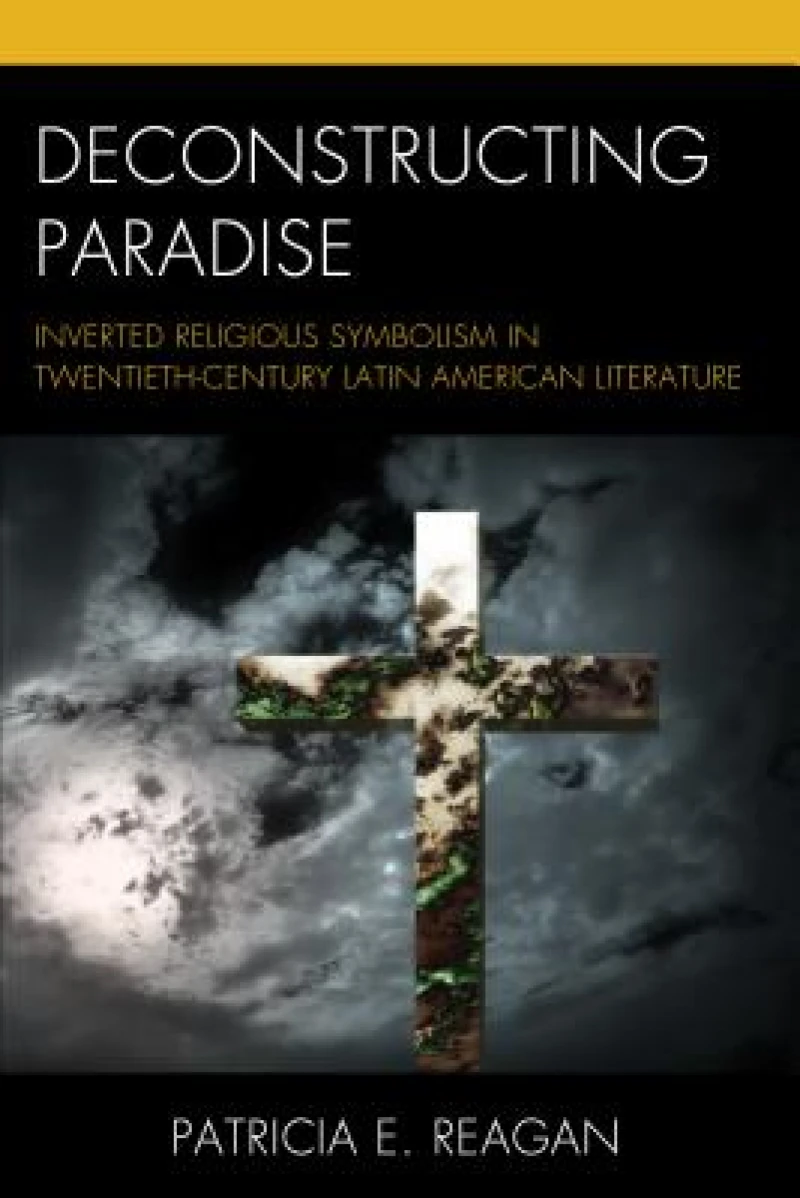
Deconstructing Paradise : Inverted Religious Symbolism in Twentieth-Century Latin American Literature
Book Details
Format
Hardback or Cased Book
ISBN-10
1498524710
ISBN-13
9781498524711
Publisher
Bloomsbury Publishing Plc
Imprint
Lexington Books
Country of Manufacture
GB
Country of Publication
GB
Publication Date
Jun 23rd, 2016
Print length
160 Pages
Weight
386 grams
Dimensions
16.20 x 23.70 x 1.70 cms
Product Classification:
Literary studies: generalReligious issues & debates
Ksh 16,400.00
Manufactured on Demand
0 in stock
Delivery Location
Delivery fee: Select location
Secure
Quality
Fast
Deconstructing Paradise investigates Christian symbols that appear in Latin American Literature in an inverted way. The texts under investigation invert the Christian center to generate a social, political, cultural, or even artistic commentary. In doing so, each text underscores a search for meaning that rejects the centering presence of the more traditional Christian focus that has long validated humankind’s existence both in society and in literature. As Deconstructing Paradise examines, finding a unified center around which to construct meaning is no longer possible, although the search for meaning persists in the inverted Christian center. The first three chapters analyze the trifecta of novels that offer a full allegory of inverted Christian symbolism including: Miguel Ángel Asturias’ El Señor Presidente; Juan Rulfo’s Pedro Páramo and José Donoso’s El lugar sin límites. Chapters Four and Five focus on inverted Christ and inverted Judas figures in multiple novels and short fiction.As many Latin American literary critics affirm, it is increasingly difficult to categorize fiction after the Boom, although even the usefulness of these categories is ultimately questionable. Literary critics now look for patterns and Deconstructing Paradise offers one such pattern by identifying a trend in an impressive scope of the well-known authors of twentieth-century Latin American literature, while also tracing this pattern back to nineteenth-century precursors. Deconstructing Paradise offers a unique and comprehensive look at a significant trend that will undoubtedly foment new ideas and paths of study in contemporary Latin American literature.
Deconstructing Paradise investigates Christian symbols that appear in Latin American Literature in an inverted way. The texts under investigation invert the Christian center to generate a social, political, cultural, or even artistic commentary. In doing so, each text underscores a search for meaning that rejects the centering presence of the more traditional Christian focus that has long validated humankind’s existence both in society and in literature. As Deconstructing Paradise examines, finding a unified center around which to construct meaning is no longer possible, although the search for meaning persists in the inverted Christian center. The first three chapters analyze the trifecta of novels that offer a full allegory of inverted Christian symbolism including: Miguel Ángel Asturias’ El Señor Presidente; Juan Rulfo’s Pedro Páramo and José Donoso’s El lugar sin límites. Chapters Four and Five focus on inverted Christ and inverted Judas figures in multiple novels and short fiction. As many Latin American literary critics affirm, it is increasingly difficult to categorize fiction after the Boom, although even the usefulness of these categories is ultimately questionable. Literary critics now look for patterns and Deconstructing Paradise offers one such pattern by identifying a trend in an impressive scope of the well-known authors of twentieth-century Latin American literature, while also tracing this pattern back to nineteenth-century precursors. Deconstructing Paradise offers a unique and comprehensive look at a significant trend that will undoubtedly foment new ideas and paths of study in contemporary Latin American literature.
Get Deconstructing Paradise by at the best price and quality guaranteed only at Werezi Africa's largest book ecommerce store. The book was published by Bloomsbury Publishing Plc and it has pages.

