
Cart 0
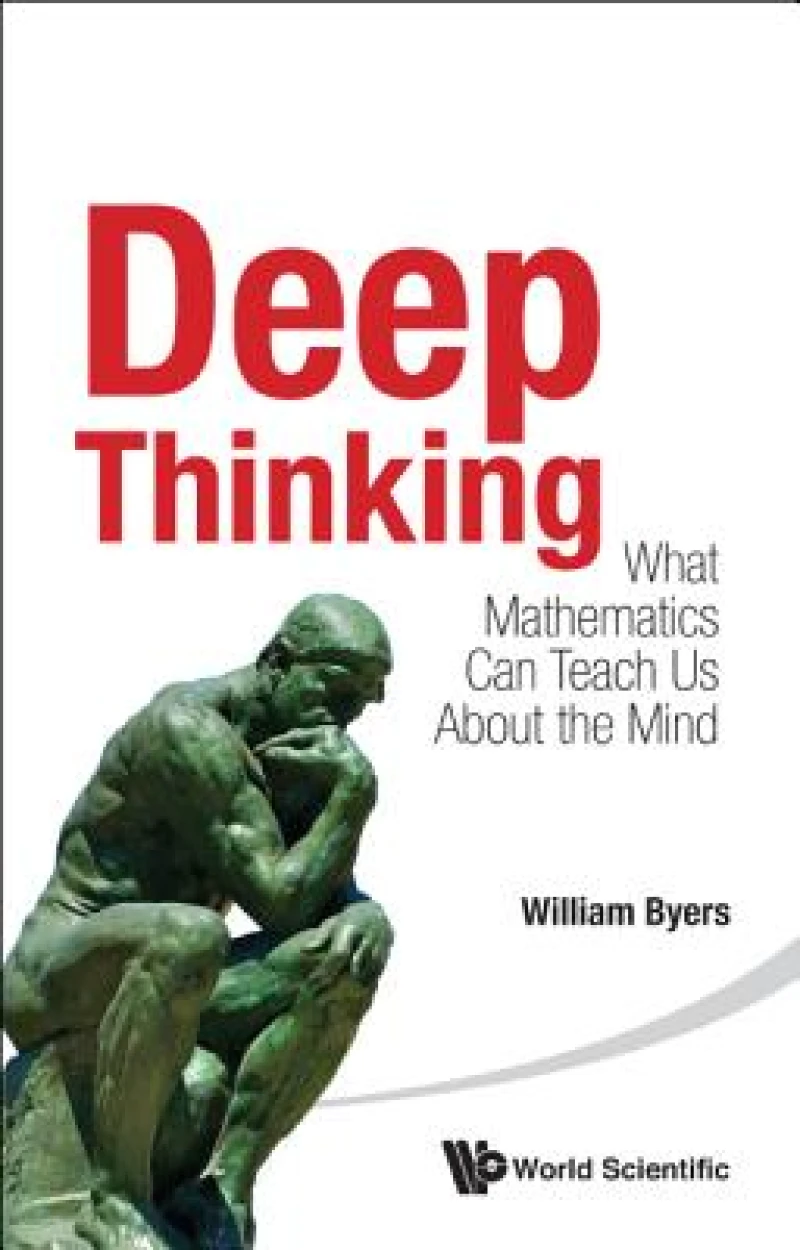
Deep Thinking: What Mathematics Can Teach Us About The Mind
Click to zoom

Share this book

Deep Thinking: What Mathematics Can Teach Us About The Mind

Book Details

Format Paperback / Softback
ISBN-10 9814618039
ISBN-13 9789814618038
Publisher World Scientific Publishing Co Pte Ltd
Imprint World Scientific Publishing Co Pte Ltd
Country of Manufacture GB
Country of Publication GB
Publication Date Nov 14th, 2014
Print length 264 Pages
Weight 384 grams
Dimensions 17.90 x 22.90 x 1.10 cms
Product Classification: Mathematics
Ksh 4,150.00
Temporarily out of stock, due soon 0 in stock

Delivery Location

Delivery fee: Select location

Secure
Quality
Fast
There is more than one way to think. Most people are familiar with the systematic, rule-based thinking that one finds in a mathematical proof or a computer program. But such thinking does not produce breakthroughs in mathematics and science nor is it the kind of thinking that results in significant learning. Deep thinking is a different and more basic way of using the mind. It results in the discontinuous “aha!” experience, which is the essence of creativity. It is at the heart of every paradigm shift or reframing of a problematic situation.The identification of deep thinking as the default state of the mind has the potential to reframe our current approach to technological change, education, and the nature of mathematics and science. For example, there is an unbridgeable gap between deep thinking and computer simulations of thinking. Many people suspect that such a gap exists, but find it difficult to make this intuition precise. This book identifies the way in which the authentic intelligence of deep thinking differs from the artificial intelligence of “big data” and “analytics”.Deep thinking is the essential ingredient in every significant learning experience, which leads to a new way to think about education. It is also essential to the construction of conceptual systems that are at the heart of mathematics and science, and of the technologies that shape the modern world. Deep thinking can be found whenever one conceptual system morphs into another.The sources of this study include the cognitive development of numbers in children, neuropsychology, the study of creativity, and the historical development of mathematics and science. The approach is unusual and original. It comes out of the author's lengthy experience as a mathematician, teacher, and writer of books about mathematics and science, such as How Mathematicians Think: Using Ambiguity, Contradiction, and Paradox to Create Mathematics and The Blind Spot: Science and the Crisis of Uncertainty.


There is more than one way to think. Most people are familiar with the systematic, rule-based thinking that one finds in a mathematical proof or a computer program. But such thinking does not produce breakthroughs in mathematics and science nor is it the kind of thinking that results in significant learning. Deep thinking is a different and more basic way of using the mind. It results in the discontinuous “aha!” experience, which is the essence of creativity. It is at the heart of every paradigm shift or reframing of a problematic situation.

The identification of deep thinking as the default state of the mind has the potential to reframe our current approach to technological change, education, and the nature of mathematics and science. For example, there is an unbridgeable gap between deep thinking and computer simulations of thinking. Many people suspect that such a gap exists, but find it difficult to make this intuition precise. This book identifies the way in which the authentic intelligence of deep thinking differs from the artificial intelligence of “big data” and “analytics”.

Deep thinking is the essential ingredient in every significant learning experience, which leads to a new way to think about education. It is also essential to the construction of conceptual systems that are at the heart of mathematics and science, and of the technologies that shape the modern world. Deep thinking can be found whenever one conceptual system morphs into another.

The sources of this study include the cognitive development of numbers in children, neuropsychology, the study of creativity, and the historical development of mathematics and science. The approach is unusual and original. It comes out of the author's lengthy experience as a mathematician, teacher, and writer of books about mathematics and science, such as How Mathematicians Think: Using Ambiguity, Contradiction, and Paradox to Create Mathematics and The Blind Spot: Science and the Crisis of Uncertainty.


Get Deep Thinking: What Mathematics Can Teach Us About The Mind by at the best price and quality guaranteed only at Werezi Africa's largest book ecommerce store. The book was published by World Scientific Publishing Co Pte Ltd and it has pages.


Mind, Body, & Spirit

Shopping Cart

Africa largest book store

Sub Total:
Ebooks

Digital Library
Coming Soon

Our digital collection is currently being curated to ensure the best possible reading experience on Werezi. We'll be launching our Ebooks platform shortly.