
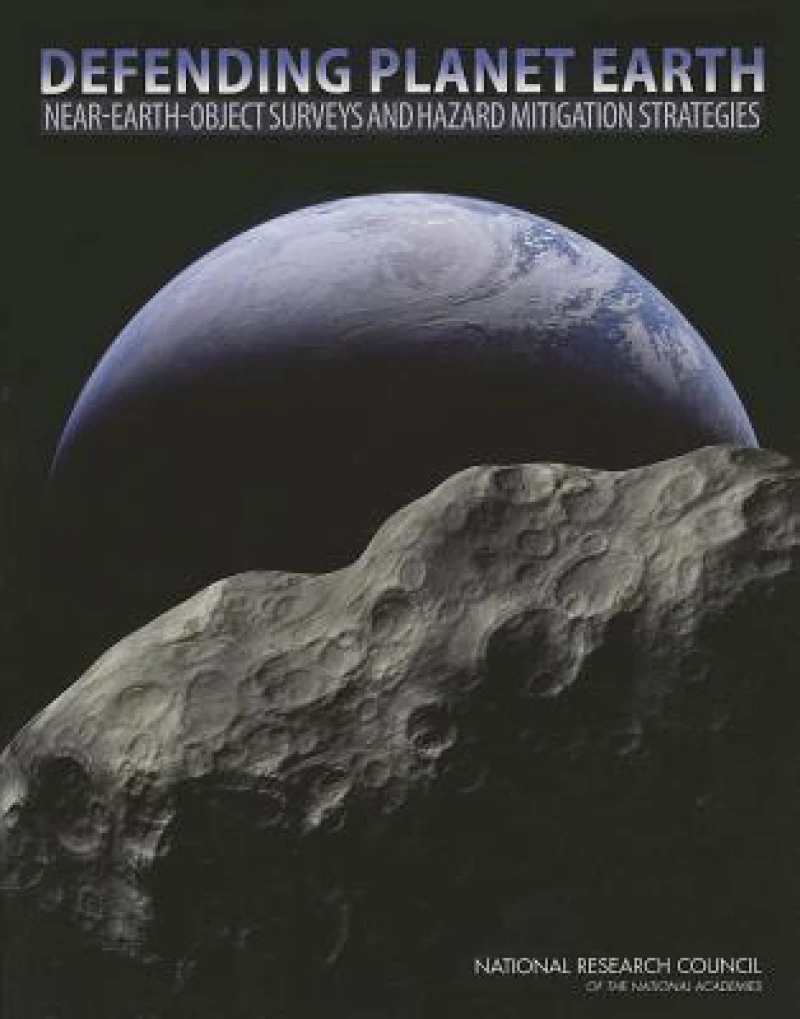
The United States spends approximately $4 million each year searching for near-Earth objects (NEOs). The objective is to detect those that may collide with Earth. The majority of this funding supports the operation of several observatories that scan the sky searching for NEOs. This, however, is insufficient in detecting the majority of NEOs that may present a tangible threat to humanity. A significantly smaller amount of funding supports ways to protect the Earth from such a potential collision or "mitigation." In 2005, a Congressional mandate called for NASA to detect 90 percent of NEOs with diameters of 140 meters of greater by 2020. Defending Planet Earth: Near-Earth Object Surveys and Hazard Mitigation Strategies identifies the need for detection of objects as small as 30 to 50 meters as these can be highly destructive. The book explores four main types of mitigation including civil defense, "slow push" or "pull" methods, kinetic impactors and nuclear explosions. It also asserts that responding effectively to hazards posed by NEOs requires national and international cooperation. Defending Planet Earth: Near-Earth Object Surveys and Hazard Mitigation Strategies is a useful guide for scientists, astronomers, policy makers and engineers. Table of ContentsFront MatterSummary1 Introduction2 Risk Analysis3 Survey and Detection of Near-Earth Objects4 Characterization5 Mitigation6 Research7 National and International Coordination and Collaboration8 Optimal ApproachesAppendixesAppendix A: Independent Cost AssessmentAppendix B: Letter of RequestAppendix C: Committee, Panel, and Staff Biographical InformationAppendix D: Minority Opinion - Mark Boslough, Mitigation Panel MemberAppendix E: Glossary and Selected Acronyms
The United States spends approximately $4 million each year searching for near-Earth objects (NEOs). The objective is to detect those that may collide with Earth. The majority of this funding supports the operation of several observatories that scan the sky searching for NEOs. This, however, is insufficient in detecting the majority of NEOs that may present a tangible threat to humanity. A significantly smaller amount of funding supports ways to protect the Earth from such a potential collision or "mitigation."
In 2005, a Congressional mandate called for NASA to detect 90 percent of NEOs with diameters of 140 meters of greater by 2020. Defending Planet Earth: Near-Earth Object Surveys and Hazard Mitigation Strategies identifies the need for detection of objects as small as 30 to 50 meters as these can be highly destructive. The book explores four main types of mitigation including civil defense, "slow push" or "pull" methods, kinetic impactors and nuclear explosions. It also asserts that responding effectively to hazards posed by NEOs requires national and international cooperation. Defending Planet Earth: Near-Earth Object Surveys and Hazard Mitigation Strategies is a useful guide for scientists, astronomers, policy makers and engineers.
Get Defending Planet Earth by at the best price and quality guaranteed only at Werezi Africa's largest book ecommerce store. The book was published by National Academies Press and it has pages.

Our digital collection is currently being curated to ensure the best possible reading experience on Werezi. We'll be launching our Ebooks platform shortly.
