
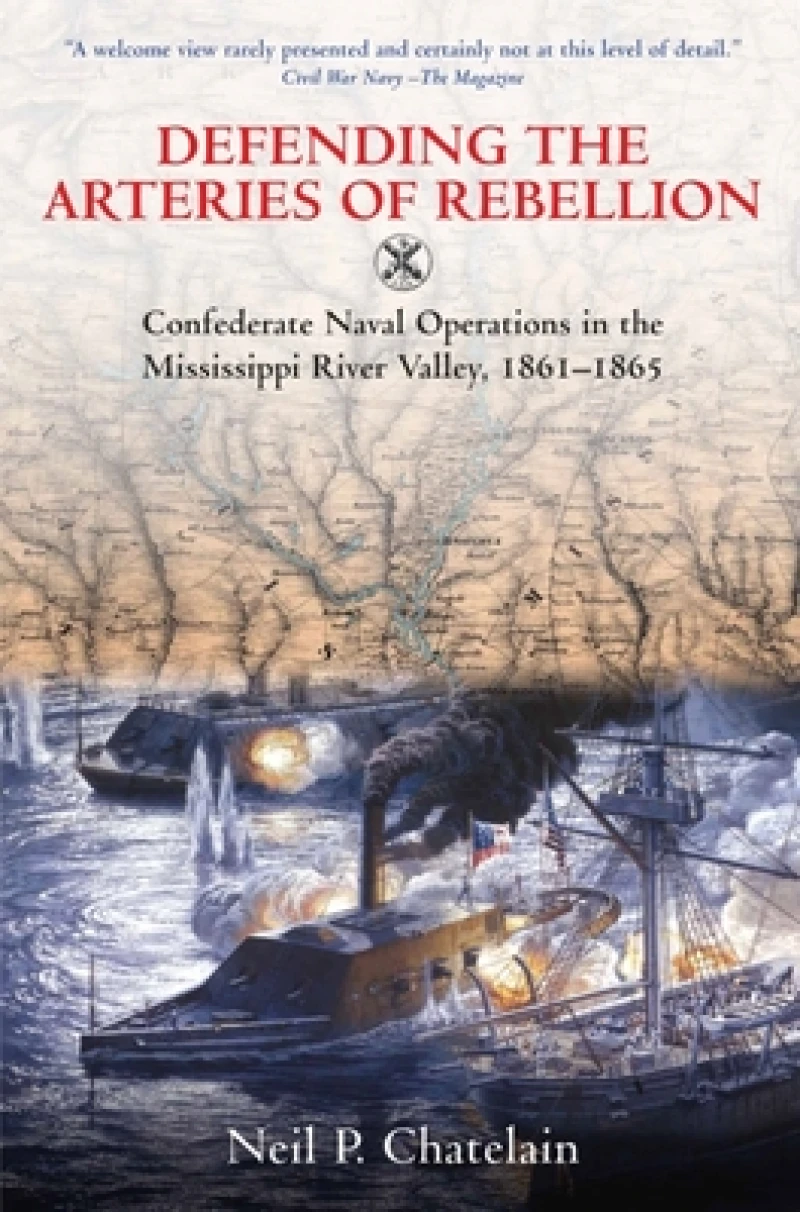
Defending the Arteries of Rebellion : Confederate Naval Operations in the Mississippi River Valley, 1861-1865
Book Details
Format
Paperback / Softback
ISBN-10
1611216036
ISBN-13
9781611216035
Publisher
Savas Beatie
Imprint
Savas Beatie
Country of Manufacture
US
Country of Publication
GB
Publication Date
Sep 15th, 2022
Print length
336 Pages
Weight
462 grams
Dimensions
15.20 x 22.80 x 2.10 cms
Product Classification:
Modern history to 20th century: c 1700 to c 1900American Civil War
Ksh 3,050.00
Temporarily out of stock, due soon
0 in stock
Delivery Location
Delivery fee: Select location
Secure
Quality
Fast
Most studies of the Mississippi River focus on Union campaigns to open and control it, overlooking Southern attempts to stop them. Now in paperback, Neil Chatelain''s Defending the Arteries of Rebellion: Confederate Naval Operations in the Mississippi River Valley, 1861-1865 is the other side of the story - the first modern full-length treatment of inland naval operations from the Confederate perspective. Confederate President Jefferson Davis realized the value of the Mississippi River and its entire valley, which he described as the "great artery of the Confederacy." This key internal highway controlled the fledgling nation''s transportation network. Davis and Stephen Mallory, his secretary of the navy, knew these vital logistical paths had to be held, and that they offered potential highways of invasion for Union warships and armies to stab their way deep into the heart of the Confederacy. To protect these arteries of rebellion, Southern strategy called for crafting a ring of powerful fortifications supported by naval forces. Different military branches, however, including the Navy, Marine Corps, Army, and Revenue Service, as well as civilian privateers and even state naval forces, competed for scarce resources to operate their own vessels. A lack of industrial capacity, coupled with a dearth of skilled labor, further complicated Confederate efforts and guaranteed the South''s grand vision of deploying dozens of river gunboats and powerful ironclads would never be fully realized. Despite these limitations, the Southern war machine introduced numerous innovations and alternate defenses including the Confederacy''s first operational ironclad, the first successful use of underwater torpedoes, widespread use of Army-Navy joint operations, and the employment of extensive river obstructions. When the Mississippi came under complete Union control in 1863, Confederate efforts shifted to its many tributaries, where a bitter and deadly struggle ensued to control these internal lifelines. Despite a lack of ships, material, personnel, funding, and unified organization, the Confederacy fought desperately and scored many localized tactical victories - often won at great cost - but failed at the strategic level. Chatelain, a former Navy Surface Warfare Officer, grounds his study in extensive archival and firsthand accounts, official records, and a keen understanding of terrain and geography. The result is a fast-paced, well-crafted, and endlessly fascinating account that is sure to please the most discriminating student of the Civil War.
Most studies of the Mississippi River focus on Union campaigns to open and control it, overlooking Southern attempts to stop them. Now in paperback, Neil Chatelain's Defending the Arteries of Rebellion: Confederate Naval Operations in the Mississippi River Valley, 1861-1865 is the other side of the story - the first modern full-length treatment of inland naval operations from the Confederate perspective. Confederate President Jefferson Davis realized the value of the Mississippi River and its entire valley, which he described as the "great artery of the Confederacy." This key internal highway controlled the fledgling nation's transportation network. Davis and Stephen Mallory, his secretary of the navy, knew these vital logistical paths had to be held, and that they offered potential highways of invasion for Union warships and armies to stab their way deep into the heart of the Confederacy. To protect these arteries of rebellion, Southern strategy called for crafting a ring of powerful fortifications supported by naval forces. Different military branches, however, including the Navy, Marine Corps, Army, and Revenue Service, as well as civilian privateers and even state naval forces, competed for scarce resources to operate their own vessels. A lack of industrial capacity, coupled with a dearth of skilled labor, further complicated Confederate efforts and guaranteed the South's grand vision of deploying dozens of river gunboats and powerful ironclads would never be fully realized. Despite these limitations, the Southern war machine introduced numerous innovations and alternate defenses including the Confederacy's first operational ironclad, the first successful use of underwater torpedoes, widespread use of Army-Navy joint operations, and the employment of extensive river obstructions. When the Mississippi came under complete Union control in 1863, Confederate efforts shifted to its many tributaries, where a bitter and deadly struggle ensued to control these internal lifelines. Despite a lack of ships, material, personnel, funding, and unified organization, the Confederacy fought desperately and scored many localized tactical victories - often won at great cost - but failed at the strategic level. Chatelain, a former Navy Surface Warfare Officer, grounds his study in extensive archival and firsthand accounts, official records, and a keen understanding of terrain and geography. The result is a fast-paced, well-crafted, and endlessly fascinating account that is sure to please the most discriminating student of the Civil War.
Get Defending the Arteries of Rebellion by at the best price and quality guaranteed only at Werezi Africa's largest book ecommerce store. The book was published by Savas Beatie and it has pages.

