
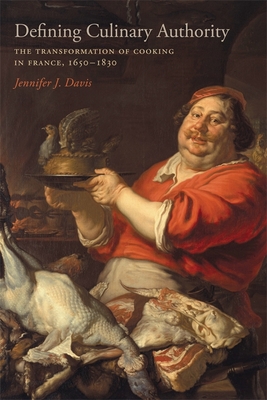
Defining Culinary Authority : The Transformation of Cooking in France, 1650-1830
Book Details
Format
Hardback
ISBN-10
0807145335
ISBN-13
9780807145333
Publisher
Louisiana State University Press
Imprint
Louisiana State University Press
Country of Manufacture
US
Country of Publication
GB
Publication Date
Jan 2nd, 2013
Print length
264 Pages
Weight
534 grams
Dimensions
23.70 x 15.90 x 2.40 cms
Product Classification:
General cookery & recipesGeneral cookery and recipes
KSh 7,100.00
Publisher Out of Stock
0 in stock
Delivery Location
Delivery fee: Select location
Secure
Quality
Fast
Tracing the transformation of culinary trades in France during the Revolutionary era, Jennifer Davis argues that the work of cultivating sensibility in food was not simply an elite matter; it was essential to the livelihood of thousands of men and women.
In the eighteenth and nineteenth centuries, French cooks began to claim central roles in defining and enforcing taste, as well as in educating their diners to changing standards. Tracing the transformation of culinary trades in France during the Revolutionary era, Jennifer J. Davis argues that the work of cultivating sensibility in food was not simply an elite matter; it was essential to the livelihood of thousands of men and women.
Combining rigorous archival research with social history and cultural studies, Davis analyzes the development of cooking aesthetics and practices by examining the propagation of taste, the training of cooks, and the policing of the culinary marketplace in the name of safety and good taste. French cooks formed their profession through a series of debates intimately connected to broader Enlightenment controversies over education, cuisine, law, science, and service. Though cooks assumed prominence within the culinary public sphere, the unique literary genre of gastronomy replaced the Old Regime guild police in the wake of the French Revolution as individual diners began to rethink cooks' authority. The question of who wielded culinary influence -- and thus shaped standards of taste -- continued to reverberate throughout society into the early nineteenth century.
This remarkable study illustrates how culinary discourse affected French national identity within the country and around the globe, where elite cuisine bears the imprint of the country's techniques and labor organization.
Combining rigorous archival research with social history and cultural studies, Davis analyzes the development of cooking aesthetics and practices by examining the propagation of taste, the training of cooks, and the policing of the culinary marketplace in the name of safety and good taste. French cooks formed their profession through a series of debates intimately connected to broader Enlightenment controversies over education, cuisine, law, science, and service. Though cooks assumed prominence within the culinary public sphere, the unique literary genre of gastronomy replaced the Old Regime guild police in the wake of the French Revolution as individual diners began to rethink cooks' authority. The question of who wielded culinary influence -- and thus shaped standards of taste -- continued to reverberate throughout society into the early nineteenth century.
This remarkable study illustrates how culinary discourse affected French national identity within the country and around the globe, where elite cuisine bears the imprint of the country's techniques and labor organization.
Get Defining Culinary Authority by Jennifer J. Davis at the best price and quality guaranteed only at Werezi Africa's largest book ecommerce store. The book was published by Louisiana State University Press and it has 264 pages.
Customers Who Bought This Also Bought

French Cooking for Two
KSh 2,700.00
Salt, Fat, Acid, Heat
KSh 6,650.00
Persiana: Recipes from the Middle East & Beyond
KSh 5,050.00

Complete Air Fryer Cookbook
KSh 3,050.00

Bazaar
KSh 5,150.00

Annabel Karmel’s New Complete Baby & Toddler Meal Planner: No.1 Bestseller with new finger food guidance & recipes
KSh 3,200.00

Persiana Everyday
KSh 5,200.00

Flavour
KSh 4,950.00

Persiana Easy
KSh 5,200.00

Simply
KSh 4,900.00

The Ritz London: The Cookbook
KSh 7,350.00
Healthy Everyday Mediterranean
KSh 3,400.00
More by Jennifer J. Davis

More in This Genre
French Cooking for Two
KSh 2,700.00
Salt, Fat, Acid, Heat
KSh 6,650.00
Persiana: Recipes from the Middle East & Beyond
KSh 5,050.00
Complete Air Fryer Cookbook
KSh 3,050.00
Bazaar
KSh 5,150.00
Annabel Karmel’s New Complete Baby & Toddler Meal Planner: No.1 Bestseller with new finger food guidance & recipes
KSh 3,200.00
