
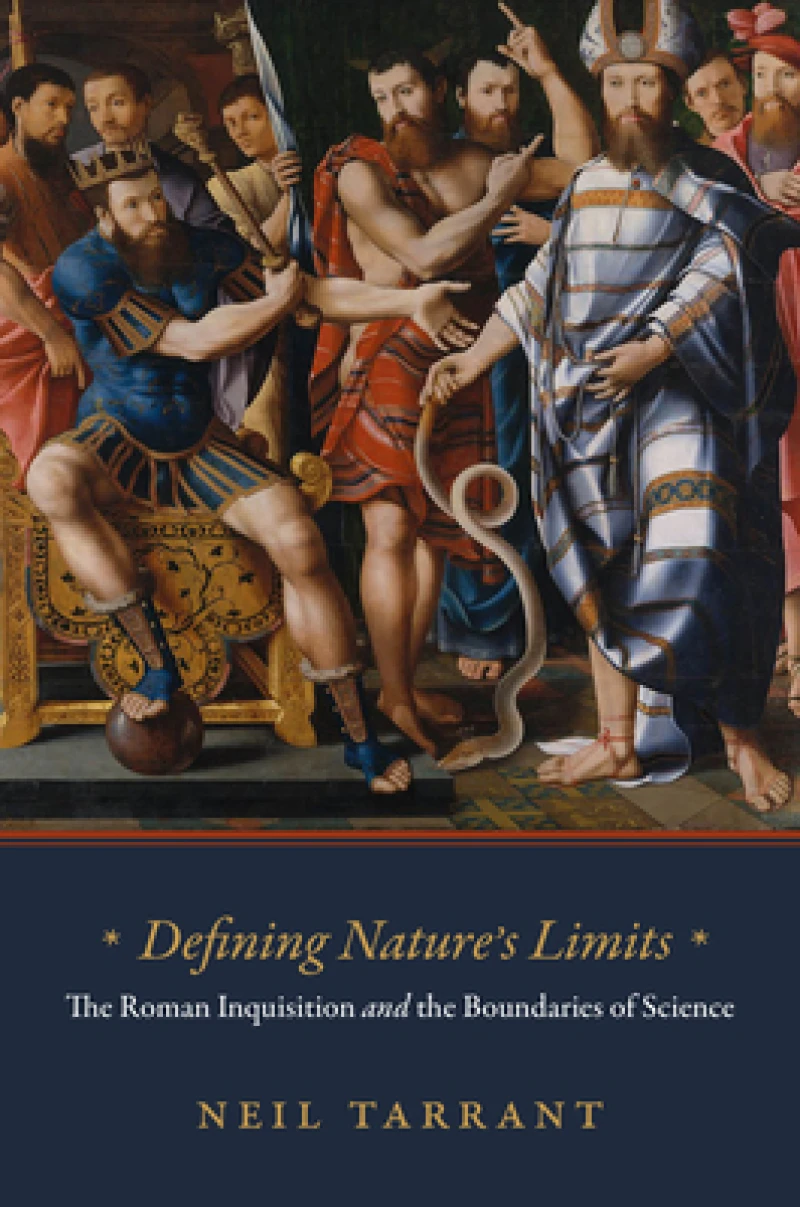
Defining Nature's Limits : The Roman Inquisition and the Boundaries of Science
by
Neil Tarrant
Book Details
Format
Hardback or Cased Book
ISBN-10
0226819426
ISBN-13
9780226819426
Publisher
The University of Chicago Press
Imprint
University of Chicago Press
Country of Manufacture
US
Country of Publication
GB
Publication Date
Nov 18th, 2022
Print length
288 Pages
Weight
524 grams
Dimensions
15.90 x 23.70 x 2.70 cms
Product Classification:
HistoryArchaeologyHistory of religionChristianityHistory of science
Ksh 6,500.00
Temporarily out of stock, due soon
0 in stock
Delivery Location
Delivery fee: Select location
Secure
Quality
Fast
A look at the history of censorship, science, and magic from the Middle Ages to the post-Reformation era. Neil Tarrant challenges conventional thinking by looking at the longer history of censorship, considering a five-hundred-year continuity of goals and methods stretching from the late eleventh century to well into the sixteenth. Unlike earlier studies, Defining Nature's Limits engages the history of both learned and popular magic. Tarrant explains how the church developed a program that sought to codify what was proper belief through confession, inquisition, and punishment and prosecuted what they considered superstition or heresy that stretched beyond the boundaries of religion. These efforts were continued by the Roman Inquisition, established in 1542. Although it was designed primarily to combat Protestantism, from the outset the new institution investigated both practitioners of "illicit" magic and inquiries into natural philosophy, delegitimizing certain practices and thus shaping the development of early modern science. Describing the dynamics of censorship that continued well into the post-Reformation era, Defining Nature's Limits is revisionist history that will interest scholars of the history science, the history of magic, and the history of the church alike.
Get Defining Nature's Limits by at the best price and quality guaranteed only at Werezi Africa's largest book ecommerce store. The book was published by The University of Chicago Press and it has pages.

