
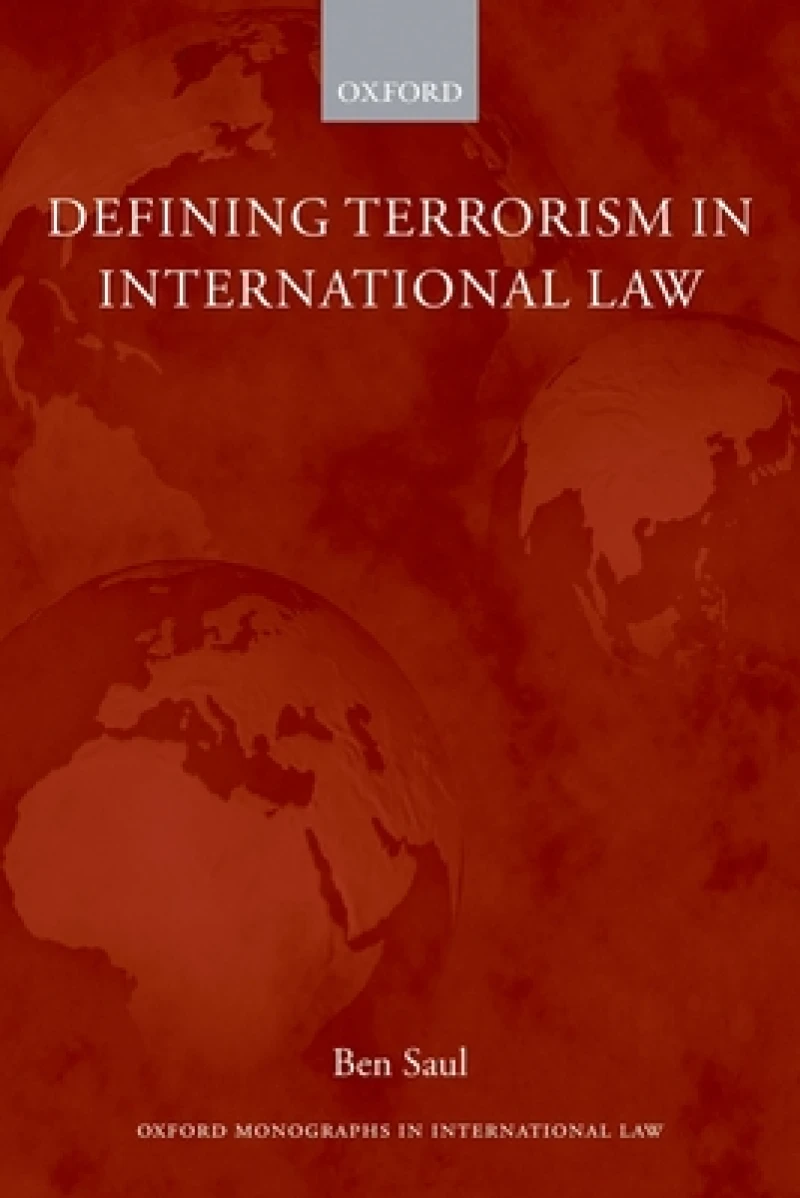
Defining Terrorism in International Law
by
Ben Saul
Book Details
Format
Paperback / Softback
Book Series
Oxford Monographs in International Law
ISBN-10
0199535477
ISBN-13
9780199535477
Publisher
Oxford University Press
Imprint
Oxford University Press
Country of Manufacture
GB
Country of Publication
GB
Publication Date
Feb 14th, 2008
Print length
416 Pages
Weight
630 grams
Dimensions
23.20 x 15.50 x 2.40 cms
Ksh 12,500.00
Manufactured on Demand
0 in stock
Delivery Location
Delivery fee: Select location
Secure
Quality
Fast
This book examines the attempts by the international community and the United Nations to define and criminalize terrorism. In doing so, it explores the difficult legal, ethical and philosophical questions involved in deciding when political violence is, or is not, permissible.
Despite numerous efforts since the 1920s, the international community has failed to define or criminalize ''terrorism'' in international law. This book first explores the policy reasons for defining and criminalizing terrorism, before proposing the basic elements of an international definition. Terrorism should be defined and criminalized because it seriously undermines fundamental human rights, jeopardizes the State and peaceful politics, and may threaten international peace and security. Definition would also help to distinguish political from private violence, eliminating the overreach of the many ''sectoral'' anti-terrorism treaties. A definition may also help to confine the scope of UN Security Council resolutions since 11 September 2001, which have encouraged States to pursue unilateral and excessive counter-terrorism measures.Defining terrorism as a discrete international crime normatively recognizes and protects vital international community values and interests, symbolically expresses community condemnation, and stigmatizes offenders. Any definition of terrorism must also accommodate reasonable claims to political violence, particularly against repressive governments, and this book examines the range of exceptions, justifications, excuses, defences, and amnesties potentially available to terrorists, as well as purported exceptions such as self-determination struggles, ''State terrorism'', and armed conflicts.While this book seeks to minimize recourse to violence, it recognises that international law should not become complicit in oppression by criminalizing legitimate forms of political resistance. In the absence of an international definition, the remainder of the book explores how the international community has responded to terrorism in international and ''regional'' treaties, the United Nations system, and in customary law. The final part of the book explores the distinctive prohibitions and crime of ''terrorism'' in armed conflict under international humanitarian law.
Get Defining Terrorism in International Law by at the best price and quality guaranteed only at Werezi Africa's largest book ecommerce store. The book was published by Oxford University Press and it has pages.

