
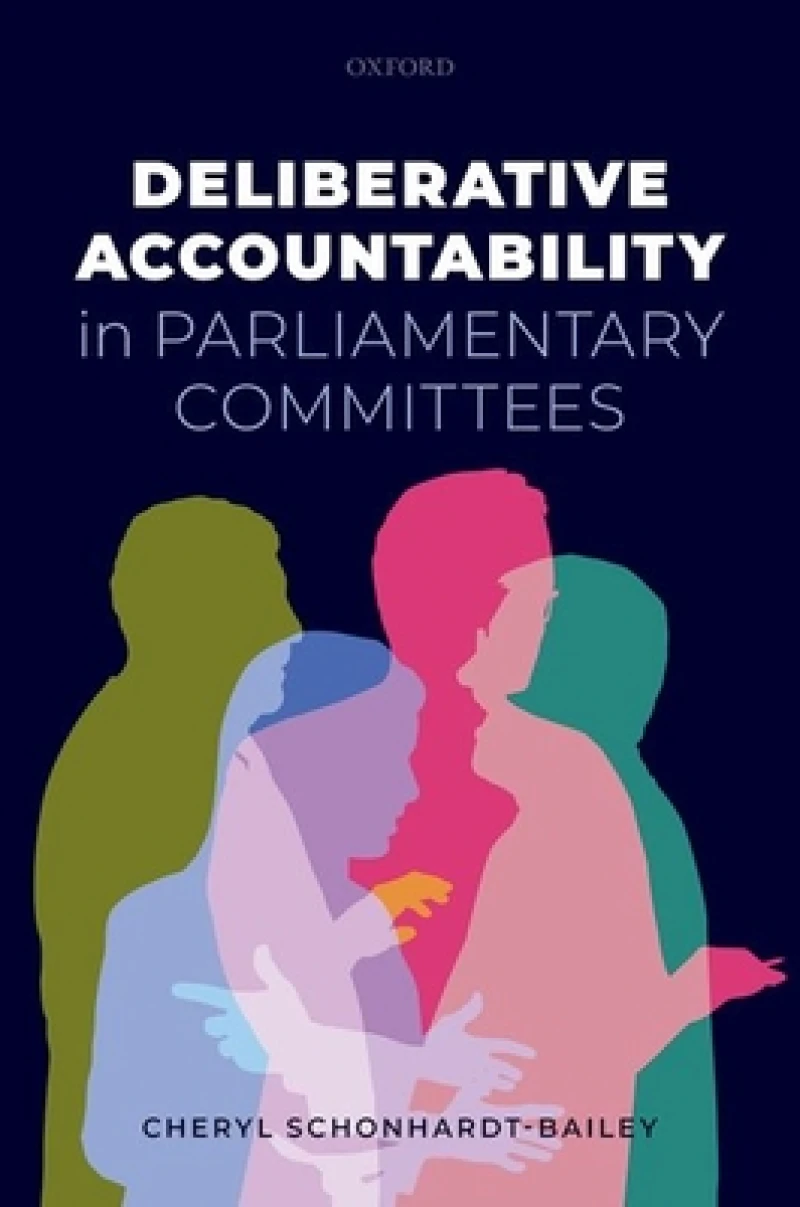
Deliberative Accountability in Parliamentary Committees
Book Details
Format
Hardback or Cased Book
ISBN-10
0192847872
ISBN-13
9780192847874
Publisher
Oxford University Press
Imprint
Oxford University Press
Country of Manufacture
GB
Country of Publication
GB
Publication Date
Mar 14th, 2022
Print length
288 Pages
Weight
628 grams
Dimensions
24.00 x 16.50 x 2.40 cms
Ksh 20,950.00
Werezi Extended Catalogue
0 in stock
Delivery Location
Delivery fee: Select location
Secure
Quality
Fast
This book examines the core paradox of why, in the past 40 years, we have seen an explosion of public accountability but at the same time have also witnessed a plummeting of public trust in politicians and governments.
In recent decades, we have seen an explosion in expectations for greater accountability of public policymaking. But, as accountability has increased, trust in governments and politicians has fallen. By focusing on the heart of public accountability--the reason-giving by policymakers for their policy decisions (i.e. deliberative accountability)--this work offers an empirical route for understanding why more accountability may not always deliver more public trust. The focus is on the British Parliament, where both the Treasury Select Committee and the House of Lords Economic Affairs Committee hold hearings on monetary policy, financial stability, and fiscal policy. The intent in these hearings is to challenge policymakers to explain their decisions, and thus the dialogue is expected to be deliberative. But how do we judge the quality of this deliberative accountability? Three metrics are explored and measured: respect, non-partisanship, and reciprocity. The approach is multi-method, including (1) quantitative text analysis to gauge the verbatim transcripts in committee hearings; (2) qualitative coding combined with an experimental design to gauge the role of nonverbal communication in the hearings; and (3) interviews with the MPs, peers, central bankers, and Treasury officials who participated in the hearings. The first method measures the content of ''what'' was said, the second examines ''how'' the words and arguments were expressed, and the third provides a more reflective ''why'' component by asking participants to explain their motivations. This merging of the ''what'', the ''how'', and the ''why'' offers a novel template for studying both accountability and deliberation.
Get Deliberative Accountability in Parliamentary Committees by at the best price and quality guaranteed only at Werezi Africa's largest book ecommerce store. The book was published by Oxford University Press and it has pages.

