

Democracy : A Very Short Introduction
by
Naomi Zack
Book Details
Format
Paperback / softback
Book Series
Very Short Introductions
ISBN-10
0192845063
ISBN-13
9780192845061
Publisher
Oxford University Press
Imprint
Oxford University Press
Country of Manufacture
GB
Country of Publication
GB
Publication Date
Sep 28th, 2023
Print length
192 Pages
Weight
162 grams
Dimensions
11.10 x 17.30 x 1.30 cms
KSh 1,800.00
Werezi Extended Catalogue
Delivery in 12 days
19 copies in stock
Delivery Location
Delivery fee: Select location
Delivery in 12 days
Secure
Quality
Fast
Democracy refers to both ideal and real forms of government. The concept of democracy means that those governed — the demos — have a say in government. But different conceptions of democracy have left many out. Here, Naomi Zack takes us through key conceptions of democracy, from ancient Athens to the modern world.
Very Short Introductions: Brilliant, Sharp, Inspiring Democracy refers to both ideal and real forms of government. The concept of democracy means that those governed — the demos — have a say in government. But different conceptions of democracy have left many out. Naomi Zack provides here a fresh treatment of the history of this idea and its key conceptions. In the ancient world, direct and representative democracy in Athens and Rome privileged elites, as did democratic deliberative bodies in Africa, India, the Middle East, and China. Plato, Aristotle, and Cicero were sceptical of mob-rule dangers of democracy. The medieval and renaissance periods saw legislative checks on monarchy, notably the Magna Carta. The social contract theories of Thomas Hobbes, John Locke, and Jean-Jacques Rousseau matched political expectations that national government be based on consent, for the benefit of those governed. The American Revolution established a new sovereignty, based on British government tradition. By contrast, the French Revolution heralded universal humanitarian ideals.In the nineteenth century, Jeremy Bentham, John Stuart Mill, Immanuel Kant, and Karl Marx focused on the democratization of society. Mary Wollstonecraft had championed women''s education and rights and Mill advocated further for that cause. Movements for the abolition of slavery, women''s suffrage, and labour unionization were organized. World War II brought a reset in the twentieth century, with new democratic governments for many countries, including India and South Africa, and new ideals. Karl Popper, Hannah Arendt, and John Rawls emphasized orderly government transition, inclusion, and fairness. Equalitarian goals have concerned racial and ethnic minorities, as well as women. The twenty-first century has brought fresh challenges, including disasters and uninformed electorates. Democracy among nations is a future goal.ABOUT THE SERIES: The Very Short Introductions series from Oxford University Press contains hundreds of titles in almost every subject area. These pocket-sized books are the perfect way to get ahead in a new subject quickly. Our expert authors combine facts, analysis, perspective, new ideas, and enthusiasm to make interesting and challenging topics highly readable.
Get Democracy by Naomi Zack at the best price and quality guaranteed only at Werezi Africa's largest book ecommerce store. The book was published by Oxford University Press and it has 192 pages.
Customers Who Bought This Also Bought

End of History and the Last Man
KSh 2,700.00

12 Rules for Life
KSh 2,350.00

The 48 Laws of Power
KSh 4,700.00

Second Treatise of Government – Norton Library
KSh 1,600.00
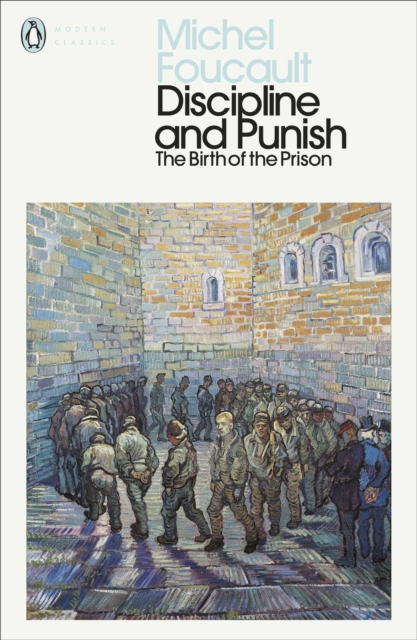
Discipline and Punish
KSh 2,350.00

The Prince The Original Classic
KSh 2,150.00
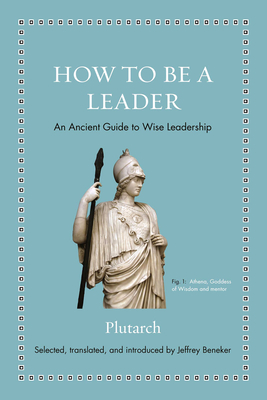
How to Be a Leader – An Ancient Guide to Wise Leadership
KSh 2,800.00

The Origin of Others
KSh 3,600.00
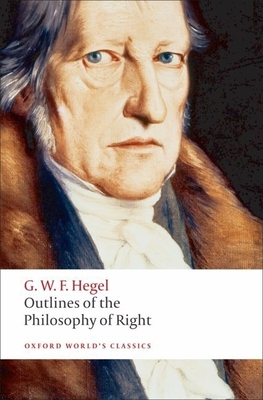
Outlines of the Philosophy of Right
KSh 2,500.00

How Fascism Works
KSh 2,900.00

The Prince
KSh 1,800.00

Who''s Afraid of Gender?
KSh 2,350.00
More by Naomi Zack

Disaster Resilience and Normalization
KSh 7,900.00

Intersectionality
KSh 4,050.00

Philosophy of Race
KSh 11,700.00

Progressive Anonymity
KSh 6,450.00

Ethics and Race
KSh 12,600.00

Reviving the Social Compact
KSh 5,750.00

Applicative Justice
KSh 17,550.00

White Privilege and Black Rights
KSh 9,900.00

American Tragedy of COVID-19
KSh 4,700.00

Ethics and Mores of Race
KSh 7,800.00

Ethics and Race
KSh 4,700.00

American Tragedy of COVID-19
KSh 10,800.00
