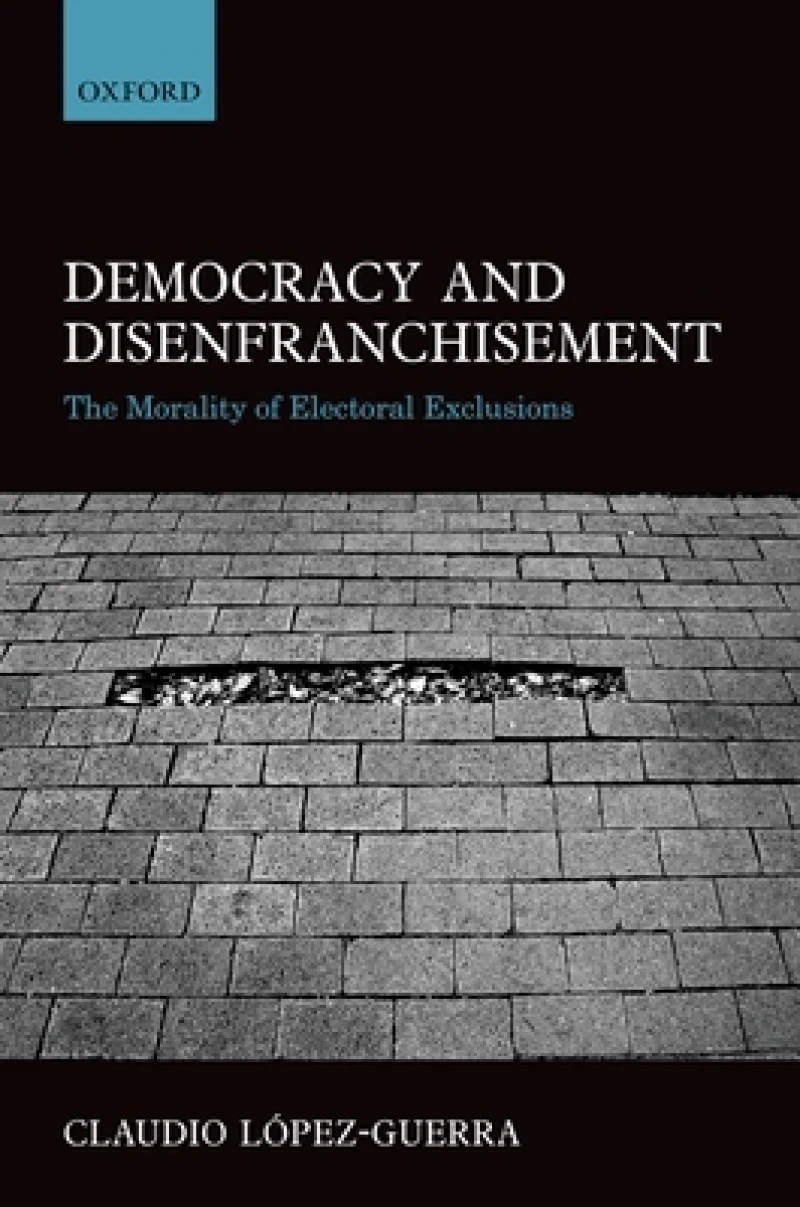
Democracy and Disenfranchisement : The Morality of Electoral Exclusions
Book Details
Format
Hardback or Cased Book
ISBN-10
0198705786
ISBN-13
9780198705789
Publisher
Oxford University Press
Imprint
Oxford University Press
Country of Manufacture
GB
Country of Publication
GB
Publication Date
Jun 19th, 2014
Print length
200 Pages
Weight
462 grams
Dimensions
24.00 x 16.40 x 1.70 cms
Ksh 21,150.00
Manufactured on Demand
0 in stock
Delivery Location
Delivery fee: Select location
Secure
Quality
Fast
The denial of voting rights to certain types of persons continues to be a moral problem of practical significance. The disenfranchisement of persons with mental impairments, minors, noncitizen residents, nonresident citizens, and criminal offenders is a matter of controversy. This book makes a contribution to this largely neglected yet key topic
The denial of voting rights to certain types of persons continues to be a moral problem of practical significance. The disenfranchisement of persons with mental impairments, minors, noncitizen residents, nonresident citizens, and criminal offenders is a matter of controversy in many countries. How should we think morally about electoral exclusions? What should we conclude about these particular cases? This book proposes a set of principles, called the Critical Suffrage Doctrine, that defies conventional beliefs on the legitimate denial of the franchise. According to the Critical Suffrage Doctrine, in some realistic circumstances it is morally acceptable to adopt an alternative to universal suffrage that would exclude the vast majority of sane adults for being largely uninformed. Thus, contrary to what most people believe, current controversies on the franchise are not about exploring the limits of a basic moral right. Regarding such controversies, the Critical Suffrage Doctrine establishes that, in polities with universal suffrage, the blanket disenfranchisement of minors and the mentally impaired cannot be justified; that noncitizen residents should be allowed to vote; that excluding nonresident citizens is permissible; and that criminal offenders should not be disenfranchised-although facilitating voting from prison is not required in all contexts. Political theorists have rarely submitted the franchise to serious scrutiny. Hence this study makes a contribution to a largely neglected and important subject.
Get Democracy and Disenfranchisement by at the best price and quality guaranteed only at Werezi Africa's largest book ecommerce store. The book was published by Oxford University Press and it has pages.