
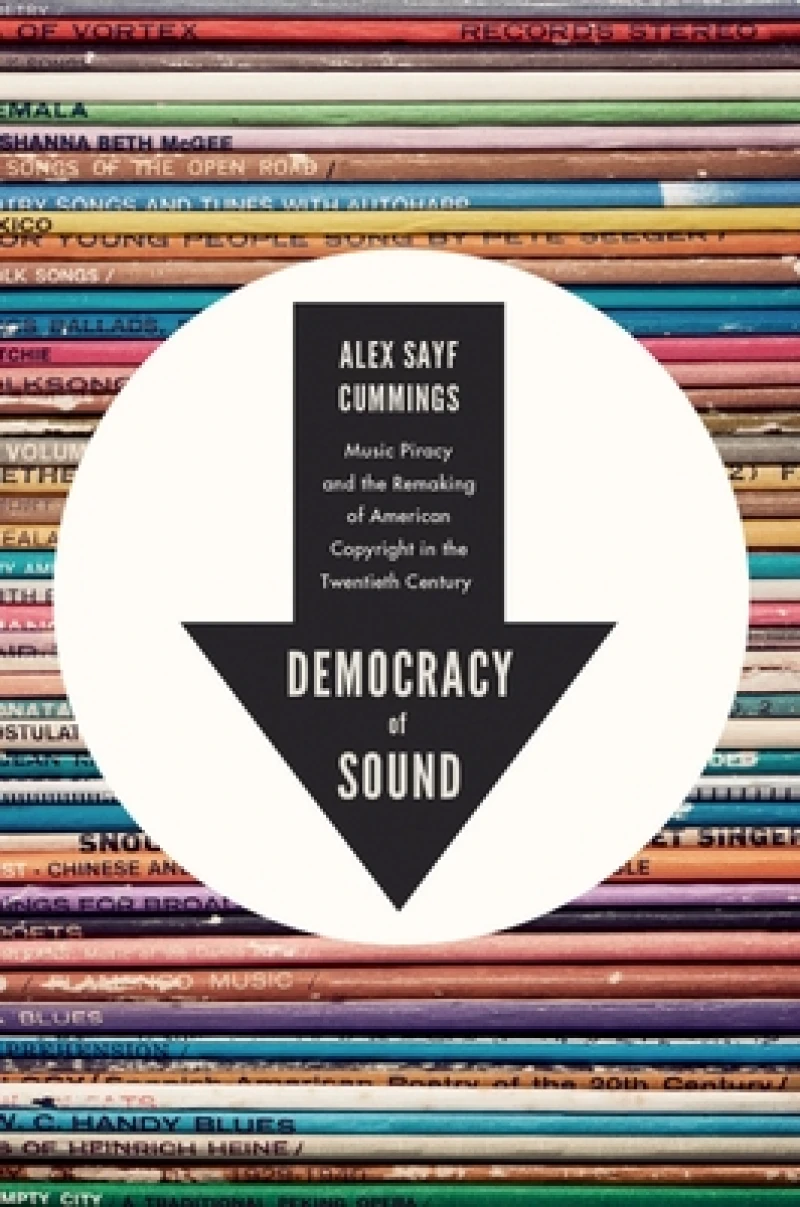
Democracy of Sound : Music Piracy and the Remaking of American Copyright in the Twentieth Century
Book Details
Format
Paperback / Softback
ISBN-10
019067511X
ISBN-13
9780190675110
Publisher
Oxford University Press Inc
Imprint
Oxford University Press Inc
Country of Manufacture
GB
Country of Publication
GB
Publication Date
Mar 30th, 2017
Print length
274 Pages
Weight
399 grams
Dimensions
23.40 x 15.50 x 2.00 cms
Product Classification:
Music recording & reproductionPopular cultureMedia studiesCopyright law
Ksh 6,650.00
Manufactured on Demand
0 in stock
Delivery Location
Delivery fee: Select location
Secure
Quality
Fast
Democracy of Sound tells the story of the pirates, radicals, jazzbos, Deadheads, and DJs who challenged the record industry for control of recorded sound throughout the twentieth century. A political and cultural history, it shows how the primacy of "intellectual property" gradually eclipsed an American political tradition that was suspicious of monopolies and favored free competition.
It was a time when music fans copied and traded recordings without permission. An outraged music industry pushed Congress to pass anti-piracy legislation. Yes, that time is now; it was also the era of Napster in the 1990s, of cassette tapes in the 1970s, of reel-to-reel tapes in the 1950s, even the phonograph epoch of the 1930s. Piracy, it turns out, is as old as recorded music itself. In Democracy of Sound, Alex Sayf Cummings uncovers the little-known history of music piracy and its sweeping effects on the definition of copyright in the United States. When copyright emerged, only visual material such as books and maps were thought to deserve protection; even musical compositions were not included until 1831. Once a performance could be captured on a wax cylinder or vinyl disc, profound questions arose over the meaning of intellectual property. Is only a written composition defined as a piece of art? If a singer performs a different interpretation of a song, is it a new and distinct work? Such questions have only grown more pressing with the rise of sampling and other forms of musical pastiche. Indeed, music has become the prime battleground between piracy and copyright. It is compact, making it easy to copy. And it is highly social, shared or traded through social networks--often networks that arise around music itself. But such networks also pose a counter-argument: as channels for copying and sharing sounds, they were instrumental in nourishing hip-hop and other new forms of music central to American culture today. Piracy is not always a bad thing. An insightful and often entertaining look at the history of music piracy, Democracy of Sound offers invaluable background to one of the hot-button issues involving creativity and the law.
Get Democracy of Sound by at the best price and quality guaranteed only at Werezi Africa's largest book ecommerce store. The book was published by Oxford University Press Inc and it has pages.

