
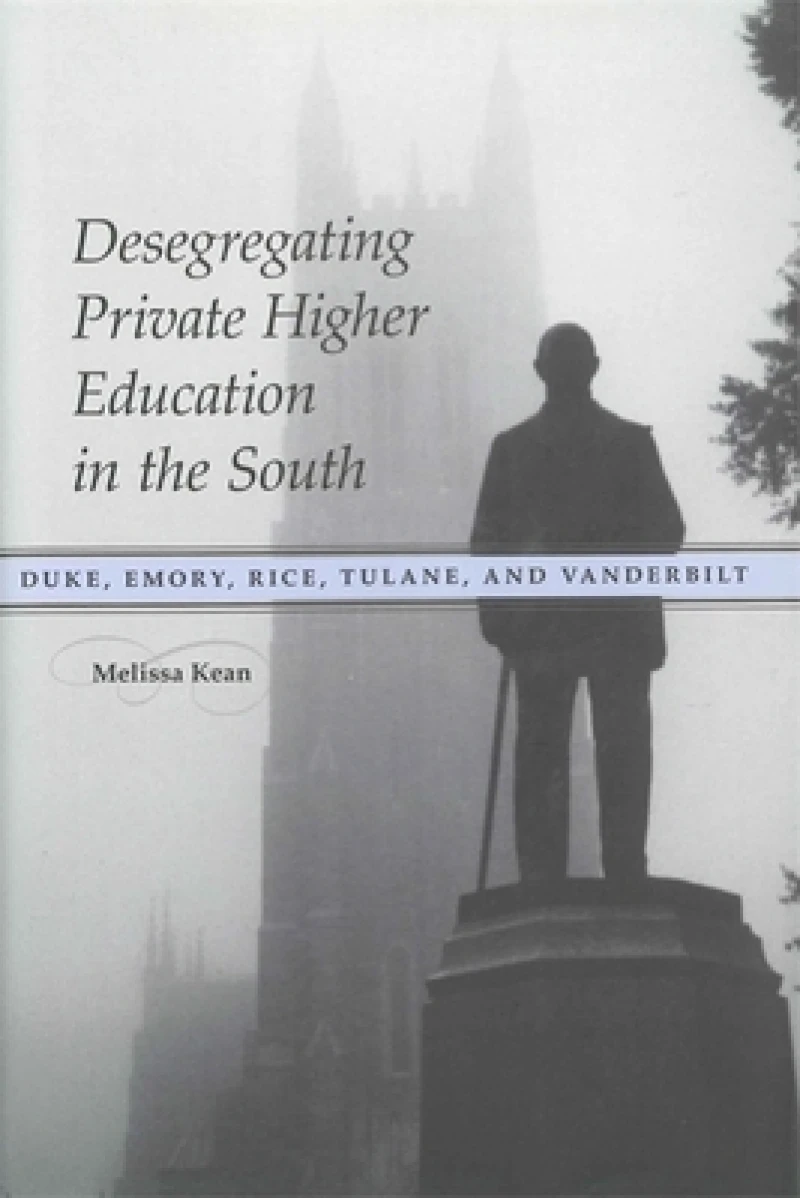
Desegregating Private Higher Education in the South : Duke, Emory, Rice, Tulane, and Vanderbilt
by
Melissa Kean
Book Details
Format
Paperback / Softback
ISBN-10
0807154474
ISBN-13
9780807154472
Publisher
Louisiana State University Press
Imprint
Louisiana State University Press
Country of Manufacture
US
Country of Publication
GB
Publication Date
Aug 26th, 2013
Print length
352 Pages
Weight
567 grams
Dimensions
22.60 x 15.20 x 2.20 cms
Product Classification:
Educational administration and organizationOrganization & management of education
Ksh 7,450.00
Werezi Extended Catalogue
0 in stock
Delivery Location
Delivery fee: Select location
Secure
Quality
Fast
Explores how leaders at five of the American south's most prestigious private universities - Duke, Emory, Rice, Tulane, and Vanderbilt - sought to strengthen their national position and reputation while simultaneously answering the increasing pressure to end segregation after World War II.
After World War II, elite private universities in the South faced growing calls for desegregation. Though, unlike their peer public institutions, no federal court ordered these schools to admit black students and no troops arrived to protect access to the schools, to suggest that desegregation at these universities took place voluntarily would be misleading In Desegregating Private Higher Education in the South,Melissa Kean explores how leaders at five of the region's most prestigious private universities -- Duke, Emory, Rice, Tulane, and Vanderbilt -- sought to strengthen their national position and reputation while simultaneously answering the increasing pressure to end segregation.
To join the upper echelon of U. S. universities, these schools required increased federal and northern philanthropic funding. Clearly, to receive this funding, schools had to eliminate segregation, and so a rift appeared within the leadership of the schools. University presidents generally favored making careful accommodations in their racial policies for the sake of academic improvement, but universities' boards of trustees -- the presidents' main opponents -- served as the final decision-makers on university policy. Board members--usually comprised of professional, white, male alumni--reacted strongly to threats against southern white authority and resisted determinedly any outside attempts to impose desegregation.
The grassroots civil rights movement created a national crisis of conscience that led many individuals and institutions vital to the universities' survival to insist on desegregation. The schools felt enormous pressure to end discrimination as northern foundations withheld funding, accrediting bodies and professional academic associations denied membership, divinity students and professors chose to study and teach elsewhere, and alumni withheld contributions. The Brown v. Board of Education decision in 1954 gave the desegregation debate a sense of urgency and also inflamed tensions -- which continued to mount into the early 1960s. These tensions and the boards' resistance to change created an atmosphere of crisis that badly eroded their cherished role as southern leaders. When faced with the choice between institutional viability and segregation, Kean explains, they gracelessly relented, refusing to the end to admit they had been pressured by outside forces.
Shedding new light on a rare, unexamined facet of the civil rights movement, Desegregating Private Higher Education in the South fills a gap in the history of the academy.
To join the upper echelon of U. S. universities, these schools required increased federal and northern philanthropic funding. Clearly, to receive this funding, schools had to eliminate segregation, and so a rift appeared within the leadership of the schools. University presidents generally favored making careful accommodations in their racial policies for the sake of academic improvement, but universities' boards of trustees -- the presidents' main opponents -- served as the final decision-makers on university policy. Board members--usually comprised of professional, white, male alumni--reacted strongly to threats against southern white authority and resisted determinedly any outside attempts to impose desegregation.
The grassroots civil rights movement created a national crisis of conscience that led many individuals and institutions vital to the universities' survival to insist on desegregation. The schools felt enormous pressure to end discrimination as northern foundations withheld funding, accrediting bodies and professional academic associations denied membership, divinity students and professors chose to study and teach elsewhere, and alumni withheld contributions. The Brown v. Board of Education decision in 1954 gave the desegregation debate a sense of urgency and also inflamed tensions -- which continued to mount into the early 1960s. These tensions and the boards' resistance to change created an atmosphere of crisis that badly eroded their cherished role as southern leaders. When faced with the choice between institutional viability and segregation, Kean explains, they gracelessly relented, refusing to the end to admit they had been pressured by outside forces.
Shedding new light on a rare, unexamined facet of the civil rights movement, Desegregating Private Higher Education in the South fills a gap in the history of the academy.
Get Desegregating Private Higher Education in the South by at the best price and quality guaranteed only at Werezi Africa's largest book ecommerce store. The book was published by Louisiana State University Press and it has pages.

