

Design in Motion : Film Experiments at the Bauhaus
Book Details
Format
Paperback / softback
Book Series
Leonardo
ISBN-10
0262045184
ISBN-13
9780262045186
Publisher
MIT Press Ltd
Imprint
MIT Press
Country of Manufacture
GB
Country of Publication
GB
Publication Date
Jul 19th, 2022
Print length
392 Pages
Weight
756 grams
Dimensions
18.00 x 25.60 x 0.70 cms
Product Classification:
Films, cinemaTelevision
KSh 6,850.00
Not available
0 in stock
Delivery Location
Delivery fee: Select location
Secure
Quality
Fast
The first comprehensive history in English of film at the Bauhaus, exploring practices that experimented with film as an adaptable, elastic “polymedium.”
With Design in Motion, Laura Frahm proposes an alternate history of the Bauhaus—one in which visual media, and film in particular, are crucial to the Bauhaus’s visionary pursuit of integrating art and technology. In the first comprehensive examination in English of film at the Bauhaus, Frahm shows that experimentation with film spanned a range of Bauhaus practices, from textiles and typography to stage and exhibition design. Indeed, Bauhausler deployed film as an adaptable, elastic “polymedium,” malleable in shape and form, unfolding and refracting into multiple material, aesthetic, and philosophical directions.
Frahm shows how the encounter with film imbued the Bauhaus of the 1920s and early 1930s with a flexible notion of design, infusing painting with temporal concepts, sculptures with moving forms, photographs with sequential aesthetics, architectural designs with a choreography of movement. Frahm considers, among other things, student works that explored light and the transparent features of celluloid and cellophane; weaving practices that incorporate cellophane; experimental films, social documentaries, and critical reportage by Bauhaus women; and the proliferation of film strips in posters, book covers, and other typographic work.
Viewing the Bauhaus’s engagement with film through a media-theoretic lens, Frahm shows how film became a medium for “design in motion.” Movement and process, rather than stability and fixity, become the defining characteristics of Bauhaus educational, aesthetic, and philosophical ethos.
With Design in Motion, Laura Frahm proposes an alternate history of the Bauhaus—one in which visual media, and film in particular, are crucial to the Bauhaus’s visionary pursuit of integrating art and technology. In the first comprehensive examination in English of film at the Bauhaus, Frahm shows that experimentation with film spanned a range of Bauhaus practices, from textiles and typography to stage and exhibition design. Indeed, Bauhausler deployed film as an adaptable, elastic “polymedium,” malleable in shape and form, unfolding and refracting into multiple material, aesthetic, and philosophical directions.
Frahm shows how the encounter with film imbued the Bauhaus of the 1920s and early 1930s with a flexible notion of design, infusing painting with temporal concepts, sculptures with moving forms, photographs with sequential aesthetics, architectural designs with a choreography of movement. Frahm considers, among other things, student works that explored light and the transparent features of celluloid and cellophane; weaving practices that incorporate cellophane; experimental films, social documentaries, and critical reportage by Bauhaus women; and the proliferation of film strips in posters, book covers, and other typographic work.
Viewing the Bauhaus’s engagement with film through a media-theoretic lens, Frahm shows how film became a medium for “design in motion.” Movement and process, rather than stability and fixity, become the defining characteristics of Bauhaus educational, aesthetic, and philosophical ethos.
Get Design in Motion by Laura A Frahm at the best price and quality guaranteed only at Werezi Africa's largest book ecommerce store. The book was published by MIT Press Ltd and it has 392 pages.
Customers Who Bought This Also Bought

Worthy
KSh 3,500.00

Angels And Demons
KSh 1,900.00

Thinking in Pictures
KSh 6,100.00

Reel to Real
KSh 4,500.00

Duke in His Domain
KSh 550.00

The Lord of the Rings Tarot and Guidebook
KSh 4,150.00
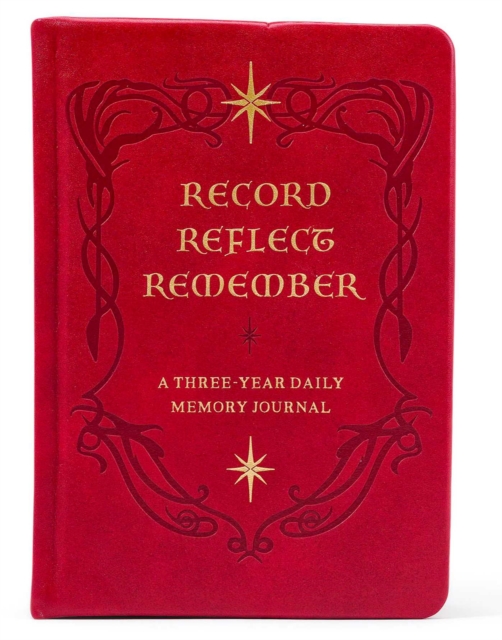
The Lord of the Rings Memory Journal
KSh 2,200.00

With Nails
KSh 2,000.00
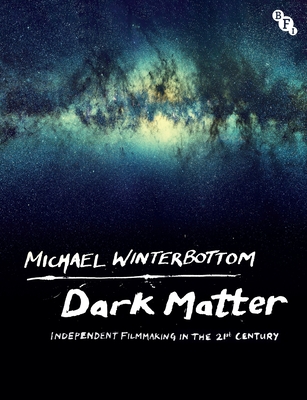
Dark Matter
KSh 3,600.00

Marvel''s Black Panther - Script To Page
KSh 3,250.00
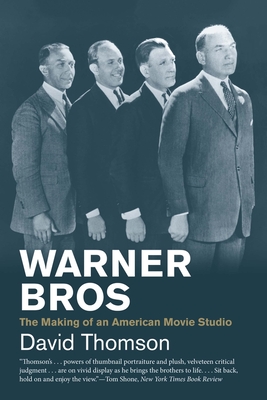
Warner Bros – The Making of an American Movie Studio
KSh 2,750.00

A Deadly Episode
KSh 3,950.00
