
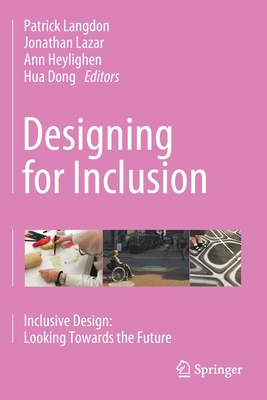
Designing for Inclusion : Inclusive Design: Looking Towards the Future
2020 ed.
Book Details
Format
Paperback / softback
ISBN-10
3030438678
ISBN-13
9783030438678
Edition
2020 ed.
Publisher
Springer Nature Switzerland AG
Imprint
Springer Nature Switzerland AG
Country of Manufacture
GB
Country of Publication
GB
Publication Date
Apr 17th, 2021
Print length
194 Pages
Weight
326 grams
Dimensions
20.90 x 29.60 x 1.70 cms
KSh 28,800.00
Currently unavailable
0 in stock
Delivery Location
Delivery fee: Select location
Secure
Quality
Fast
This proceedings book presents papers from the 10th Cambridge Workshops on Universal Access and Assistive Technology. The CWUAAT series of workshops have celebrated a long history of interdisciplinarity, including design disciplines, computer scientists, engineers, architects, ergonomists, ethnographers, ethicists, policymakers, practitioners, and user communities. This reflects the wider increasing realisation over the long duration of the series that design for inclusion is not limited to technology, engineering disciplines, and computer science but instead requires an interdisciplinary approach. The key to this is providing a platform upon which the different disciplines can engage and see each other’s antecedents, methods, and point of view. This proceedings book of the 10th CWUAAT conference presents papers in a variety of topics includingReconciling usability, accessibility, and inclusive design;Designing inclusive assistive and rehabilitationsystems;Designing cognitive interaction with emerging technologies;Designing inclusive architecture;Data mining and visualising inclusion;Legislation, standards, and policy in inclusive design;Situational inclusive interfaces; andThe historical perspective: 20 years of CWUAAT. CWUAAT has always aimed to be inclusive in the fields that it invites to the workshop. We must include social science, psychologies, anthropologies, economists, politics, governance, and business. This requirement is now energised by imminent new challenges arising from techno-social change. In particular, artificial intelligence, wireless technologies, and the Internet of Things generate a pressing need for more socially integrated projects with operational consequences on individuals in the built environment and at all levels of design and society. Business cases and urgent environmental issues such as sustainability and transportation should now be a focus point for inclusion in an increasingly challenging world. This proceedings book continues the goal of designing for inclusion, as set out by the CWUAAT when it first started.
Get Designing for Inclusion by Ann Heylighen at the best price and quality guaranteed only at Werezi Africa's largest book ecommerce store. The book was published by Springer Nature Switzerland AG and it has 194 pages.
Customers Who Bought This Also Bought

Message
KSh 3,400.00

Corruptible
KSh 2,350.00

On War
KSh 1,200.00

Abundance
KSh 2,150.00

The Republic
KSh 2,350.00

What Happened to Liberal Democracy?
KSh 3,050.00

Pedagogy of the Oppressed
KSh 2,000.00

Great Ideas Social Contract
KSh 1,450.00

Fire Next Time; Nobody Knows My Name ; No Name In The Street; The Devil Finds Work
KSh 3,400.00

The Body Politic
KSh 700.00

The Prince The Original Classic
KSh 2,150.00

The Fourth Turning Is Here
KSh 2,600.00
