

Developmental Perspectives on Metaphor : A Special Issue of metaphor and Symbolic Activity
Book Details
Format
Hardback
ISBN-10
0805899375
ISBN-13
9780805899375
Publisher
Taylor & Francis Inc
Imprint
Psychology Press
Country of Manufacture
US
Country of Publication
GB
Publication Date
Dec 1st, 1995
Print length
92 Pages
Weight
330 grams
KSh 30,950.00
Currently unavailable
0 in stock
Delivery Location
Delivery fee: Select location
Secure
Quality
Fast
Metaphor is now considered to be a central aspect of language and thought and thus a crucial variable in cognitive development. The articles in this issue support the claim that no longer can any theory of language acquisition afford to ignore how children are able to recognize metaphors.
Research on the development of metaphor abilities in children can be dated back as far as 1960, with Asch and Nerlove''s pioneering study, which concluded that children were unable to understand metaphors until middle or even late childhood. However, the study of metaphor in children did not take off until the 1970s; research continued to show metaphor as a relatively late-developing skill, based on children''s inability to paraphrase correctly metaphoric sentences presented out of any situational or narrative context.
In the past decade, research into the development of figurative language has broadened considerably in scope. Efforts have been underway to demonstrate the cognitive underpinnings of the ability to make sense of figurative language and to demonstrate the role of metaphor and its cousin, analogy, in the development of cognition.
Metaphor is now considered to be a central aspect of language and thought and thus a crucial variable in cognitive development. The articles in this issue support the claim that no longer can any theory of language acquisition afford to ignore how children are able to recognize the distinction between what is said and what is meant and how they are able to grasp what is meant when people say things they do not mean.
In the past decade, research into the development of figurative language has broadened considerably in scope. Efforts have been underway to demonstrate the cognitive underpinnings of the ability to make sense of figurative language and to demonstrate the role of metaphor and its cousin, analogy, in the development of cognition.
Metaphor is now considered to be a central aspect of language and thought and thus a crucial variable in cognitive development. The articles in this issue support the claim that no longer can any theory of language acquisition afford to ignore how children are able to recognize the distinction between what is said and what is meant and how they are able to grasp what is meant when people say things they do not mean.
Get Developmental Perspectives on Metaphor by Ellen Winner at the best price and quality guaranteed only at Werezi Africa's largest book ecommerce store. The book was published by Taylor & Francis Inc and it has 92 pages.
Customers Who Bought This Also Bought

Second Language Acquisition
KSh 7,550.00

Vital Literacies from the Clinic to the Classroom
KSh 30,950.00

Vital Literacies from the Clinic to the Classroom
KSh 8,650.00

Talking Time
KSh 27,900.00

Linguistic theory and adult second language acquisition
KSh 9,800.00
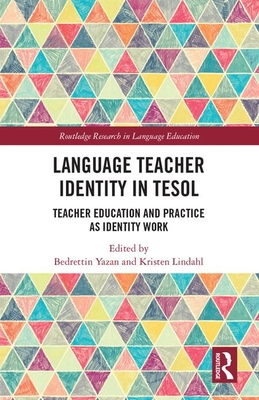
Language Teacher Identity in TESOL
KSh 30,950.00

English Language Teaching and Teacher Education in East Asia
KSh 19,600.00

Second Language Speech Learning
KSh 19,600.00

Social Dimensions of Autonomy in Language Learning
KSh 16,200.00

Second Language Anxiety
KSh 21,600.00

Self-Concept in Foreign Language Learning
KSh 8,650.00

Optimizing a Lexical Approach to Instructed Second Language Acquisition
KSh 16,200.00
More in This Genre
Second Language Acquisition
KSh 7,550.00
Vital Literacies from the Clinic to the Classroom
KSh 30,950.00
Vital Literacies from the Clinic to the Classroom
KSh 8,650.00
Talking Time
KSh 27,900.00
Linguistic theory and adult second language acquisition
KSh 9,800.00
Language Teacher Identity in TESOL
KSh 30,950.00
