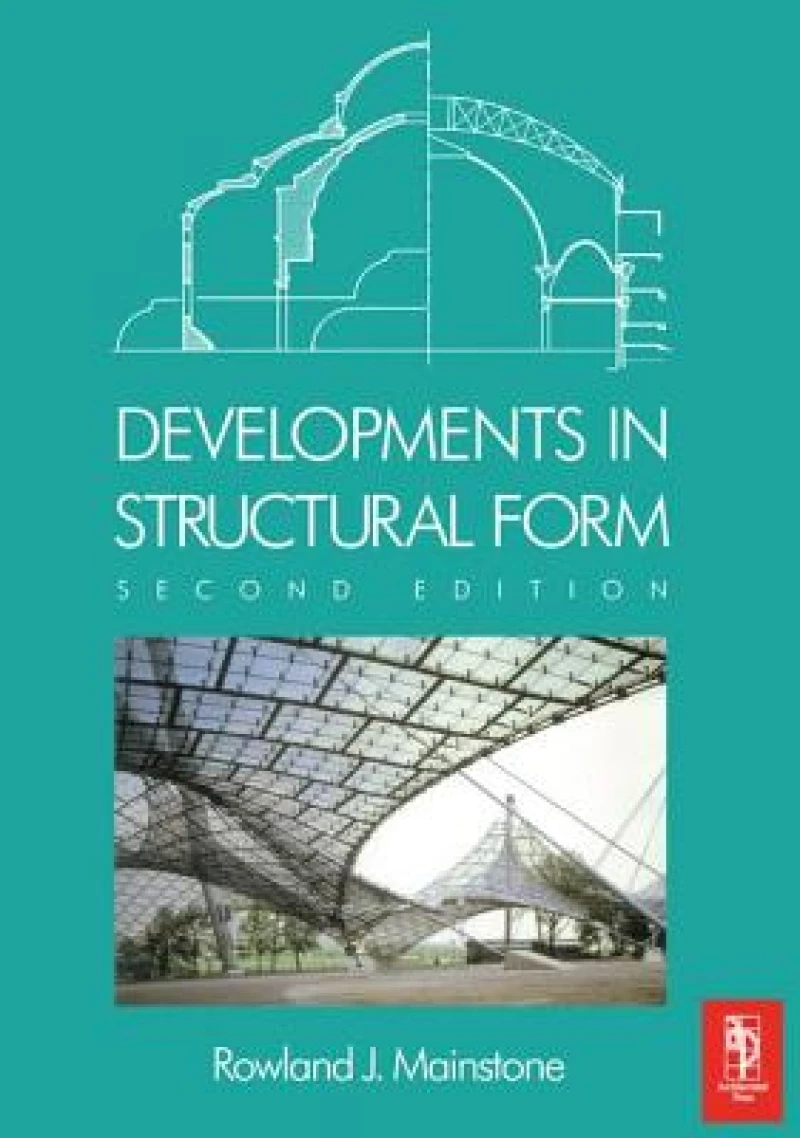
Developments in Structural Form
Book Details
Format
Hardback or Cased Book
ISBN-10
1138171816
ISBN-13
9781138171817
Publisher
Taylor & Francis Ltd
Imprint
Routledge
Country of Manufacture
GB
Country of Publication
GB
Publication Date
Apr 24th, 2016
Print length
382 Pages
Weight
1,320 grams
Dimensions
22.00 x 30.80 x 2.40 cms
Product Classification:
Architectural structure & designArchitectural structure and design
Ksh 33,950.00
Werezi Extended Catalogue
0 in stock
Delivery Location
Delivery fee: Select location
Secure
Quality
Fast
In the critically acclaimed first edition of this book, Mainstone offered a brilliant and highly original account of the structural developments that have made possible the achievements of architects and bridge builders throughout history.
In this extensively revised and expanded new edition, now available in paperback, new insights and a full coverage of recent developments in both design and construction are incorporated. The book identifies features that distinguish the forms built by man from those shaped by nature and discusses the physical and other constraints on the choices that can be made. It then looks in turn at all the elementary forms - arches, domes, beams, slabs and the like - which combine into the more complex forms of complete structures, and at the different classes of the complete forms themselves. The development of each form is traced chronologically, but with an emphasis less on the chronology than on the problems that designers have continually faced in trying to serve new ends with limited means or to serve old ones in new ways. The book concludes with a chapter on the processes of design, showing how the designer''s freedom of choice has been widened by a growing understanding of structural behaviour.
In this extensively revised and expanded new edition, now available in paperback, new insights and a full coverage of recent developments in both design and construction are incorporated. The book identifies features that distinguish the forms built by man from those shaped by nature and discusses the physical and other constraints on the choices that can be made. It then looks in turn at all the elementary forms - arches, domes, beams, slabs and the like - which combine into the more complex forms of complete structures, and at the different classes of the complete forms themselves. The development of each form is traced chronologically, but with an emphasis less on the chronology than on the problems that designers have continually faced in trying to serve new ends with limited means or to serve old ones in new ways. The book concludes with a chapter on the processes of design, showing how the designer''s freedom of choice has been widened by a growing understanding of structural behaviour.
Get Developments in Structural Form by at the best price and quality guaranteed only at Werezi Africa's largest book ecommerce store. The book was published by Taylor & Francis Ltd and it has pages.