
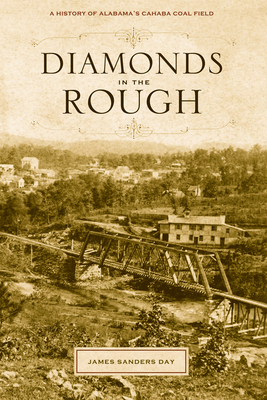
Diamonds in the Rough : A History of Alabama's Cahaba Coal Field
Book Details
Format
Paperback / softback
ISBN-10
081735834X
ISBN-13
9780817358341
Publisher
The University of Alabama Press
Imprint
The University of Alabama Press
Country of Manufacture
US
Country of Publication
GB
Publication Date
Mar 15th, 2015
Print length
224 Pages
Weight
342 grams
Dimensions
22.80 x 15.50 x 1.80 cms
KSh 5,150.00
Temporarily out of stock, due soon
0 in stock
Delivery Location
Delivery fee: Select location
Secure
Quality
Fast
Diamonds in the Rough reconstructs the historical moment that defined the Cahaba Coal Field, a mineral-rich area that stretches across sixty-seven miles and four counties of central Alabama.
Diamonds in the Rough reconstructs the historical moment that defined the Cahaba Coal Field, a mineral-rich area that stretches across sixty-seven miles and four counties of central Alabama.
Combining existing written sources with oral accounts and personal recollections, James Sanders Day’s Diamonds in the Rough describes the numerous coal operations in this region—later overshadowed by the rise of the Birmingham district and the larger Warrior Field to the north.
Many of the capitalists are the same: Truman H. Aldrich, Henry F. DeBardeleben, and James W. Sloss, among others; however, the plethora of small independent enterprises, properties of the coal itself, and technological considerations distinguish the Cahaba from other Alabama coal fields. Relatively short-lived, the Cahaba coal-mining operation spanned from discovery in the 1840s through development, boom, and finally bust in the mid-1950s.
Day considers the chronological discovery, mapping, mining, and marketing of the field’s coal as well as the issues of convict leasing, town development, welfare capitalism, and unionism, weaving it all into a rich tapestry. At the heart of the story are the diverse people who lived and worked in the district—whether operator or miner, management or labor, union or nonunion, white or black, immigrant or native—who left a legacy for posterity now captured in Diamonds in the Rough. Largely obscured today by pine trees and kudzu, the mining districts of the Cahaba Coal Field forever influenced the lives of countless individuals and families, and ultimately contributed to the whole fabric of the state of Alabama.
Winner of the 2014 Clinton Jackson Coley Award for Best Work on Alabama Local History from the Alabama Historical Association
Get Diamonds in the Rough by James Sanders Day at the best price and quality guaranteed only at Werezi Africa's largest book ecommerce store. The book was published by The University of Alabama Press and it has 224 pages.
Customers Who Bought This Also Bought
A Modern History of the Somali
KSh 5,300.00

Sapiens
KSh 2,350.00

Rise Fall Great Powers
KSh 3,050.00

Legacy of Violence
KSh 3,150.00

Chip War
KSh 2,000.00

Covering Islam
KSh 2,350.00

They Came Before Columbus
KSh 3,400.00

Hiroshima
KSh 2,000.00

Guns, Germs and Steel
KSh 2,400.00

Silk Roads
KSh 3,050.00

Empire
KSh 2,700.00

Strategy
KSh 4,350.00