
Diasporic Cold Warriors : Nationalist China, Anticommunism, and the Philippine Chinese, 1930s–1970s
Book Details
Format
Hardback or Cased Book
ISBN-10
1501762214
ISBN-13
9781501762215
Publisher
Cornell University Press
Imprint
Cornell University Press
Country of Manufacture
US
Country of Publication
GB
Publication Date
Mar 15th, 2022
Print length
277 Pages
Weight
642 grams
Dimensions
16.10 x 23.60 x 3.00 cms
Product Classification:
General & world historyAsian historyMigration, immigration & emigration
Ksh 9,200.00
Werezi Extended Catalogue
0 in stock
Delivery Location
Delivery fee: Select location
Secure
Quality
Fast
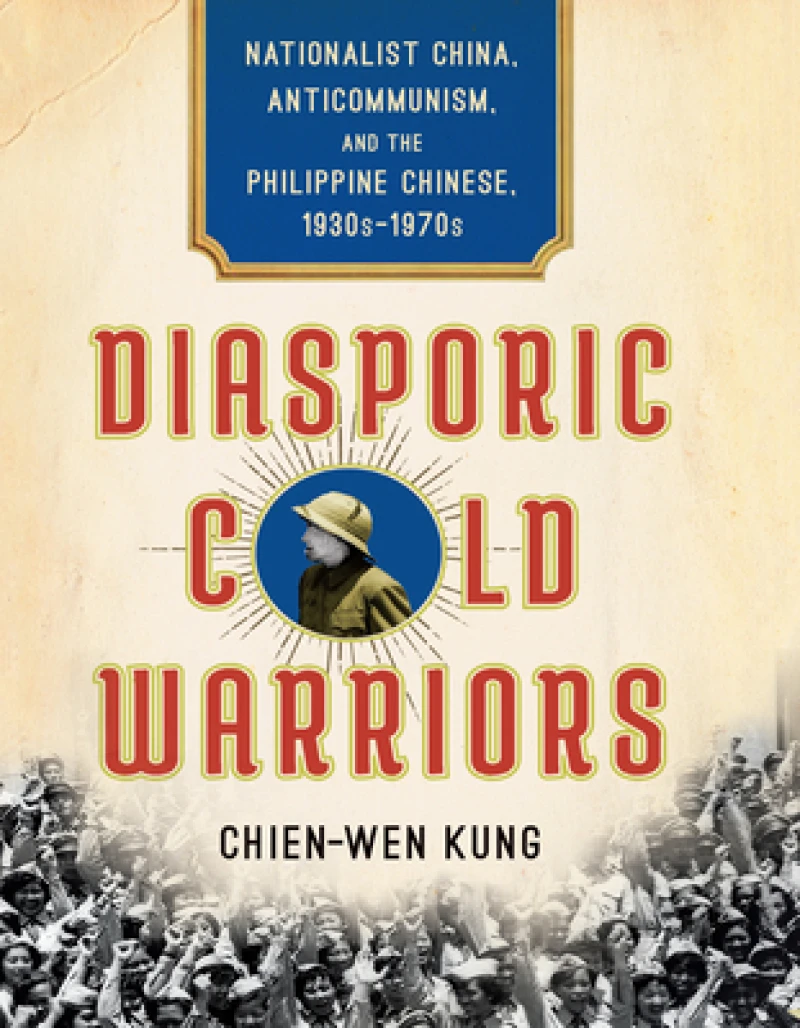
In Diasporic Cold Warriors, Chien-Wen Kung explains how the Chinese Nationalist Party (Kuomintang) sowed the seeds of anticommunism among the Philippine Chinese with the active participation of the Philippine state. From the 1950s to the 1970s, Philippine Chinese were Southeast Asia's most exemplary Cold Warriors among overseas Chinese. During these decades, no Chinese community in the region was more vigilant in identifying and rooting out suspected communists from within its midst; none was as committed to mobilizing against the People's Republic of China as the one in the former US colony. Ironically, for all the fears of overseas Chinese communities' ties to the PRC at the time, the example of the Philippines shows that the "China" that intervened the most extensively in any Southeast Asian Chinese society during the Cold War was the Republic of China on Taiwan. For the first time, Kung tells the story of the Philippine Chinese as pro-Taiwan, anticommunist partisans, tracing their evolving relationship with the KMT and successive Philippine governments over the mid-twentieth century. Throughout, he argues for a networked and transnational understanding of the ROC-KMT party-state and demonstrates that Taipei exercised a form of nonterritorial sovereignty over the Philippine Chinese with Manila's participation and consent. Challenging depoliticized narratives of cultural integration, he also contends that, because of the KMT, Chinese identity formation and practices of belonging in the Philippines were deeply infused with Cold War ideology. Drawing on archival research and fieldwork in Taiwan, the Philippines, the United States, and China, Diasporic Cold Warriors reimagines the histories of the ROC, the KMT, and the Philippine Chinese, connecting them to the broader canvas of the Cold War and postcolonial nation-building in East and Southeast Asia.
Get Diasporic Cold Warriors by at the best price and quality guaranteed only at Werezi Africa's largest book ecommerce store. The book was published by Cornell University Press and it has pages.

