
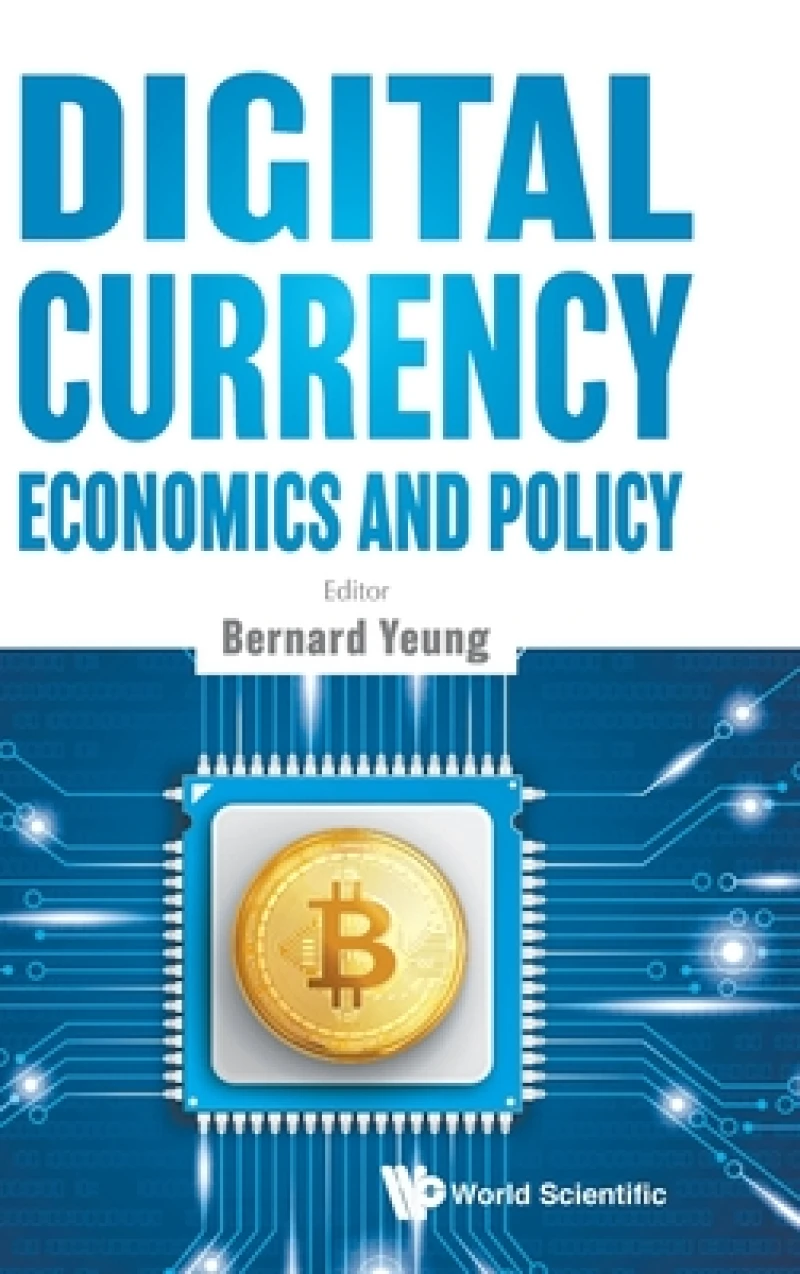
Digital Currency Economics And Policy
Book Details
Format
Hardback or Cased Book
ISBN-10
9811223777
ISBN-13
9789811223778
Publisher
World Scientific Publishing Co Pte Ltd
Imprint
World Scientific Publishing Co Pte Ltd
Country of Manufacture
GB
Country of Publication
GB
Publication Date
Nov 13th, 2020
Print length
200 Pages
Weight
450 grams
Dimensions
23.60 x 15.70 x 1.80 cms
Product Classification:
Information technology industries
Ksh 12,600.00
Temporarily out of stock, due soon
0 in stock
Delivery Location
Delivery fee: Select location
Secure
Quality
Fast
Recent technological advancements, particularly the advent of distributed ledger, have made the development of private digital currencies possible. This raises some important questions: Whether private digital currencies can be considered 'money' and their impact on monetary policy and the international monetary system; whether central banks should issue their own digital currencies and the impact of such actions; and the usage of the distributed ledger technology in the financial system.In November 2018, the Asian Bureau of Finance and Economic Research (ABFER), the Economic Policy Group (EPG) of the Monetary Authority of Singapore (MAS), and the National University of Singapore (NUS) Business School co-organised a two-day workshop on Digital Currency Economics and Policy to explore these issues. Leading academic researchers in monetary and financial economics offered valuable stimulating insights useful to practitioners, policymakers and academics in a non-technical manner. This volume is a collection of their work.This volume suggests that central banks will most likely issue digital currencies. There are many positive considerations. A central bank digital currency can generate useful information for the monetary authority, can enhance the effectiveness and flexibility of monetary policy, and may raise financial inclusion. Central bank digital currency, however, can have a significant impact on the banking and financial sector and could change a central bank's role in the economy.This volume also explains crucial differences between distributed ledger and centralized ledger, which is the basis of currency payment systems. Continuous innovations have made the distributed ledger technology more resilient, auditable and scalable, giving it far-reaching applications and potential contributions.For anyone who would like to gain a fundamental and comprehensive understanding of the impact of technology on our money and financial system and the future implications, this is a must-read volume.
Recent technological advancements, particularly the advent of distributed ledger, have made the development of private digital currencies possible. This raises some important questions: Whether private digital currencies can be considered ''money'' and their impact on monetary policy and the international monetary system; whether central banks should issue their own digital currencies and the impact of such actions; and the usage of the distributed ledger technology in the financial system.In November 2018, the Asian Bureau of Finance and Economic Research (ABFER), the Economic Policy Group (EPG) of the Monetary Authority of Singapore (MAS), and the National University of Singapore (NUS) Business School co-organised a two-day workshop on Digital Currency Economics and Policy to explore these issues. Leading academic researchers in monetary and financial economics offered valuable stimulating insights useful to practitioners, policymakers and academics in a non-technical manner. This volume is a collection of their work.This volume suggests that central banks will most likely issue digital currencies. There are many positive considerations. A central bank digital currency can generate useful information for the monetary authority, can enhance the effectiveness and flexibility of monetary policy, and may raise financial inclusion. Central bank digital currency, however, can have a significant impact on the banking and financial sector and could change a central bank''s role in the economy.This volume also explains crucial differences between distributed ledger and centralized ledger, which is the basis of currency payment systems. Continuous innovations have made the distributed ledger technology more resilient, auditable and scalable, giving it far-reaching applications and potential contributions.For anyone who would like to gain a fundamental and comprehensive understanding of the impact of technology on our money and financial system and the future implications, this is a must-read volume.
Get Digital Currency Economics And Policy by at the best price and quality guaranteed only at Werezi Africa's largest book ecommerce store. The book was published by World Scientific Publishing Co Pte Ltd and it has pages.

