
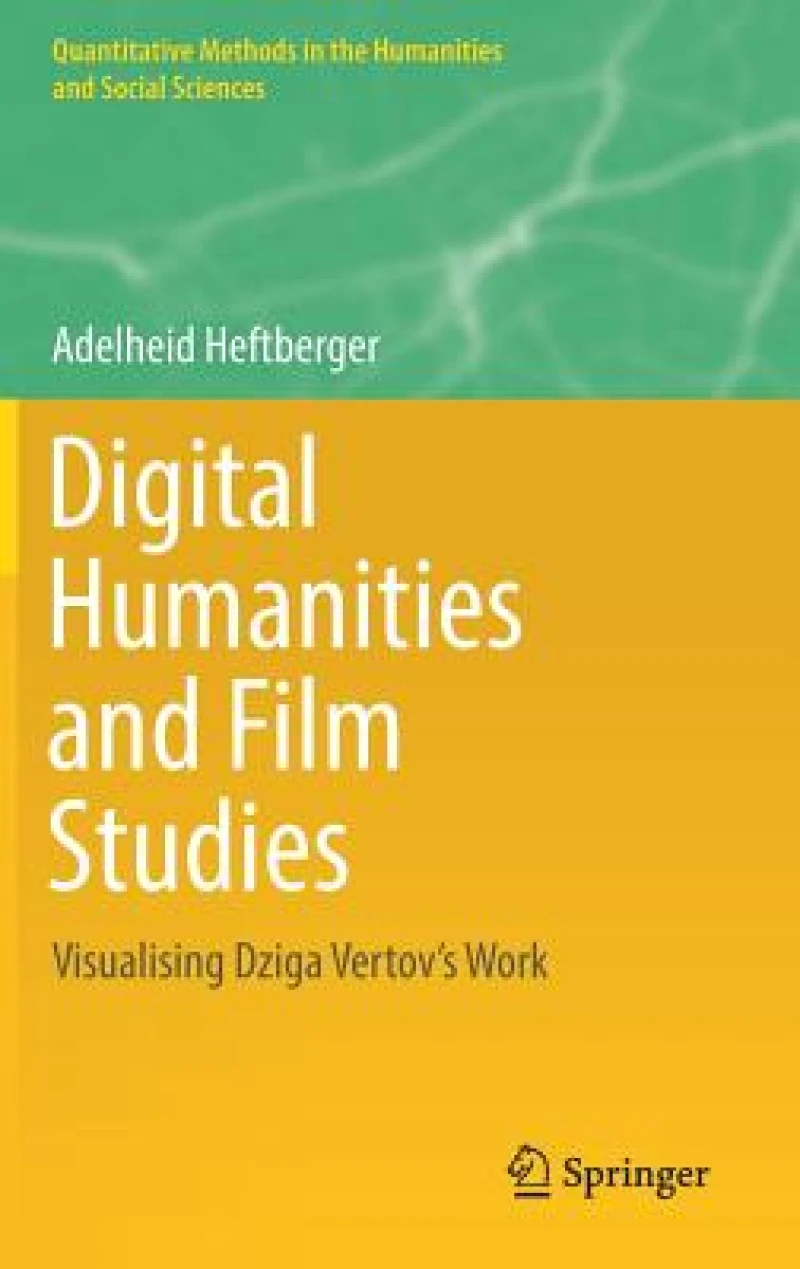
Digital Humanities and Film Studies : Visualising Dziga Vertov's Work
2018 ed.
Book Details
Format
Hardback or Cased Book
ISBN-10
3030028631
ISBN-13
9783030028633
Edition
2018 ed.
Publisher
Springer Nature Switzerland AG
Imprint
Springer Nature Switzerland AG
Country of Manufacture
GB
Country of Publication
GB
Publication Date
Jan 23rd, 2019
Print length
311 Pages
Weight
652 grams
Dimensions
16.40 x 24.00 x 2.80 cms
Product Classification:
Film theory & criticismFilm history, theory or criticismHistory of other landsSocial research & statisticsSocial research and statisticsHistory of other geographical groupings and regions or specific cultures / societies / groups / peoplesProbability & statisticsProbability and statistics
Ksh 19,800.00
Werezi Extended Catalogue
0 in stock
Delivery Location
Delivery fee: Select location
Secure
Quality
Fast
This book highlights the quantitative methods of data mining and information visualization and explores their use in relation to the films and writings of the Russian director, Dziga Vertov. The theoretical basis of the work harkens back to the time when a group of Russian artists and scholars, known as the “formalists,” developed new concepts of how art could be studied and measured. This book brings those ideas to the digital age. One of the central questions the book intends to address is, “How can hypothetical notions in film studies be supported or falsified using empirical data and statistical tools?” The first stage involves manual and computer-assisted annotation of the films, leading to the production of empirical data which is then used for statistical analysis but more importantly for the development of visualizations. Studies of this type furthermore shed light on the field of visual presentation of time-based processes; an area which has its origin in the Russian formalist sphere of the 1920s and which has recently gained new relevance due to technological advances and new possibilities for computer-assisted analysis of large and complex data sets. In order to reach a profound understanding of Vertov and his films, the manual or computer-assisted data analysis must be combined with film-historical knowledge and a study of primary sources. In addition, the status of the surviving film materials and the precise analysis of these materials combined with knowledge of historical film technology provide insight into archival policy and political culture in the Soviet Union in the 1920s and 30s.
Get Digital Humanities and Film Studies by at the best price and quality guaranteed only at Werezi Africa's largest book ecommerce store. The book was published by Springer Nature Switzerland AG and it has pages.

