
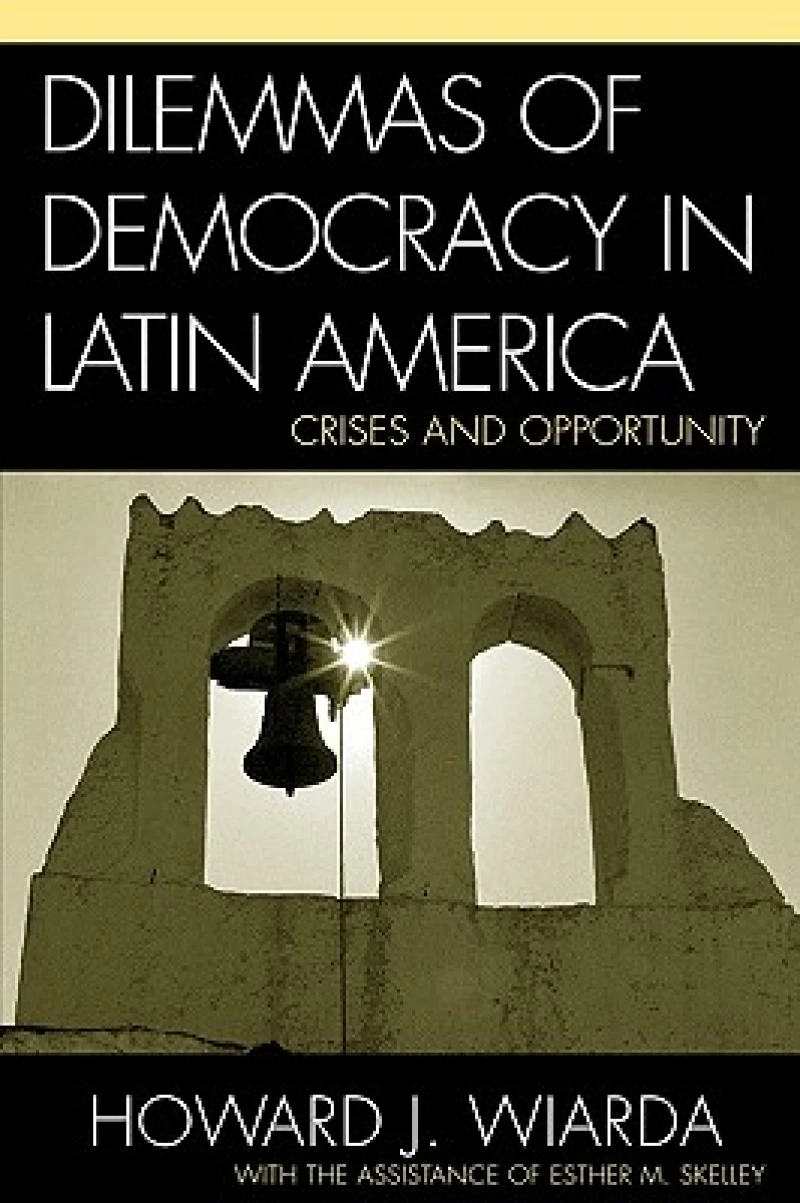
Dilemmas of Democracy in Latin America : Crises and Opportunity
Book Details
Format
Paperback / Softback
ISBN-10
0742530329
ISBN-13
9780742530324
Publisher
Bloomsbury Publishing Plc
Imprint
Rowman & Littlefield Publishers
Country of Manufacture
GB
Country of Publication
GB
Publication Date
Aug 4th, 2005
Print length
256 Pages
Weight
358 grams
Dimensions
22.70 x 14.80 x 1.60 cms
Product Classification:
Politics & governmentMiscellaneous items
Ksh 7,000.00
Manufactured on Demand
0 in stock
Delivery Location
Delivery fee: Select location
Secure
Quality
Fast
Democracy is deep peril in Latin America, as is U.S. policy in the region. Public support for democracy has declined dramatically since the impressive 'third wave' transitions to democracy in the 1980s and 1990s, and public opinion surveys show almost half of Latin Americans prefer 'strong government,' often a euphemism for authoritarianism. Meanwhile, U.S. policy toward Latin America has returned to far-from-benign neglect. The democratic gains of the last two decades are under threat, neither in Latin America nor in the United States do policymakers seem to have any viable alternatives or solutions to the present malaise. This balanced, clear study explores why democracy in Latin America is so troubled, and why U.S. policy in the area so often goes astray. Howard Wiarda argues that because Latin America was built on a different basis than the United States and has a different history, political culture, and social foundation, it cannot possibly imitate the U.S. model of democracy. Indeed, U.S. policy in Latin America goes astray not just through neglect but through misunderstanding. Ultimately, the author argues, it is only with a renewed and respectful U.S. policy approach-one that includes engaging with the myriad histories and cultures of the region-can the United States hope to encourage a strong and effective democratic tradition there.
Democracy is deep peril in Latin America, as is U.S. policy in the region. Public support for democracy has declined dramatically since the impressive ''third wave'' transitions to democracy in the 1980s and 1990s, and public opinion surveys show almost half of Latin Americans prefer ''strong government,'' often a euphemism for authoritarianism. Meanwhile, U.S. policy toward Latin America has returned to far-from-benign neglect. The democratic gains of the last two decades are under threat, neither in Latin America nor in the United States do policymakers seem to have any viable alternatives or solutions to the present malaise. This balanced, clear study explores why democracy in Latin America is so troubled, and why U.S. policy in the area so often goes astray. Howard Wiarda argues that because Latin America was built on a different basis than the United States and has a different history, political culture, and social foundation, it cannot possibly imitate the U.S. model of democracy. Indeed, U.S. policy in Latin America goes astray not just through neglect but through misunderstanding. Ultimately, the author argues, it is only with a renewed and respectful U.S. policy approach-one that includes engaging with the myriad histories and cultures of the region-can the United States hope to encourage a strong and effective democratic tradition there.
Get Dilemmas of Democracy in Latin America by at the best price and quality guaranteed only at Werezi Africa's largest book ecommerce store. The book was published by Bloomsbury Publishing Plc and it has pages.

