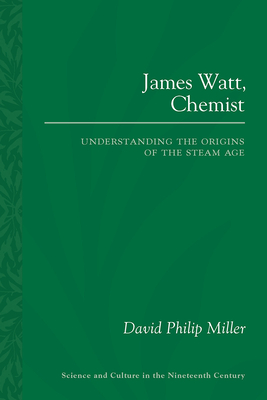
Discovering Water : James Watt, Henry Cavendish and the Nineteenth-Century 'Water Controversy'
Book Details
Format
Paperback / softback
Book Series
Science, Technology and Culture, 1700-1945
ISBN-10
1138258458
ISBN-13
9781138258457
Publisher
Taylor & Francis Ltd
Imprint
Routledge
Country of Manufacture
GB
Country of Publication
GB
Publication Date
Mar 6th, 2017
Print length
330 Pages
Weight
453 grams
Product Classification:
HistoriographyBritish & Irish historyHistoriographyEuropean historyHistory of science
KSh 10,600.00
Currently unavailable
0 in stock
Delivery Location
Delivery fee: Select location
Secure
Quality
Fast
The ''water controversy'' concerns one of the central discoveries of modern science, that water is not an element but rather a compound. The allocation of priority in this discovery was contentious in the 1780s and has occupied a number of 20th century historians. The matter is tied up with the larger issues of the so-called chemical revolution of the late eighteenth century. A case can be made for James Watt or Henry Cavendish or Antoine Lavoisier as having priority in the discovery depending upon precisely what the discovery is taken to consist of, however, neither the protagonists themselves in the 1780s nor modern historians qualify as those most fervently interested in the affair. In fact, the controversy attracted most attention in early Victorian Britain some fifty to seventy years after the actual work of Watt, Cavendish and Lavoisier. The central historical question to which the book addresses itself is why the priority claims of long dead natural philosophers so preoccupied a wide range of people in the later period. The answer to the question lies in understanding the enormous symbolic importance of James Watt and Henry Cavendish in nineteenth-century science and society. More than credit for a particular discovery was at stake here. When we examine the various agenda of the participants in the Victorian phase of the water controversy we find it driven by filial loyalty and nationalism but also, most importantly, by ideological struggles about the nature of science and its relation to technological invention and innovation in British society. At a more general, theoretical, level, this study also provides important insights into conceptions of the nature of discovery as they are debated by modern historians, philosophers and sociologists of science.
Get Discovering Water by David Philip Miller at the best price and quality guaranteed only at Werezi Africa's largest book ecommerce store. The book was published by Taylor & Francis Ltd and it has 330 pages.
Customers Who Bought This Also Bought

Servus
KSh 4,500.00

Saladin
KSh 5,000.00

Islam and World History
KSh 5,050.00

Zionism
KSh 4,300.00

Theorising the Artist Interview
KSh 30,950.00

Echoes of the Marseillaise
KSh 2,700.00

Shapers of Southern History
KSh 18,000.00

Thucydides
KSh 5,600.00

Hearing History
KSh 9,200.00

C. Vann Woodward, Southerner
KSh 6,300.00

At the Nexus of Philosophy and History
KSh 5,600.00

Making Black History
KSh 17,400.00