

Discursive Design : Critical, Speculative, and Alternative Things
Book Details
Format
Paperback / softback
Book Series
Design Thinking, Design Theory
ISBN-10
0262546558
ISBN-13
9780262546553
Publisher
MIT Press Ltd
Imprint
MIT Press
Country of Manufacture
US
Country of Publication
GB
Publication Date
Nov 22nd, 2022
Print length
640 Pages
Weight
1,268 grams
Dimensions
17.70 x 25.10 x 3.00 cms
KSh 8,100.00
Werezi Extended Catalogue
Delivery in 12 days
2 copies in stock
Delivery Location
Delivery fee: Select location
Delivery in 12 days
Secure
Quality
Fast
Exploring how design can be used for good—prompting self-reflection, igniting the imagination, and affecting positive social change.
Good design provides solutions to problems. It improves our buildings, medical equipment, clothing, and kitchen utensils, among other objects. But what if design could also improve societal problems by prompting positive ideological change? In this book, Bruce and Stephanie Tharp survey recent critical design practices and propose a new, more inclusive field of socially minded practice: discursive design. While many consider good design to be unobtrusive, intuitive, invisible, and undemanding intellectually, discursive design instead targets the intellect, prompting self-reflection and igniting the imagination. Discursive design (derived from “discourse”) expands the boundaries of how we can use design—how objects are, in effect, good(s) for thinking.
Discursive Design invites us to see objects in a new light, to understand more than their basic form and utility. Beyond the different foci of critical design, speculative design, design fiction, interrogative design, and adversarial design, Bruce and Stephanie Tharp establish a more comprehensive, unifying vision as well as innovative methods. They not only offer social criticism but also explore how objects can, for example, be used by counselors in therapy sessions, by town councils to facilitate a pre-vote discussions, by activists seeking engagement, and by institutions and industry to better understand the values, beliefs, and attitudes of those whom they serve. Discursive design sparks new ways of thinking, and it is only through new thinking that our sociocultural futures can change.
Good design provides solutions to problems. It improves our buildings, medical equipment, clothing, and kitchen utensils, among other objects. But what if design could also improve societal problems by prompting positive ideological change? In this book, Bruce and Stephanie Tharp survey recent critical design practices and propose a new, more inclusive field of socially minded practice: discursive design. While many consider good design to be unobtrusive, intuitive, invisible, and undemanding intellectually, discursive design instead targets the intellect, prompting self-reflection and igniting the imagination. Discursive design (derived from “discourse”) expands the boundaries of how we can use design—how objects are, in effect, good(s) for thinking.
Discursive Design invites us to see objects in a new light, to understand more than their basic form and utility. Beyond the different foci of critical design, speculative design, design fiction, interrogative design, and adversarial design, Bruce and Stephanie Tharp establish a more comprehensive, unifying vision as well as innovative methods. They not only offer social criticism but also explore how objects can, for example, be used by counselors in therapy sessions, by town councils to facilitate a pre-vote discussions, by activists seeking engagement, and by institutions and industry to better understand the values, beliefs, and attitudes of those whom they serve. Discursive design sparks new ways of thinking, and it is only through new thinking that our sociocultural futures can change.
Get Discursive Design by Bruce M. Tharp, Stephanie M. Tharp at the best price and quality guaranteed only at Werezi Africa's largest book ecommerce store. The book was published by MIT Press Ltd and it has 640 pages.
Customers Who Bought This Also Bought
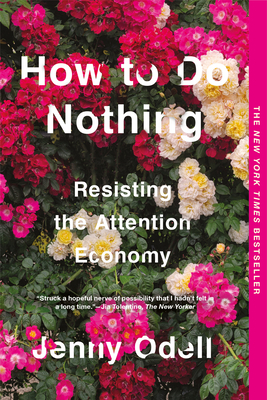
How To Do Nothing
KSh 2,700.00

The Art of Marvel''s Spider-Man 2
KSh 8,200.00
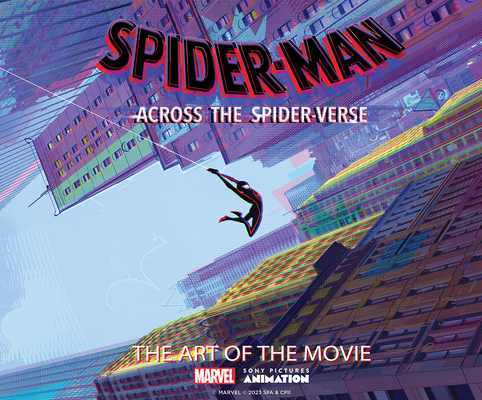
Spider-Man: Across the Spider-Verse: The Art of the Movie
KSh 6,400.00

Changing Moods
KSh 8,650.00

L'art de l'IA
KSh 3,100.00

The South Never Plays Itself
KSh 6,300.00

Esoteric Hollywood 3
KSh 3,800.00

The Art of Assassin''s Creed Black Flag Resynced
KSh 7,200.00

The Future of New Testament Studies
KSh 5,400.00

Gamers 2
KSh 2,950.00

A History of Artists' Film and Video in Britain
KSh 8,250.00

Digital Memory and the Archive
KSh 3,800.00
