
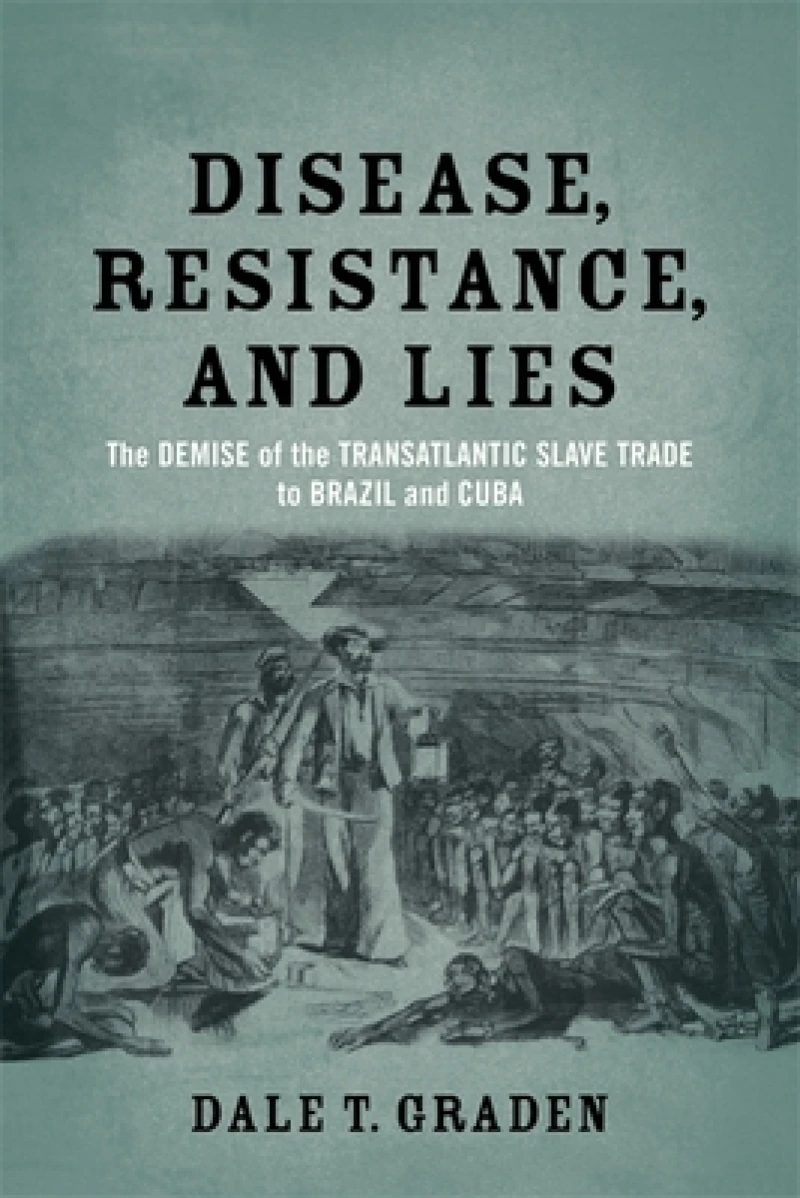
Disease, Resistance, and Lies : The Demise of the Transatlantic Slave Trade to Brazil and Cuba
Book Details
Format
Paperback / Softback
ISBN-10
0807155292
ISBN-13
9780807155295
Publisher
Louisiana State University Press
Imprint
Louisiana State University Press
Country of Manufacture
US
Country of Publication
GB
Publication Date
Jun 9th, 2014
Print length
304 Pages
Weight
462 grams
Dimensions
15.20 x 22.80 x 2.50 cms
Ksh 7,300.00
Werezi Extended Catalogue
0 in stock
Delivery Location
Delivery fee: Select location
Secure
Quality
Fast
By 1877 the US imported half of Brazil's coffee exports and 82 percent of Cuba's total exports. Disease, Resistance, and Lies examines the impact of these burgeoning markets on the Atlantic slave trade between these countries from 1808 to 1867, when slave traffic to Cuba ceased.
In the early nineteenth century the major economic players of the Atlantic trade lanes -- the United States, Brazil, and Cuba -- witnessed explosive commercial growth. Commodities like cotton, coffee, and sugar contributed to the fantastic wealth of an elite few and the enslavement of many. As a result of an increased population and concurrent economic expansion, the United States widened its trade relationship with Cuba and Brazil, importing half of Brazil's coffee exports and 82 percent of Cuba's total exports by 1877. Disease, Resistance, and Lies examines the impact of these burgeoning markets on the Atlantic slave trade between these countries from 1808 -- when the U.S. government outlawed American involvement in the slave trade to Cuba and Brazil -- to 1867, when slave traffic to Cuba ceased.
In his comparative study, Dale Graden engages several important historiographic debates, including the extent to which U.S. merchants and capital facilitated the slave trade to Brazil and Cuba, the role of infectious disease in ending the trade to those countries, and the effect of slave revolts in helping to bring the transatlantic slave trade to an end.
Graden situates the transatlantic slave trade within the expanding and rapidly changing international economy of the first half of the nineteenth century, offering a fresh analysis of the ""Southern Triangle Trade"" that linked Cuba, Brazil, and Africa. Disease, Resistance, and Lies challenges more conservative interpretations of the waning decades of the transatlantic slave trade by arguing that the threats of infectious disease and slave resistance both influenced policymakers to suppress slave traffic to Brazil and Cuba and also made American merchants increasingly unwilling to risk their capital in the transport of slaves.
In his comparative study, Dale Graden engages several important historiographic debates, including the extent to which U.S. merchants and capital facilitated the slave trade to Brazil and Cuba, the role of infectious disease in ending the trade to those countries, and the effect of slave revolts in helping to bring the transatlantic slave trade to an end.
Graden situates the transatlantic slave trade within the expanding and rapidly changing international economy of the first half of the nineteenth century, offering a fresh analysis of the ""Southern Triangle Trade"" that linked Cuba, Brazil, and Africa. Disease, Resistance, and Lies challenges more conservative interpretations of the waning decades of the transatlantic slave trade by arguing that the threats of infectious disease and slave resistance both influenced policymakers to suppress slave traffic to Brazil and Cuba and also made American merchants increasingly unwilling to risk their capital in the transport of slaves.
Get Disease, Resistance, and Lies by at the best price and quality guaranteed only at Werezi Africa's largest book ecommerce store. The book was published by Louisiana State University Press and it has pages.

