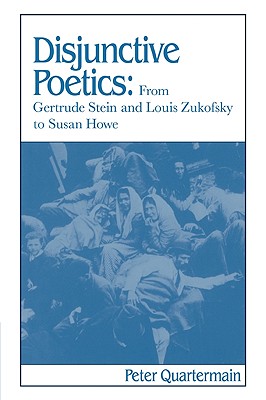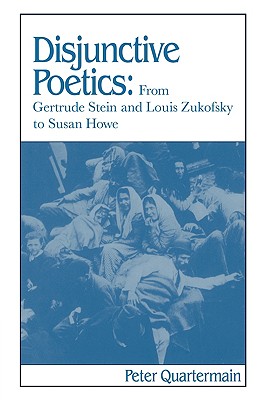
Disjunctive Poetics : From Gertrude Stein and Louis Zukofsky to Susan Howe
Book Details
Format
Hardback
ISBN-10
0521412684
ISBN-13
9780521412681
Publisher
Cambridge University Press
Imprint
Cambridge University Press
Country of Manufacture
GB
Country of Publication
GB
Publication Date
Jun 26th, 1992
Print length
256 Pages
Weight
530 grams
Dimensions
23.60 x 16.10 x 2.30 cms
KSh 18,200.00
Currently unavailable
0 in stock
Delivery Location
Delivery fee: Select location
Secure
Quality
Fast
Disjunctive Poetics examines some of the most interesting and experimental contemporary writers whose work forms a counterpoint to the mainstream writing of our time.
Disjunctive Poetics examines some of the most interesting and experimental contemporary writers whose work forms a counterpoint to the mainstream writing of our time. Peter Quartermain suggests that the explosion of non-canonical modern writing is linked to the severe political, social and economic dislocation of non-English-speaking immigrants who, bringing alternative culture with them as they passed through Ellis Island in their hundreds of thousands at the turn of the century, found themselves uprooted from their traditions and dissociated from their cultures. The line of American poetry that runs from Gertrude Stein through Louis Zukofsky and the Objectivists to the Language Writers, Quartermain contends, is not the constructive but the deconstructive aspect, which emphasises the materiality and ambiguity of the linguistic medium and the arbitrariness and openness of the creative process. Providing close reading of Gertrude Stein, Louis Zukofsky, Robert Creeley, Basil Bunting, Guy Davenport, Robert Duncan and Susan Howe, the book explains how these writers describe the modern experience in a multicultural world by displacing commonly accepted cultural icons and by loading their language with multiple potential meanings.
Get Disjunctive Poetics by Peter Quartermain at the best price and quality guaranteed only at Werezi Africa's largest book ecommerce store. The book was published by Cambridge University Press and it has 256 pages.
Customers Who Bought This Also Bought
Dreams in a Time of War
KSh 3,050.00
Modern Classics Penguin Essays of George Orwell
KSh 2,700.00
On Writing
KSh 2,000.00

To the Lighthouse
KSh 1,450.00
On Morrison
KSh 4,500.00

Africa''s Tarnished Name
KSh 700.00
C. S. Lewis
KSh 1,800.00

Life in Letters
KSh 5,400.00

By Grand Central Station I
KSh 1,800.00
Wide Sargasso Sea
KSh 1,800.00

Mom and Me and Mom
KSh 2,000.00
Jorge Luis Borges
KSh 1,800.00