
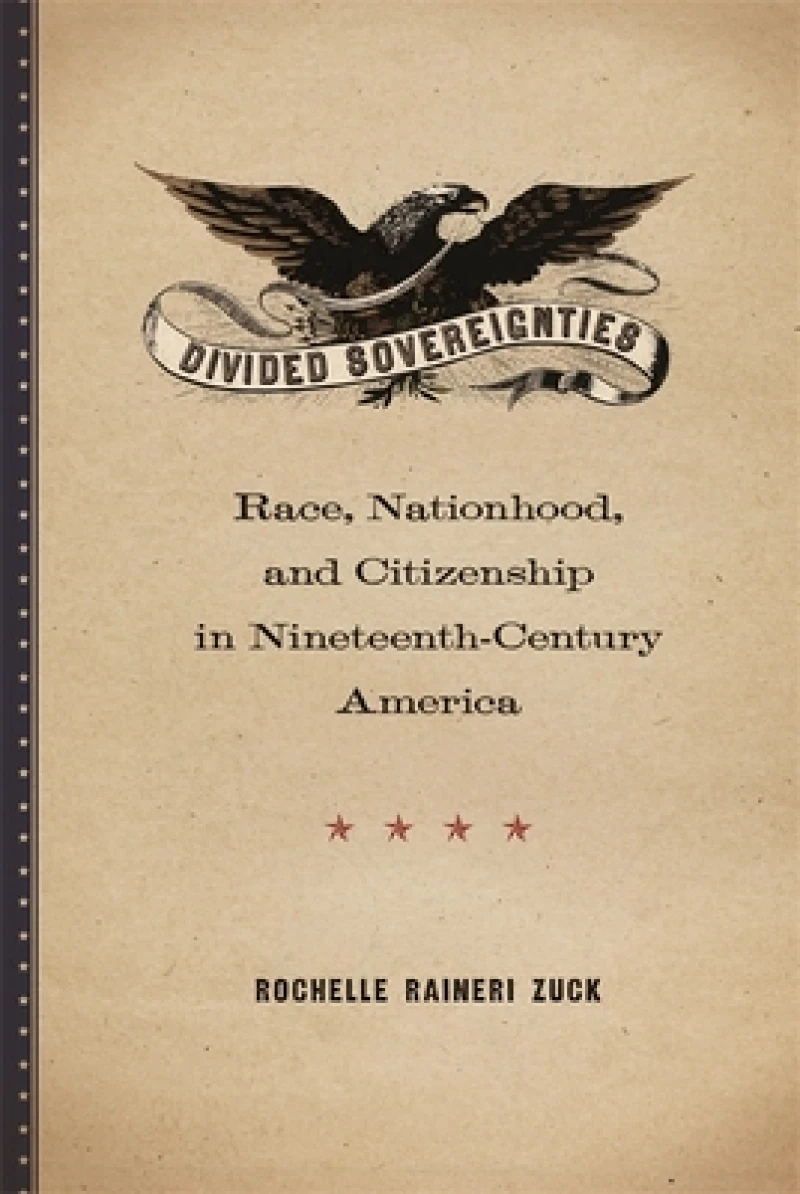
Divided Sovereignties – Race, Nationhood, and Citizenship in Nineteenth–Century America : Race, Nationhood, and Citizenship in Nineteenth-Century America
Book Details
Format
Paperback / Softback
ISBN-10
0820356808
ISBN-13
9780820356808
Publisher
University of Georgia Press
Imprint
University of Georgia Press
Country of Manufacture
US
Country of Publication
GB
Publication Date
Nov 15th, 2019
Print length
304 Pages
Weight
464 grams
Dimensions
15.10 x 22.80 x 2.50 cms
Product Classification:
Ethnic groups and multicultural studiesEthnic minorities & multicultural studiesSociology
Ksh 6,500.00
Werezi Extended Catalogue
Delivery in 14 days
1 copies in stock
Delivery Location
Delivery fee: Select location
Delivery in 14 days
Secure
Quality
Fast
Zuck argues that, in the decades between the ratification of the Constitution and the publication of Sutton Griggs’s novel Imperium in Imperio in 1899, four populations were most often referred to as racial and ethnic nations within the nation: the Cherokees, African Americans, Irish Americans, and Chinese immigrants.
In eighteenth- and nineteenth-century debates about the constructions of American nationhood and national citizenship, the frequently invoked concept of divided sovereignty signified the division of power between state and federal authorities and/or the possibility of one nation residing within the geopolitical boundaries of another. Political and social realities of the nineteenth century—such as immigration, slavery, westward expansion, Indigenous treaties, and financial panics—amplified anxieties about threats to national/state sovereignty. Rochelle Raineri Zuck argues that, in the decades between the ratification of the Constitution and the publication of Sutton Griggs’s novel Imperium in Imperio in 1899, four populations were most often referred to as racial and ethnic nations within the nation: the Cherokees, African Americans, Irish Americans, and Chinese immigrants. Writers and orators from these groups engaged the concept of divided sovereignty to assert alternative visions of sovereignty and collective allegiance (not just ethnic or racial identity), to gain political traction, and to complicate existing formations of nationhood and citizenship. Their stories intersected with issues that dominated nineteenth-century public argument and contributed to the Civil War. In five chapters focused on these groups, Zuck reveals how constructions of sovereignty shed light on a host of concerns including regional and sectional tensions; territorial expansion and jurisdiction; economic uncertainty; racial, ethnic, and religious differences; international relations; immigration; and arguments about personhood, citizenship, and nationhood.
Get Divided Sovereignties – Race, Nationhood, and Citizenship in Nineteenth–Century America by at the best price and quality guaranteed only at Werezi Africa's largest book ecommerce store. The book was published by University of Georgia Press and it has pages.

